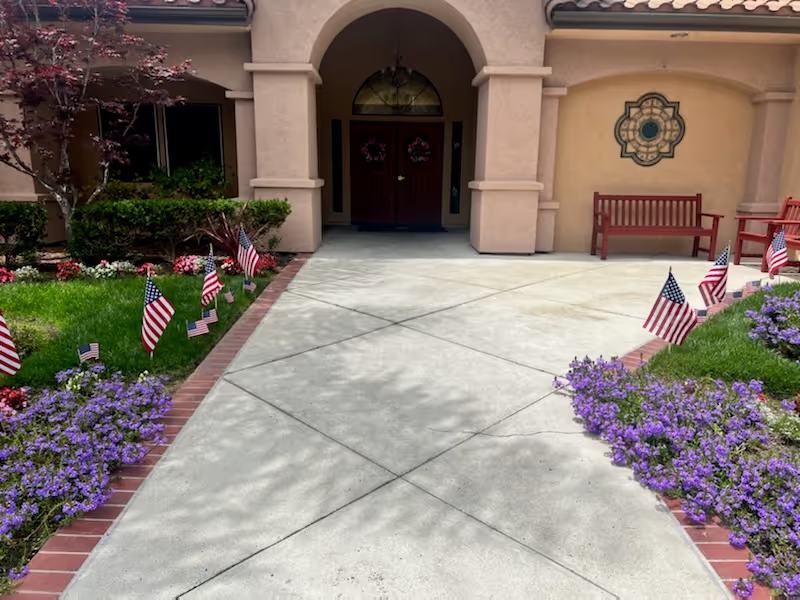
Seacrest Village presents as a well-appointed retirement community with notable strengths in facility quality, therapy services, and resident programming. Multiple reviewers describe clean, bright interiors and attractive, landscaped outdoor spaces (koi pond, patios, putting green) that support outdoor socialization. The campus offers substantive amenities — an indoor pool, fitness center, theater, coffee shop, and a range of activity spaces — alongside organized daily programming such as water exercise, yoga, classes, bingo, and escorted transportation to appointments and shopping. For residents seeking active programming and on-site rehabilitation, the community’s physical- and occupational-therapy offerings are frequently highlighted as robust and available multiple days per week; several individual therapists and nurses received specific praise for their clinical skill and person-centered care.
Care quality and staff performance present a mixed picture. Many families described caring, attentive caregivers and nurses who contribute to residents’ comfort and engagement. At the same time, there are recurring concerns about inconsistent clinical competence and professionalism across shifts and departments. Specific operational patterns include delays in nursing responsiveness and incontinence-care timeliness, variable physician coverage, and instances where family communication about clinical incidents or care plans was insufficient. These issues point to uneven clinical consistency rather than a uniformly poor or uniformly excellent level of care.
Operational and management themes also emerge. Reviewers describe staffing instability, with reports of excessive overtime and scheduling strain that can affect continuity of care. Communication gaps — both in follow-through on family inquiries and in the clarity and enforcement of visitation policies — have contributed to frustration for some families. Several comments indicate weaknesses in HR and grievance-resolution processes, where staff conduct concerns or workplace tensions (for example, in dining or kitchen areas) were not addressed to family satisfaction. There are also notes about discharge timing being influenced by payer constraints, which can create pressure around length-of-stay decisions for residents on Medicare.
Dining and daily living services receive generally positive feedback for food quality and the availability of kosher options, though complaints about inconsistent service and staff conduct in dining areas were also raised. Facilities and amenities are frequently praised: the campus’s cleanliness, secure entry points, varied common spaces, and recreational programming are commonly cited as reasons families would recommend the community. Practical limitations mentioned include variable in-unit laundry availability in older buildings and a perception of variable physician presence.
In summary, Seacrest Village offers a high-quality physical environment, comprehensive therapy services, and a wide range of activities that support an engaged resident experience. Prospective residents and families should weigh these strengths against evidence of operational inconsistency — particularly around nursing responsiveness, staff professionalism, communication, and staffing stability — and ask targeted questions about staffing levels, incident communication protocols, visitation policies, and grievance processes during tours and admissions discussions.