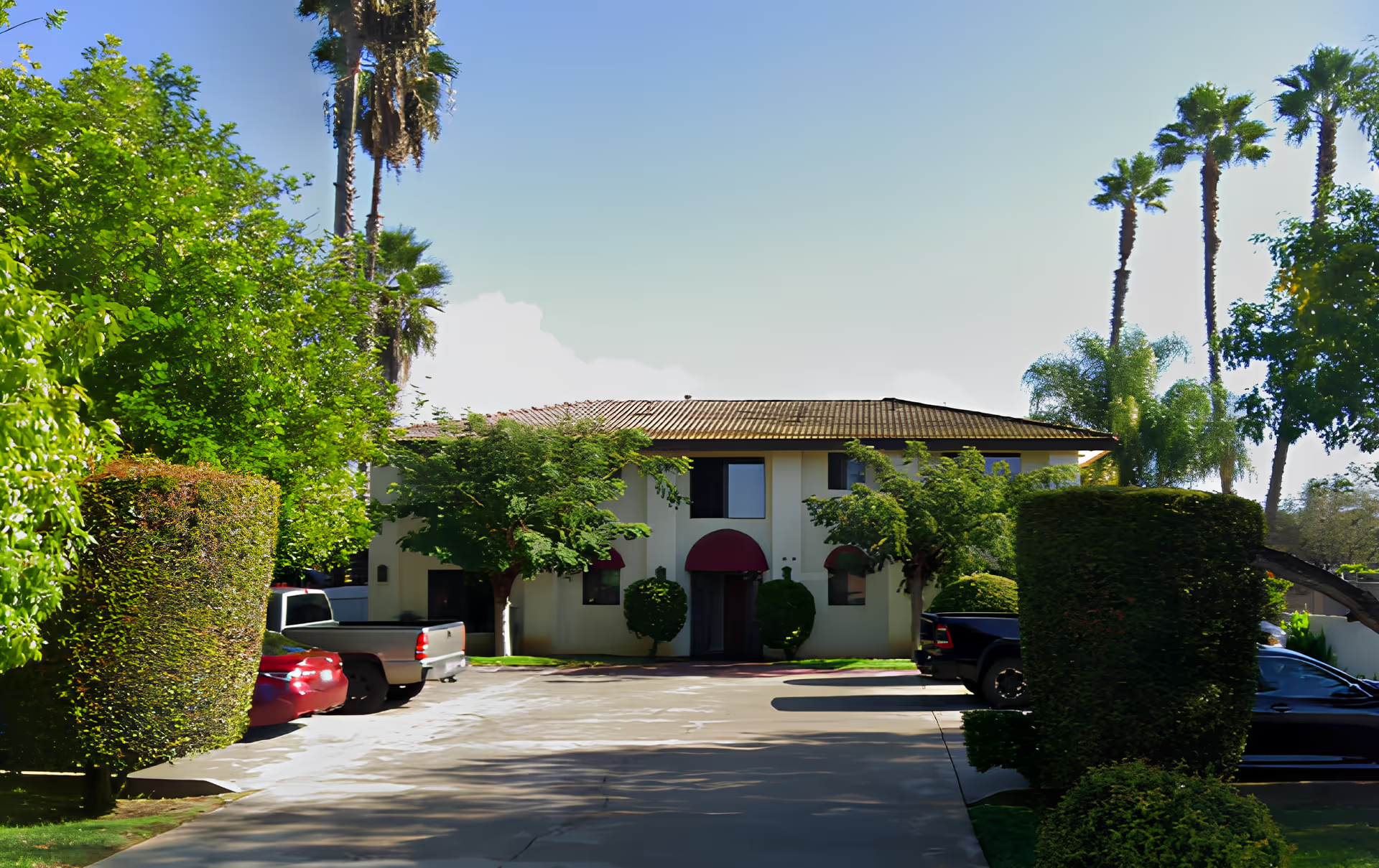
Westmont of Escondido presents a mixed but informative profile for prospective residents and families. Many reviewers emphasize the facility's amenity-rich environment — including an indoor pool, water-aerobics and fitness programs, attractive courtyards and patios, salon and theater spaces, and full kitchens in many apartments — which supports an active independent- and assisted-living lifestyle. The community offers a broad activities calendar (concerts, games, exercise classes, outings, LifeLoop activity updates) and on-site therapy/rehab services that several families found helpful for recovery and ongoing mobility maintenance.
Care and staffing receive polarized feedback. Numerous accounts praise individual caregivers, nursing staff, front-desk personnel, admissions coordinators and specific directors for compassionate, hands-on care, timely follow-up from OT/PT, and strong family communication. At the same time, there are consistent operational concerns: high staff turnover, periodic understaffing, and gaps in clinical oversight. Those operational weaknesses have been linked to delayed responses in higher-acuity situations, instances of medication-administration errors, and uneven availability of nursing coverage. Prospective families should confirm current staffing ratios, on-site clinical coverage, and escalation procedures for emergencies.
Dining and housekeeping show similar variability. Many reviewers describe restaurant-quality meals, a wide variety of menu choices, and attentive dining staff; others report a decline in meal quality, limited fresh produce or nutritional variety, long waits in the dining room, and inconsistency between different parts of the community. Housekeeping is generally provided and appreciated when timely, but reliability concerns — missed cleanings and sanitation/pest-control issues in some areas — were raised. Visitors should inspect recent menu cycles, sample meals, and ask for housekeeping schedules during tours.
Facilities and renovations are uneven. The community contains recently renovated, bright units and attractive public spaces that reviewers frequently praise for cleanliness and light. Simultaneously, several older rooms and wings are described as in need of refurbishment, producing an uneven resident experience depending on unit assignment. Parking, underground garage access, and location impressions vary among reviewers; safety and neighborhood concerns were mentioned by a subset of visitors.
Management and billing patterns are important considerations. Multiple reviewers note leadership turnover, ownership changes, and periodic staffing or culinary transitions (new executive directors and chefs). Some families report transparent, proactive management interactions and rapid problem resolution, while others cite billing opacity, annual rent increases, overlapping or unexpected fees, and uneven follow-through from business office staff. Clarify contract terms, fee escalation policies, and the facility's process for addressing billing disputes before signing.
Notable risk areas flagged across reviews include clinical and safety oversight for higher-acuity and memory-care residents, communication and coordination gaps between departments, and operational impacts following staffing or ownership changes. There are also references to serious conduct and resident-rights concerns in memory-care areas and to financial and billing irregularities; these should prompt targeted questions during a tour and a review of state inspection reports. In contrast, many families report that dedicated staff members and active programming substantially improved quality of life for residents.
Bottom line: Westmont of Escondido offers robust amenities, an active social calendar, and many staff members who provide compassionate care. However, documented variability in staffing stability, food and housekeeping consistency, clinical oversight, unit condition, and billing practices suggests families should conduct thorough, current due diligence — ask about recent staffing turnover, view inspection records, sample meals, confirm housekeeping and clinical coverage schedules, and review contract terms — to determine whether the community’s present operational state matches their expectations and care needs.