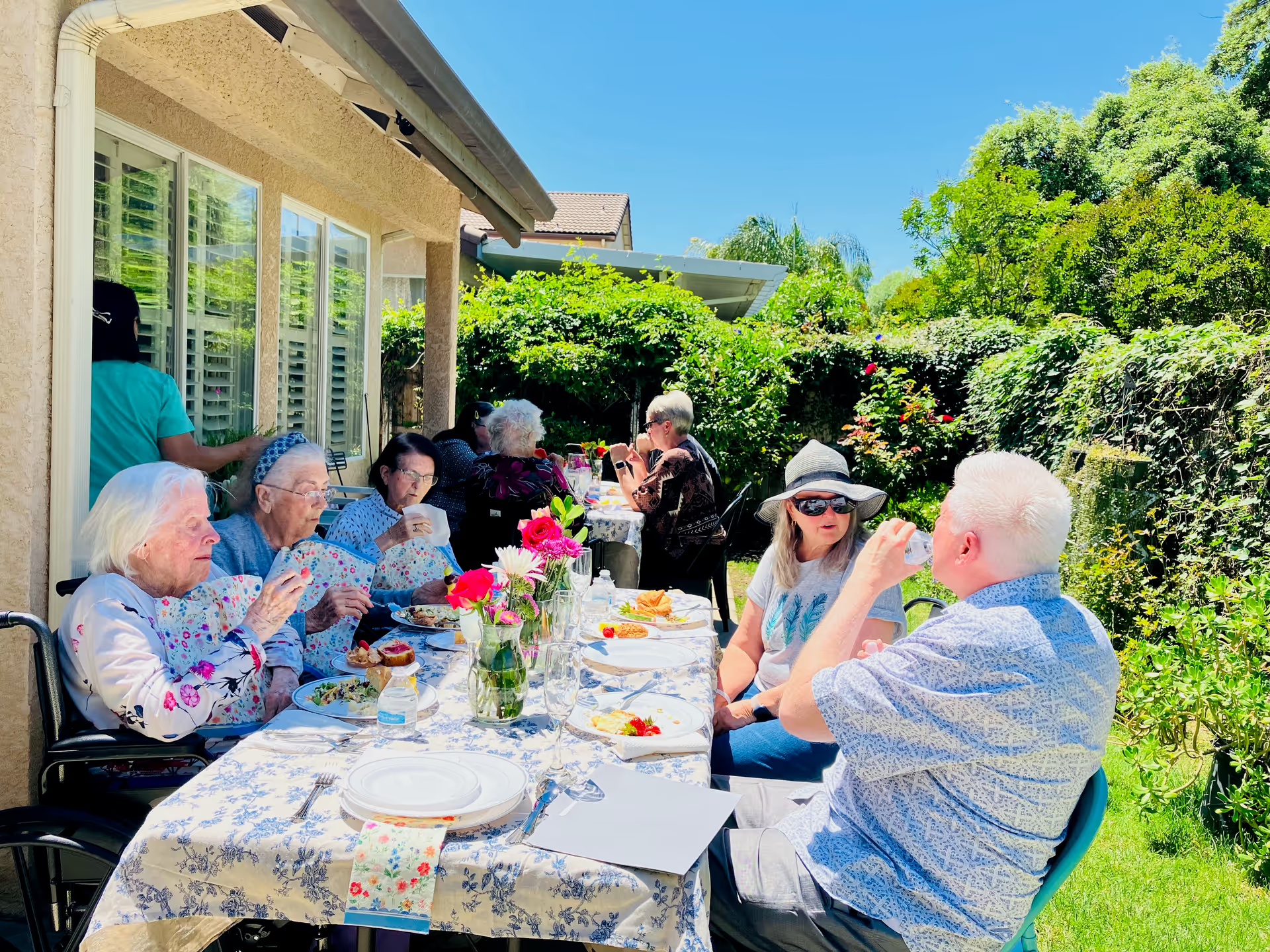
Overall impression: Fresno Senior Living properties present a mix of clearly articulated strengths and recurring operational weaknesses. Many reviewers praise the campuses for attractive, well-kept grounds, roomy and light-filled apartments (often with balconies or kitchenettes), and a broad set of on-site amenities such as pools, gyms, salons, libraries, and multiple dining rooms. The community offers a restaurant-style dining environment and a variety of programming — from water aerobics and tai chi to arts, live music, bingo, and regular outings — which supports an active social atmosphere for residents.
Staff and caregiving: Direct-care and floor staff are frequently described as compassionate, attentive, and personable; many families singled out individual caregivers and front-desk personnel for responsiveness and kindness. Tour and admissions staff are also commonly praised for thoroughness and helpfulness during move-in. At the same time, a recurring theme is staffing variability: several accounts describe periods when staff are overextended, when response times lag, or when temporary staff changes affect service levels. These staffing pressures are linked in some reviews to delayed checks on residents and reduced activity programming.
Dining: Dining impressions are polarized. Numerous reviews commend fresh, homemade selections, elegant dining rooms, and flexible menu options; others describe inconsistent food quality, repetitive dishes, limited menus in some dining rooms, and occasional temperature or portion issues. Meal-service continuity has also been flagged as an operational concern in a subset of accounts (for example, timing and delivery differences between dining rooms).
Activities and programming: The facility offers an extensive calendar of activities and events that many residents find engaging and community-building. However, programming availability has been affected at times by infection-control measures and by staffing shortages. Some reviewers also noted that certain activities appear geared toward more dependent residents, suggesting variable fit depending on resident ability and interest.
Facilities and maintenance: Physical facilities and public spaces are most often described as clean, attractive, and well maintained. Apartments are generally characterized as spacious and well appointed. Nevertheless, there are recurring notes about variability in housekeeping and unit-level maintenance (including carpeting and balcony threshold issues), as well as isolated pest-control concerns in food-preparation areas that warrant attention.
Clinical care, management, and policies: Clinical capacity is adequate for many independent and assisted-living needs, and hospice-friendly care is available; however, reviewers identified limits in clinical services for some medical tasks (for example, routine daily insulin administration may require verification). A number of families raised concerns about management communication, billing clarity, and administrative responsiveness. Ownership changes and management turnover are mentioned as contributing factors to uneven experiences. A few serious individual incidents generated concern about clinical-incident response and family communication; those accounts point to potential gaps in escalation and post-incident family outreach that the facility should address.
Financial and logistical considerations: Value perceptions vary by unit type and pricing promotions; several reviewers felt the facility offered good value compared with local alternatives, while others noted extra ancillary fees (laundry, per-plate room service, cable/TV) and occasional billing or invoicing confusion. Transportation and proximity are practical considerations for families: shuttle services exist but some reviewers found them insufficient for certain scheduling needs or distances.
Bottom line: Fresno Senior Living properties combine strong physical amenities, an active social program, and many highly regarded caregiving staff members, making them a good fit for residents seeking independent or assisted living with social engagement. Prospective residents and families should evaluate the site-specific operational factors — current staffing levels, clinical-capacity for specific medical needs, maintenance consistency, and administrative transparency on fees — and discuss these directly with management to assess fit and to clarify policies on higher-acuity or memory-care transitions.