Reviews of Beachside Post Acute present a mixed but specific picture: many family members and residents praise the clinical and rehabilitative teams, the facility's cleanliness, and the welcoming atmosphere, while other accounts describe operational and clinical inconsistencies that prospective families should evaluate before placement.
Care quality and staff: A strong theme in the positive feedback is compassionate, attentive nursing and caregiving, with families noting skilled therapy staff and coordinated case‑management. Several accounts highlight rapid responses to clinical needs and examples of staff going beyond expectations to secure medications or coordinate care. Counterbalancing those comments, multiple reviews describe variability in staff professionalism, missed appointments or medication delivery issues, and concerns about wound care and infection prevention. Taken together, these comments suggest the facility can provide high‑quality, rehabilitative care, but that performance may vary by shift, unit, or individual staff member; families should ask for current staffing patterns, medication‑management protocols, and examples of wound‑care processes during a visit.
Dining and nutrition: Opinions are divergent. Some reviewers describe attentive dining staff and healthy meals, while others raise consistent concerns about food quality, cold breakfasts, and portion sizes. This pattern suggests that meal preparation and service timing are inconsistent across days or units. Prospective residents should ask to sample meals, inquire about menu rotation and therapeutic diet procedures, and confirm how meal concerns are handled by management.
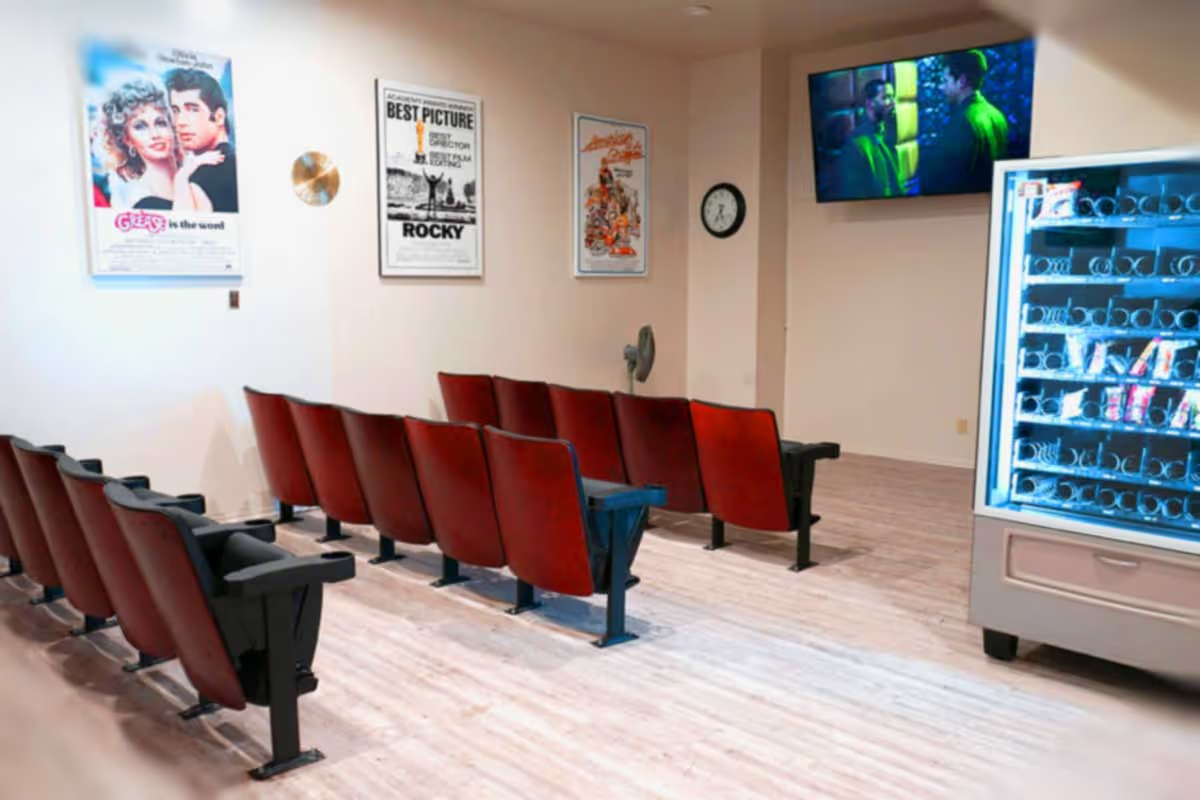
Activities and facilities: Many reviewers compliment the activity program and social opportunities (karaoke and group events were specifically mentioned), and several note a generally clean, well‑kept interior with comfortable resident rooms. At the same time, some reviewers describe overcrowding, limited resources in a smaller facility footprint, and outdated amenities in activity areas. There are also isolated sanitation and odor concerns noted at times. Visiting during activity hours and inspecting common spaces and rooms will give a clearer sense of daily life and space constraints.
Management, communication and operations: Communication experiences vary widely. Numerous families praised clear, receptive staff and responsive social workers, while others described inconsistent transparency around clinical events, medication lists, and visitation policy enforcement. Operational criticisms include perceptions of variable management oversight, a business‑first impression among some family members, and concerns about laundry controls and missing personal items — including at least one allegation of theft. These are facility‑level governance and process issues; families should request written policies on personal‑property tracking, grievance processes, medication reconciliation, and visitation rules, and meet with the director of nursing and administrator to evaluate responsiveness.
Notable patterns and recommendations: Beachside appears capable of delivering strong rehabilitative and day‑to‑day care in many cases, with standout staff members and a generally clean environment. However, recurring operational themes — inconsistent staffing professionalism, medication/documentation gaps, variable meal service, wound‑care concerns, and occasional communication breakdowns — merit careful vetting. When evaluating this facility, prospective residents and families should tour during different times of day, observe staff‑resident interactions, speak directly with therapy and nursing leads about clinical protocols, review medication reconciliation and wound‑care practices, and confirm policies for laundry, valuables, and language support. Engaging the facility’s case manager or ombudsman early can help clarify expectations and channels for resolving concerns.