The reviews for Los Altos Sub‑Acute & Rehabilitation Center present a markedly mixed picture. Many families and former patients praise the facility for its strong rehabilitative services, compassionate direct-care staff, and an active activities program, while others describe significant operational and clinical gaps. This has produced polarized experiences: where clinical therapy and attentive aides are present, patients often make measurable gains and discharge home successfully; where nursing coverage and communication lapse, families report concerning care interruptions and complications.
Care quality and clinical management show a clear divergence. Positive accounts emphasize competent, recovery-focused physical, occupational and speech therapy with staff who encourage independence and mobility. Conversely, recurrent themes in negative accounts include delayed nurse response to requests, timing and administration lapses with medications, and deficiencies in wound and pressure‑injury management. There are also multiple descriptions of delays addressing acute conditions such as urinary or infection concerns, and occasional problems with replacement of personal prosthetics (for example, dentures) and other personal-property processes.
Staffing and staff conduct are described as inconsistent. Numerous reviews name individual nurses, CNAs and therapists as highly dedicated and effective; others refer to poorly trained or inattentive staff, particularly during night shifts or periods of staffing shortage. Management behavior is also described as mixed: some reviewers note proactive new leadership initiatives (including a CNA training program and other steps to rebuild culture), while others cite absent or unresponsive administrators, poor handling of discharge logistics, and weak follow‑through on billing or payment issues.
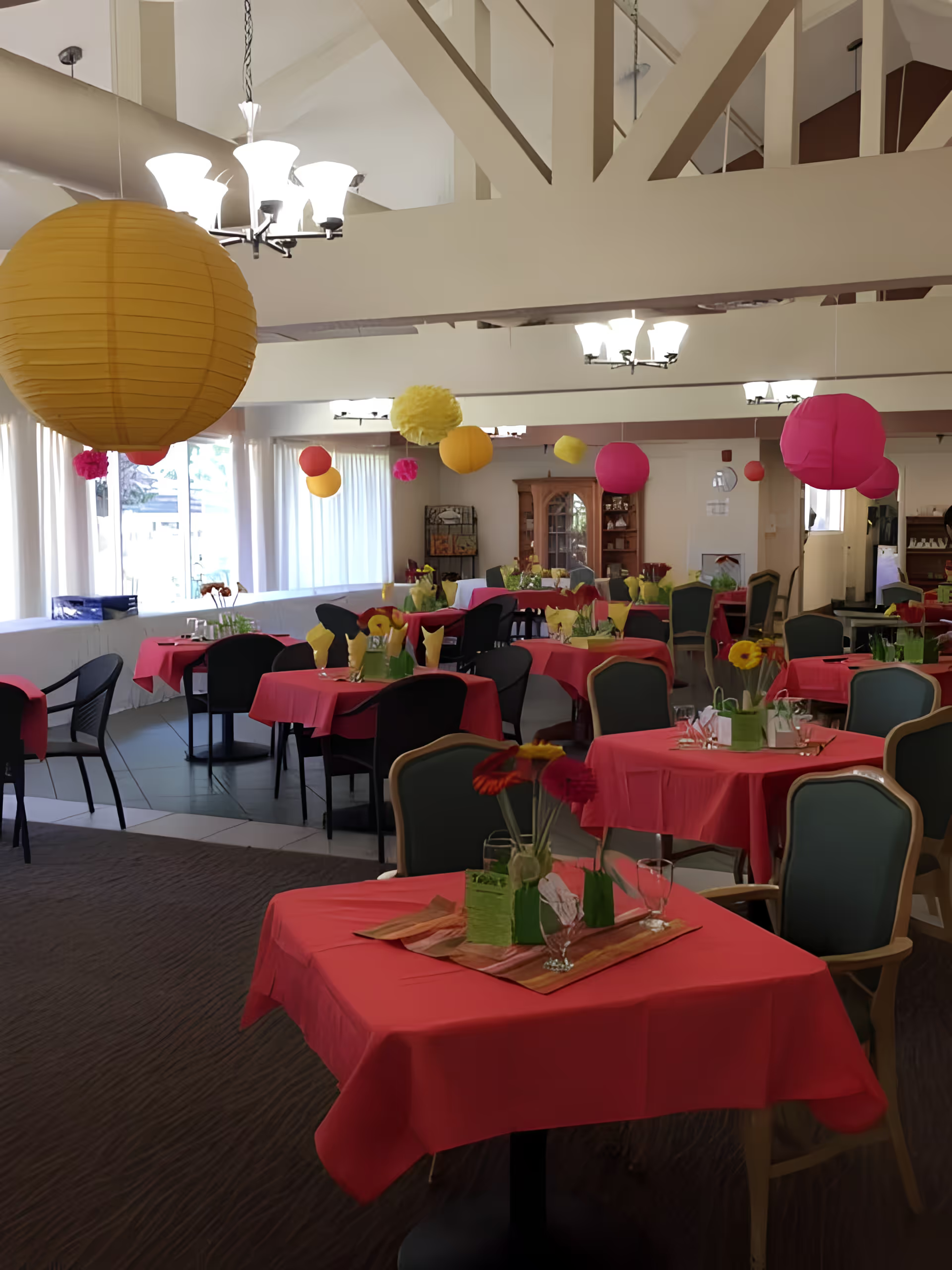
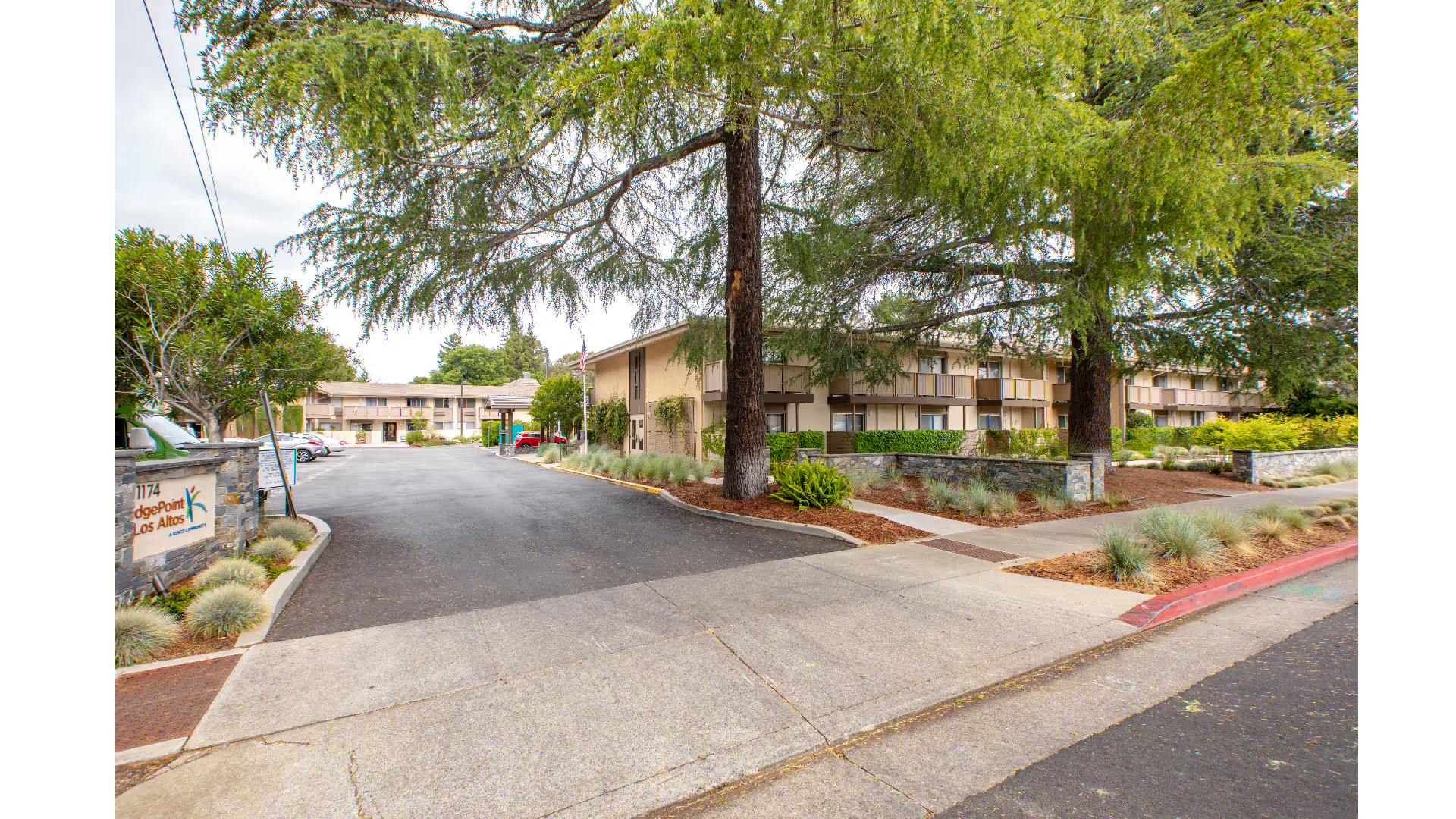
Dining and activities are likewise split. The activities department and organized events are frequently commended and appear to contribute positively to resident quality of life. Meal quality and service reliability are more commonly criticized, with comments about unappealing menu items and long delivery times. Facility and campus characteristics include a secure, gated courtyard and proximity to Stanford Hospital, which families value; however, parking is described as difficult and some areas are characterized as hospital‑like rather than homelike. Rooming options vary from private rooms to multi‑person rooms (up to four), which can limit privacy and personal space for residents in shared rooms.
Operationally, reviewers point to persistent communication challenges: difficulty reaching the facility by phone, delayed callbacks, and inconsistent family updates from nursing and social services. There are also multiple mentions of discharge coordination problems and billing or administrative friction that families are advised to clarify in advance. Sanitation and cleanliness impressions vary — some reviewers describe meticulously maintained spaces, while others describe sanitation and hygiene concerns in specific units.
Notable patterns for prospective families: the facility appears capable of providing strong, therapy‑driven rehabilitation and has many compassionate caregivers, but outcomes and daily experience are sensitive to staffing levels, unit assignment, and leadership presence. When considering this facility, visitors should prioritize a tour of the specific unit, ask about current staffing ratios and night coverage, review wound‑care protocols and medication administration safeguards, confirm phone and family‑communication processes, verify room configuration and privacy options, and clarify discharge and billing procedures. These steps will help align expectations with the significant variability reflected across experiences.