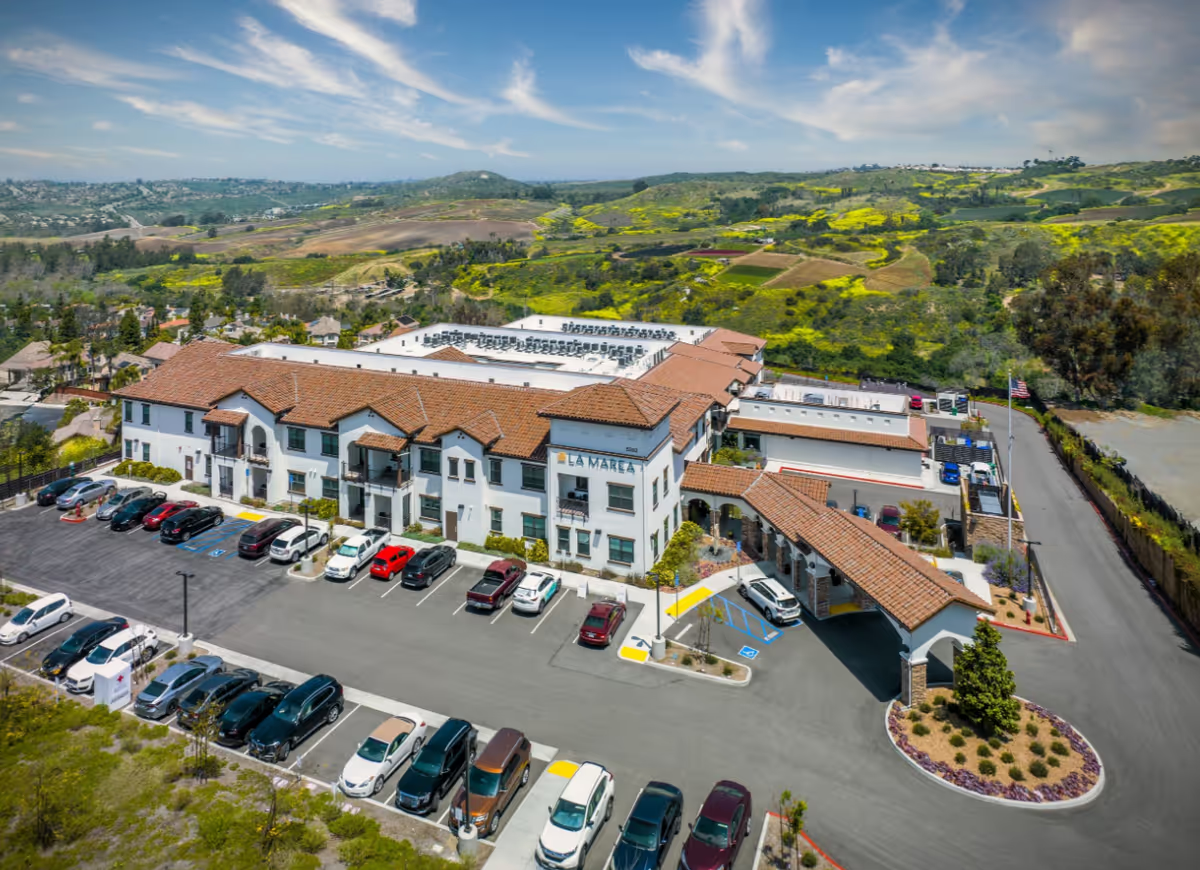
Reviews of Everest at Oceanside present a mixed but informative picture. Numerous families and residents describe warm, attentive front-line caregivers, skilled med‑tech and nursing staff, an active activities calendar, and a clean, well-maintained campus with multiple on-site amenities (salon, theater, library, garden). Assisted-living apartments are frequently described as bright and roomy, dining is often characterized as restaurant-style with varied menu choices, and hospice integration and continuity of care are noted positively by several families.
At the same time, a recurring pattern of operational concerns appears across reviews. Reviewers describe frequent leadership and director turnover, inconsistent caregiver assignments, and gaps in training and staffing within the memory-care unit. Those operational patterns are associated with incidents of delayed clinical attention, missed or inconsistent medication and bathing schedules, incomplete communication to families after incidents, and issues with monitoring residents who are at higher risk of falls or disorientation. Memory-care accommodations are described as smaller with some shared-bathroom configurations, which contrasts with the larger assisted-living units.
Dining and activities are overall strengths, but execution is uneven according to reviewers. While many residents enjoy the social programming and regular events, several accounts cite variable meal temperature and preparation, occasional reductions in menu variety, and service slowdowns. Housekeeping and personal‑item management are another area of divergence: while common areas are often praised for cleanliness, there are reports indicating inconsistent room maintenance and challenges tracking residents’ belongings.
Management and ownership changes are a notable theme. Several observers linked changes in leadership or ownership to reductions in services, altered staffing levels, or modified dining and activity offerings. Positive reviews tend to emphasize long‑tenured staff, attentive managers and nurses, and a family‑like atmosphere; negative accounts tend to emphasize inconsistent staffing, communication gaps, and safety/monitoring issues.
Practical considerations for families: clarify current staffing levels and turnover, request written incident‑reporting and family‑notification procedures, inspect memory‑care room sizes and bathroom arrangements, ask for sample care plans and dementia‑training protocols, and obtain a clear fee schedule that lists any extra charges (laundry, move‑in fees, etc.). An in-person tour at different times of day, direct conversations with nursing staff, and references from current resident families can help assess whether the facility’s strengths align with a prospective resident’s needs.