Reviews of GEM Transitional Care Center present a mixed picture: many families and patients praise the compassion and teamwork of frontline staff and cite successful rehabilitation outcomes, while others describe operational and clinical weaknesses that materially affect care experience. Positive comments center on warm, attentive nursing and nursing-assistant interactions, clear nurse-to-family updates, an active activity program, and instances of effective short-term and long-term rehabilitation that helped patients regain mobility.
Care-quality strengths coexist with notable concerns. While some residents received attentive rehabilitation and supportive nursing care, reviewers also described inconsistent clinical performance, including concerns about medication and chronic-condition management (notably diabetes care) and instances where acuity recognition or decisions about emergency transfer appeared delayed. Staffing levels and shift-coverage reliability were a recurring theme; understaffing and uneven handoffs were linked to missed or delayed assistance, shorter-than-expected therapy sessions, and fractured communication between day and night teams.
Dining and activities are areas of contrast. The facility provides generous, hot meals and an active activities calendar and communal spaces where residents engage, which reviewers appreciated. At the same time, portion size and meal consistency were raised as an issue for some residents. The rehabilitation team receives praise in many accounts for focused therapy and coordination, but reviewers also reported therapy scheduling problems, removed therapy days, and limited daily therapy duration in other instances.
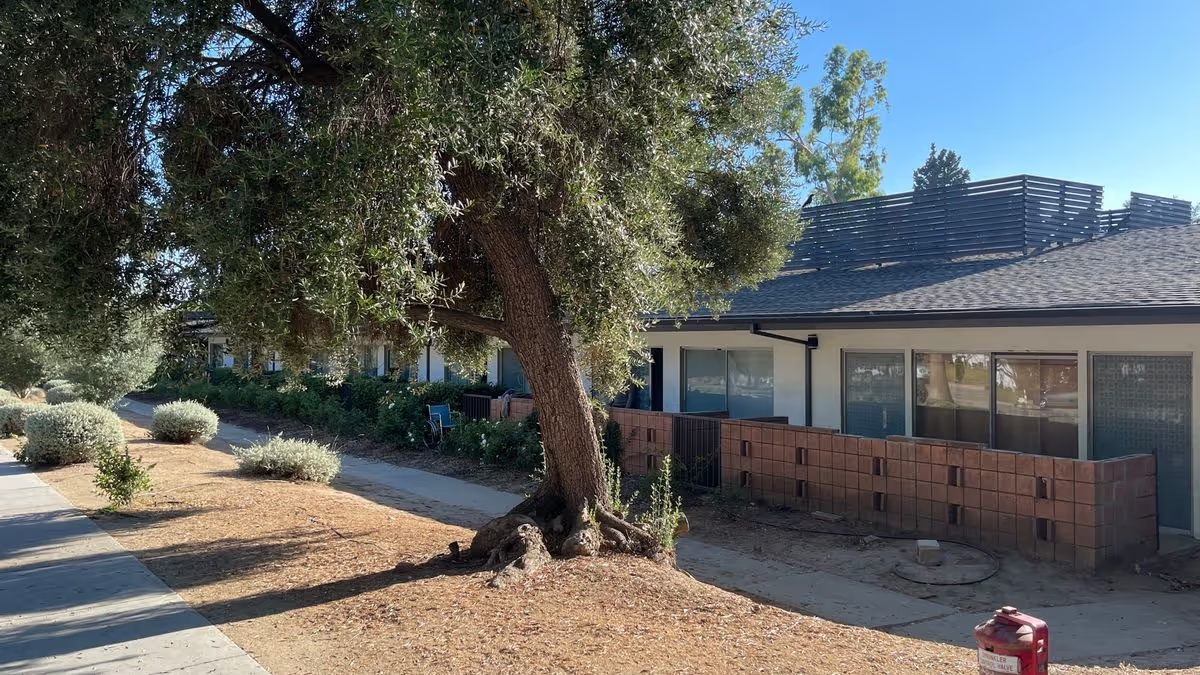
Facility condition and infection-prevention practices were described inconsistently. Several reviewers described clean, pleasant common areas and attentive housekeeping, while others raised sanitation and pest-control concerns, odor issues in some hallways, and the need for updated bathrooms, mattresses, and mobility equipment. Limited availability of private rooms was also noted. Security and property-management practices require attention: multiple accounts describe missing personal items and unclear inventory or retrieval processes, which has undermined family confidence.
Management, documentation, and accountability emerged as important patterns. Reviewers cited gaps in incident documentation, delayed or inadequate follow-up with families, and an unresponsive or unavailable on-site social-work presence in some cases. Administrative turnover and a recently changed leadership team were mentioned, and several reviews urged clearer policies on incident response, reporting, and family communication. There are also references to alleged serious conduct and legal/administrative follow-up in isolated incidents, which prospective families should investigate further through facility records and oversight agencies.
For prospective residents and family members: arrange an in-person tour that includes observation of shift-change interactions, review of therapy schedules and average therapy minutes per day, inquiry into staffing ratios, infection-control and pest-control policies, personal-belonging security procedures, and examples of incident-reporting and family-notification practices. Reviewing recent inspection reports and asking for references from recent families can help clarify whether the facility’s strengths align with your expectations and whether identified operational weaknesses have been addressed.