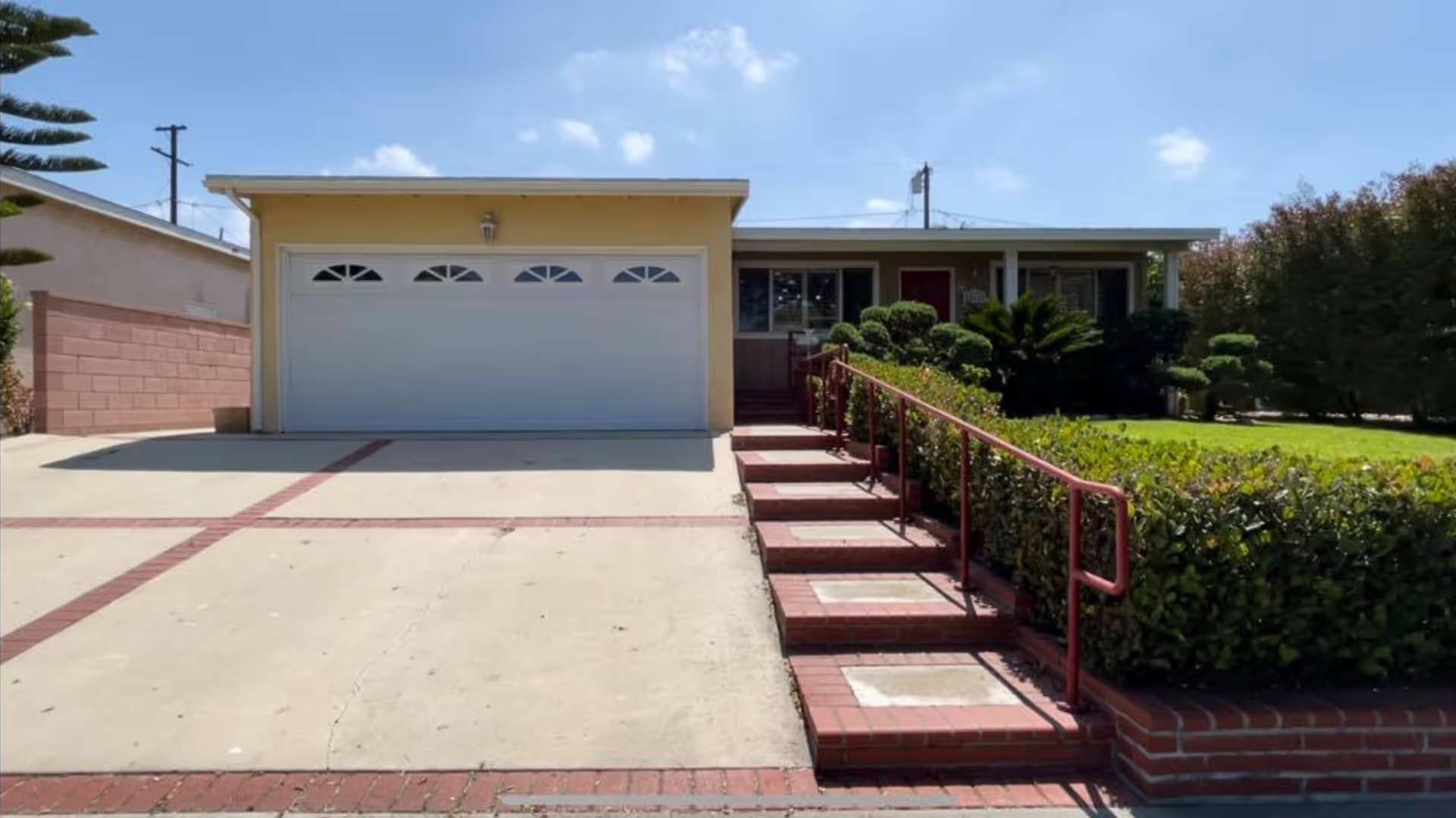
The reviews present a mixed picture, with a clear split between accounts describing a small, attentive setting and accounts describing operational shortcomings. Several families praised individualized care in a small community, daily assistance with bathing and personal tasks, and home-style meals served three times a day. Those positive accounts emphasize a clean interior, caring staff, and a scale (very few residents) that can support personalized attention.
Care and staff impressions vary. Positive reviewers describe staff as attentive and genuinely caring, with help available for grooming and mobility and a sense of safety and contentment for residents. Conversely, other reviewers raised concerns about inconsistent staff responsiveness, communication problems with management, and instances where family members felt blamed rather than supported. These contrasting reports suggest variability in staff performance or differences in expectations between families.
Dining and activities are described in divergent ways. Some families appreciated home-cooked meals and regular meal service, while others experienced limited menu options and variable food quality; specific limitations on menu variety were noted. Activity programming appears limited in certain accounts (small common-space use or television-focused options), although a small community size may mean fewer formal activities and more informal social contact.
Facility issues include several operational concerns. Reviewers described inadequate climate control leading to uncomfortable indoor temperatures, and lapses in sanitation or availability of basic supplies. There are also reports that resident mobility and visitation policies have been handled inconsistently—accounts reference both restrictive practices and confusion about visiting hours. These operational gaps affect comfort and family confidence in care.
Management and value perceptions are another salient pattern. Some reviewers perceive a management focus on financial priorities and a mismatch between advertised services and actual practice, producing questions about overall value relative to cost. At the same time, other families found pricing fair given the small-community model and level of hands-on assistance.
Overall, the facility appears to offer strengths typical of a small, home-like setting—personalized attention, helpful daily care, and home-cooked meals for some residents—but also exhibits operational inconsistencies that have significant impact on family confidence. Prospective residents and families should tour during different times of day to assess climate control, sanitation practices, meal variety, activity options, staff interactions, and the facility’s visitation and mobility policies. Asking for written details on services, staffing patterns, and how management handles family concerns may clarify whether the facility’s operating style matches the family’s expectations.