Reviews of Jurupa Hills Post Acute are mixed and present a clear split between clinical/rehabilitation strengths and operational reliability concerns. Many families and residents describe strong, recovery-oriented therapy services, attentive CNAs and nurses, and an engaged activities program that contributes to a home-like atmosphere for long-term residents. Several reviewers named specific staff and managers positively and credited the facility with measurable functional improvements, effective wound care, and coordinated interdisciplinary support that enabled safe discharges home.
Care quality shows two distinct patterns. On the positive side, the facility demonstrates an effective rehab focus: physical and occupational therapy are frequently described as helpful, and therapists achieve tangible mobility and self-care gains. Nursing and aide staff are often characterized as compassionate and supportive, with case managers and supervisors noted for responsiveness. On the other hand, a substantial number of reviews raise concerns about medication administration, clinical monitoring (including vital-sign documentation), and timeliness of acute clinical response. Those operational gaps are associated with serious family concerns and, in a few cases, clinical escalation that required hospital transfer.
Staffing and communication are recurring themes. Praise centers on friendly, knowledgeable daytime teams, bilingual staff, and supervisors who provide clear information. However, reviewers also indicate variability in staff conduct and responsiveness: delayed call responses, inconsistent phone communication with families, and uneven attention during night shifts. Several comments specifically call out reduced overnight staffing and limited on-site nursing coverage as contributors to these challenges.
Dining and activities receive mixed feedback. The activities program, celebrations, and social offerings are frequently highlighted as strengths that support resident quality of life. Dietary services are praised for accommodating special diets and for some positive meal experiences; conversely, other reviews describe inconsistent meal quality and interruptions in regular meal service during certain periods.
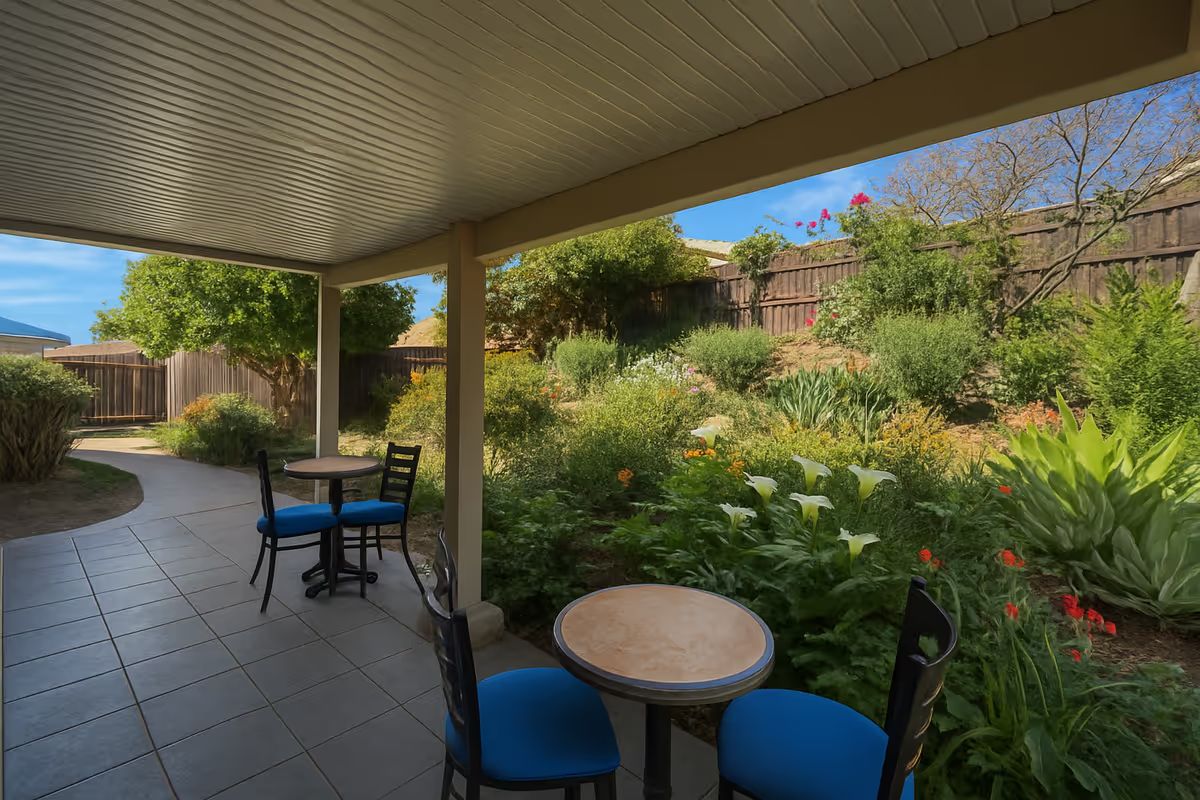
Facility condition and infection control are similarly mixed. Many reviewers note clean rooms, bright common areas, and a welcoming reception area. Conversely, there are repeated cleanliness and odor concerns in some units and expressed worries about infection-control practices, including an outbreak event that prompted elevated concern from families. Documentation reliability is another operational issue: several reviewers described discrepancies or problems with record-keeping and billing that merit attention.
Management and safety observations reflect both strengths and weaknesses. The facility has been credited with competent emergency handling in at least one severe event (a power outage) and with team-oriented leadership. At the same time, reviewers raised systemic safety issues such as roommate-placement problems, behavioral incidents, delays in transporting residents to higher-level care, and property-handling concerns. There are also serious allegations from some families regarding documentation falsification and substance use on premises; those claims are acute and would warrant investigation by responsible authorities.
Overall pattern and guidance: Jurupa Hills appears to offer strong rehabilitative care and a supportive social environment for many residents, with particular strengths in therapy, long-term resident engagement, and certain elements of nursing care. However, variability in operational practices — night staffing, medication and monitoring procedures, cleanliness/infection-control consistency, documentation accuracy, and communication with families — creates uneven experiences. Prospective residents and families should plan an in-person visit that includes questions about overnight staffing ratios, medication-administration and monitoring protocols, infection-control policies, roommate-assignment practices, emergency-transfer procedures, and how the facility documents and communicates clinical events. These targeted inquiries will help determine whether the facility’s strengths align with the needs and risk profile of the individual resident.