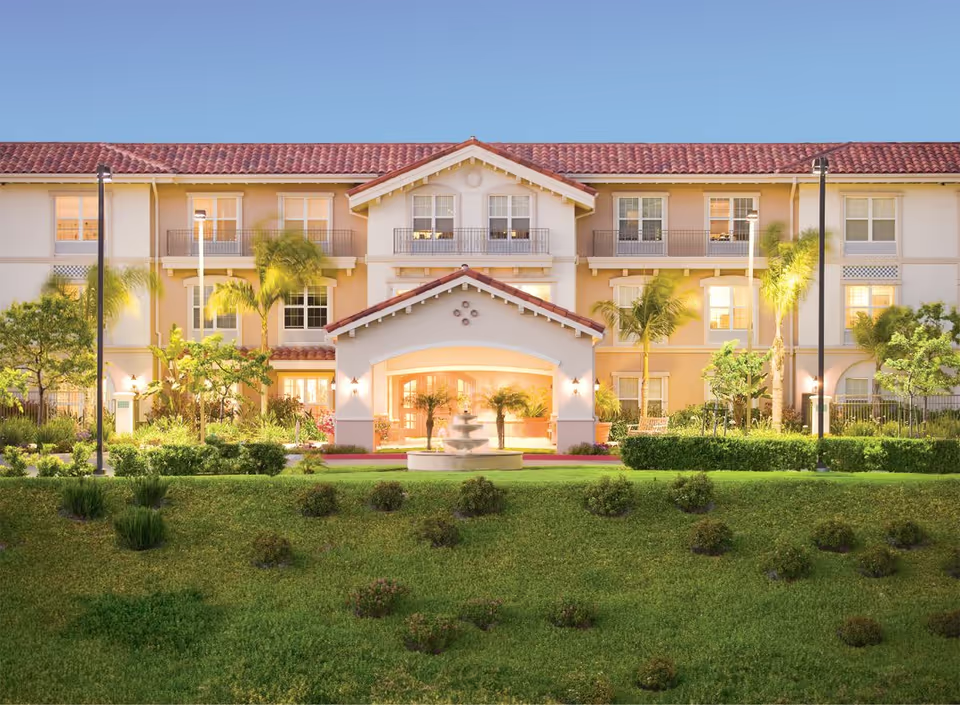
Reviewers present a largely positive view of daily life at Merrill Gardens at Rolling Hills Estates alongside a set of recurring operational concerns. Strengths most often cited relate to the people and the physical plant: many families describe compassionate, attentive caregiving and a memory-care team that offers reassuring, personalized attention. Admissions and move-in experiences are frequently described as smooth and supportive, and front-desk, dining, and caregiving staff are noted for a welcoming, family-like tone. The building and grounds are consistently praised as new or well-maintained, with bright common areas, balconies, gardens, and an array of amenities such as a movie theater, gym, salon, and communal sitting areas.
Dining and activities are generally strengths but appear inconsistent. Several reviews praise dining staff who go above and beyond and a varied activities calendar that includes holidays, movies, exercises, and resident-led programs. At the same time, other comments describe uneven meal quality and limited creative programming in some areas—indicating that dining and activity experience may vary by day or by household. Memory-care programming receives positive notes for staff engagement, though some families describe a small unit size and areas where staff experience is still developing.
Operational and management patterns are the principal source of concern. Multiple reviewers cite unstable staffing and high turnover, which can affect continuity of care. Relatedly, there are concerns about clinical oversight and medication-management practices, and some accounts raise sanitation and pest-control concerns in particular units. Administrative issues—such as gaps in office staff knowledge about service tiers and pricing, sudden rent increases or high parking fees, and uneven responsiveness to families—are also present in the feedback. These comments point to variability in management consistency and communication rather than a single universal failure.
For prospective residents and families, the overall picture is mixed but largely positive in day-to-day resident experience when staffing is stable: a well-kept facility, active programming, and many staff who are described as caring and responsive. However, the recurring operational themes—staffing stability, clinical oversight, sanitation controls, dining consistency, and transparent fee communication—are important to explore during a tour. Suggested topics for follow-up include current staffing ratios and turnover history, medication-administration and clinical oversight protocols, pest-control and sanitation procedures, dining sample menus and meal scheduling, details of fees and rent-increase policies, and the scope and staffing of memory-care programming.