Mission Care & Rehabilitation Center elicits a mixed but clear pattern: many reviewers praise clinical therapy, hands-on nursing, and a well-maintained environment, while others identify operational and communication weaknesses that affect family confidence and continuity of care.
Care quality and therapy are commonly cited strengths. Physical, occupational, and speech therapy teams receive frequent positive comments for restoring function and facilitating rapid recoveries; reviewers credit therapists and specific clinicians with helping residents regain mobility. Wound care and rehabilitation outcomes are also praised, and multiple accounts describe attentive, compassionate nurses and CNAs who provide patient-centered bedside care. The facility’s experienced, long-tenured staff and an overall warm, family-like culture are recurring positives that many families associate with good clinical attention.
Staffing and responsiveness show notable variability. Although many families describe kind, patient staff and effective clinical teams, others report long waits for assistance, reduced staffing during evenings, and delays in responding to call lights or family inquiries. These responsiveness issues appear to be operational (shift-level staffing and workload) rather than uniformly systemic, leading to inconsistent day-to-day experiences for residents and families.
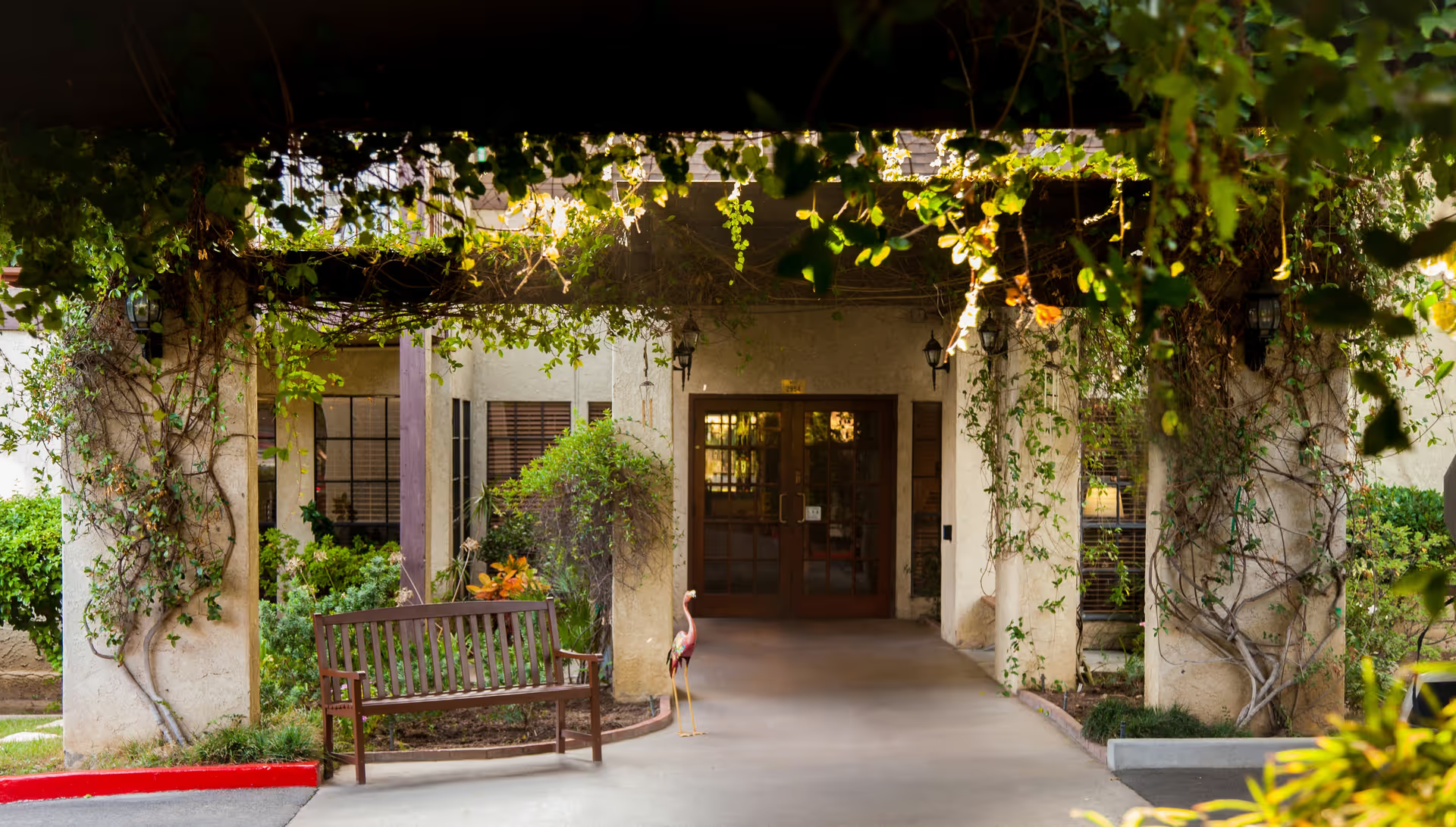
Dining, activities, and facilities present a split picture. The building is frequently described as clean, well-maintained, and comfortable, with private-room options and exercise/activity programming that support rehabilitation. At the same time, meal quality and dining responsiveness are frequently critiqued; tray placement and meal-service responsiveness are cited as areas for improvement. The facility is also noted for accommodating dietary preferences on occasion and for providing meaningful therapy-based activities.
Management, discharge, and administrative processes are common sources of friction. Several reviewers describe challenges with discharge planning, including coordination of home equipment and timely delivery, and instances where discharge instructions or medication continuity were not handled smoothly. Business-office staff are sometimes praised for knowledge of Medicare/HMO/Medi‑Cal billing, yet other families report billing disputes or unclear billing communication. Complaint-resolution pathways, follow-up from social work, and front-desk responsiveness are inconsistent—some families experience supportive administrators and follow-up calls, while others find the office unresponsive or insensitive.
Safety and sanitation concerns appear intermittently. Most accounts describe a clean facility and attentive environmental services, but a number of reviewers raise sanitation and incontinence-care concerns during certain shifts, along with isolated reports that suggest lapses in equipment sanitation or linen handling timeliness. There are also a limited set of serious allegations concerning clinical-safety events; these are distinct from the broader patterns and have been characterized by some families as severe. Such allegations warrant careful review by prospective families and by regulators or the facility’s leadership.
Overall, Mission Care & Rehabilitation Center demonstrates strong rehabilitative capability and many dedicated caregivers, producing good outcomes for numerous residents. Prospective residents and families should weigh the facility’s therapy strengths and generally positive staffing culture against variability in administrative communication, discharge coordination, dining quality, and shift-to-shift responsiveness. Asking targeted questions about discharge-planning procedures, evening staffing ratios, meal-service protocols, and complaint-resolution practices will help families assess whether the facility’s operational practices align with their expectations and clinical needs.