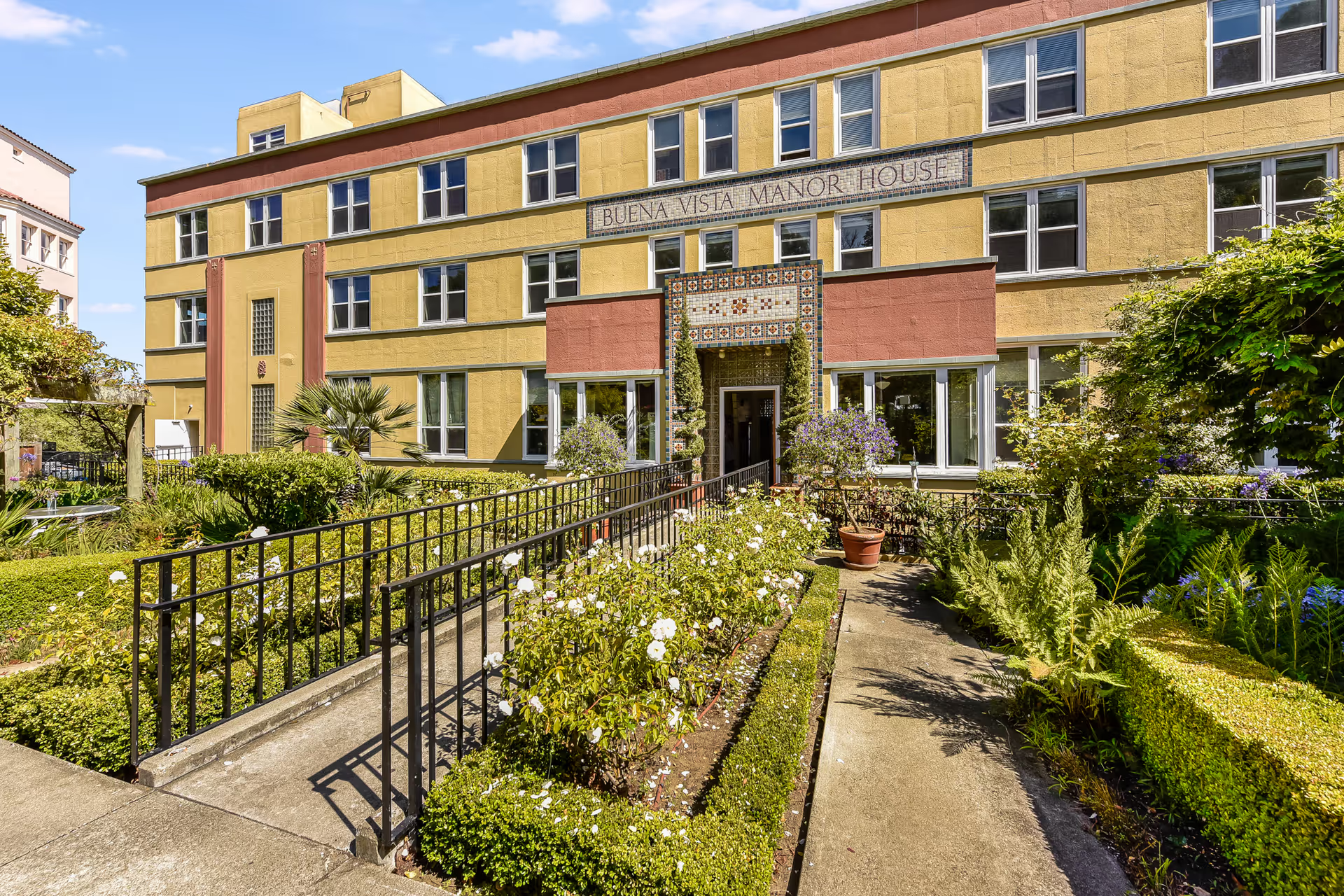
Overall impression: Reviews indicate that Farol Residential Care Homes provides a generally pleasant, well-kept living environment with staff who are described as caring and professional. The facility itself is viewed positively for its appearance and cleanliness, and daytime caregivers are consistently characterized as attentive. These strengths suggest a strong emphasis on maintaining a comfortable, home-like setting and a responsive daytime care culture.
Care and staff: Daytime caregiving is commonly described as competent and compassionate, and reviewers emphasize respectful staff–resident interactions. However, there are consistent indications of variability between shifts: daytime care is reliable, while night shift responsiveness appears inconsistent. One account describes a daytime caregiver escalating an issue that did not receive timely attention during the night shift, which points to uneven staffing performance and possible weaknesses in overnight coverage or protocols.
Clinical and hygiene practices: The facility’s cleanliness and general upkeep are noted as positive attributes. At the same time, reviewers raise incontinence-care concerns specific to morning routines, suggesting delays or gaps in timely personal-care assistance during early hours. This pattern indicates a potential operational shortcoming in morning staffing levels, handoff procedures, or prioritization of personal-care tasks.
Activities and dining: Activity programming is described as limited, with reviewers noting a desire for more social or engagement options. Dining was not frequently commented on in the provided summaries; absent explicit feedback, prospective families should inquire directly about menu variety, meal-service routines, and accommodations for special diets during a tour.
Facilities and management: The physical environment receives positive remarks for being attractive and well-maintained. Management appears to have some escalation processes in place—daytime staff escalated concerns when needed—but there are gaps in after-hours responsiveness and escalation effectiveness. This suggests that policies or staffing for overnight and early-morning hours may need reinforcement, as does the communication loop between shifts and families.
Notable patterns and recommendations: The primary pattern is a contrast between strong daytime service and weaker overnight/early-morning responsiveness, along with limited activity programming. For prospective residents and families, recommended topics to address with management before placement include overnight staffing ratios and protocols, morning personal-care schedules, specific examples of activity calendars, and how after-hours incidents are escalated and communicated to families. These inquiries can help confirm whether the facility’s daytime strengths are matched by consistent care across all shifts.