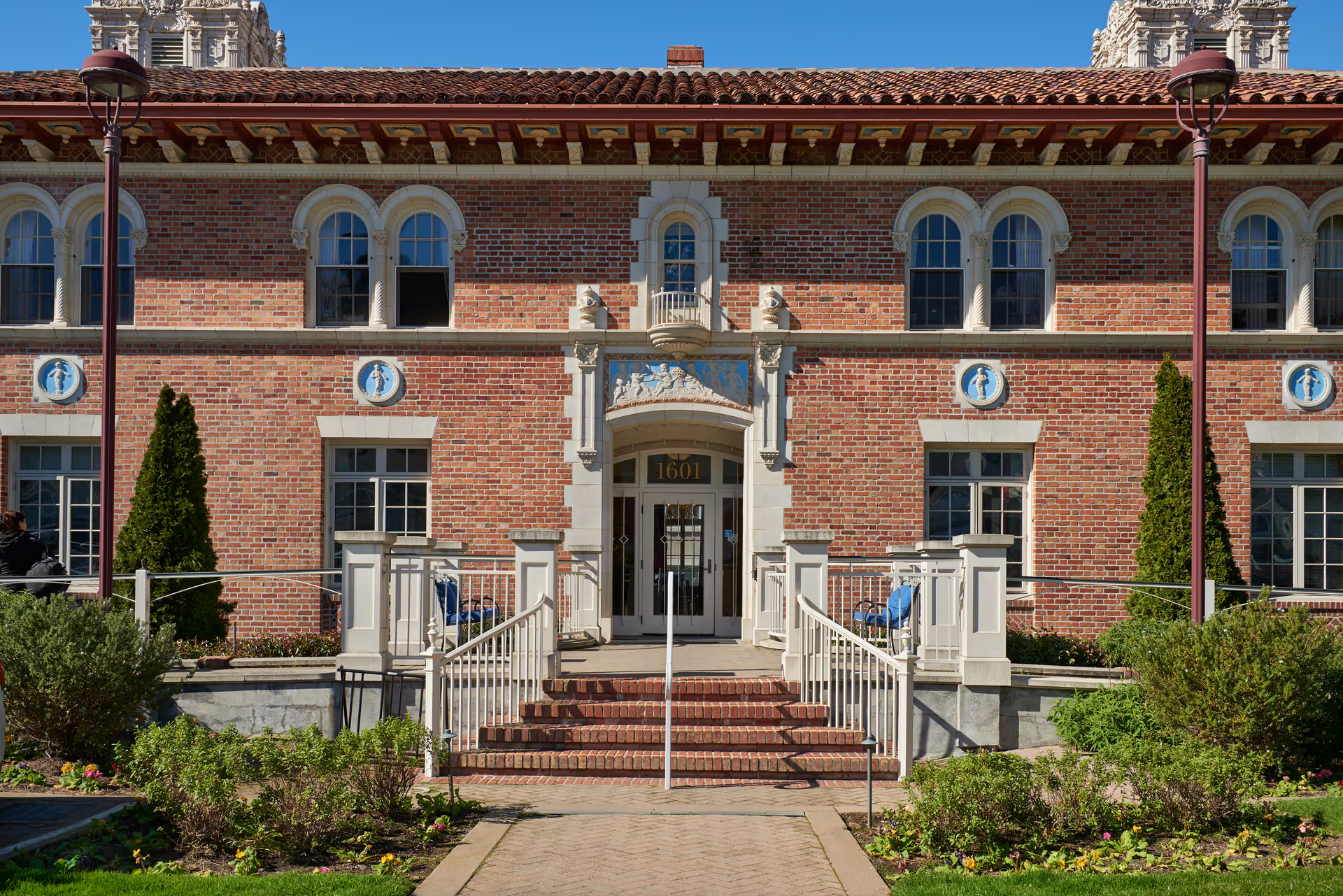
Overall sentiment across the reviews is strongly positive about the people and the location, with consistent praise for staff, dining, cleanliness, and the building’s historic charm. The most frequently mentioned strengths are the quality and compassion of the staff — reviewers repeatedly use terms like "outstanding," "incredibly caring," "warmth and compassion," and "excellent" — indicating that personal care and interpersonal engagement are core strengths. Cleanliness and general quality standards are also called out repeatedly, reinforcing a perception of reliable day-to-day operations.
Care quality and staff: The dominant theme is the high caliber of staff. Multiple summaries highlight compassion, friendliness, and knowledgeability, which suggests that residents and families experience attentive, respectful care. The staff reputation appears to contribute strongly to the community’s positive standing in the area. That said, reviews do not describe on-site clinical services in detail; rather they emphasize interpersonal care and support, which is a key distinction for prospective residents assessing staff strengths versus available medical services.
Facilities and setting: The property’s historic charm and scenic location are major selling points. Reviewers describe the facility as "charming," "beautiful," and having "spectacular views," and they note a "small community" atmosphere that will appeal to people seeking a boutique or intimate setting. At the same time, several summaries indicate the facility feels "outdated" in places, though there are signs of "refurbishing" or updates underway. This creates a mixed picture: architectural and locational appeal combined with some areas that could use modernization. Prospective residents should reconcile the appeal of historic character with any accessibility or amenity limitations that come with an older building.
Dining: Dining receives uniformly positive remarks. Reviews call the food "delicious," "diverse," and "top‑notch quality," indicating a strong culinary program and menu variety. For many residents, high-quality dining can be a significant quality-of-life factor, and these comments suggest the community performs well in that area.
Activities and social life: The community is described as "small" with "fewer events" than larger complexes, but reviewers also state there are "enough to keep people busy." This suggests a moderate activity calendar that may suit residents who prefer a quieter, less intensive social schedule. Those seeking a robust calendar of daily events, frequent offsite excursions, or a very active social scene should verify the current activity offerings and compare them to larger communities.
Management, logistics, and limitations: Several practical concerns arise repeatedly. The community reportedly has "no continuing care on-site," which is a critical limitation for people who want a seamless continuum from independent or assisted living to higher-level skilled nursing care. Availability is another recurring issue: reviewers note "no rooms available" and frame a move as "not urgent," implying potential waitlists or limited turnover. The "payment structure" is mentioned as a point to review — this may reflect pricing format, deposit/refund rules, or contract terms that prospective residents should examine closely. Together, these operational points suggest that while the community offers strong daily living and personal-care attributes, it may not be the best option for someone who anticipates needing on-site nursing care in the future or who requires immediate move-in.
Patterns and recommendations: In summary, Heritage on the Marina appears to be an attractive option for residents who prioritize compassionate, high-quality staff; excellent dining; a clean environment; and a picturesque, historic setting with a small-community feel. The trade-offs are an activity program that is modest rather than extensive, some parts of the building feeling dated (albeit with refurbishing in progress), limited availability, and the absence of on-site continuing care. Prospective residents should (1) verify current room availability and waitlist procedures, (2) review the payment structure and contract terms in detail, (3) ask for a timeline and scope for refurbishing projects, (4) confirm the exact level of medical and nursing services available and transition options if higher care becomes necessary, and (5) sample dining and view a current activities calendar to ensure the social offerings match personal preferences. For the right candidate — someone looking for a compassionate, boutique community in a scenic location and who does not require a care continuum on-site — the community appears to be a strong fit. For those who need immediate move-in, more frequent activities, or guaranteed access to higher-level medical care, this community may present important limitations.