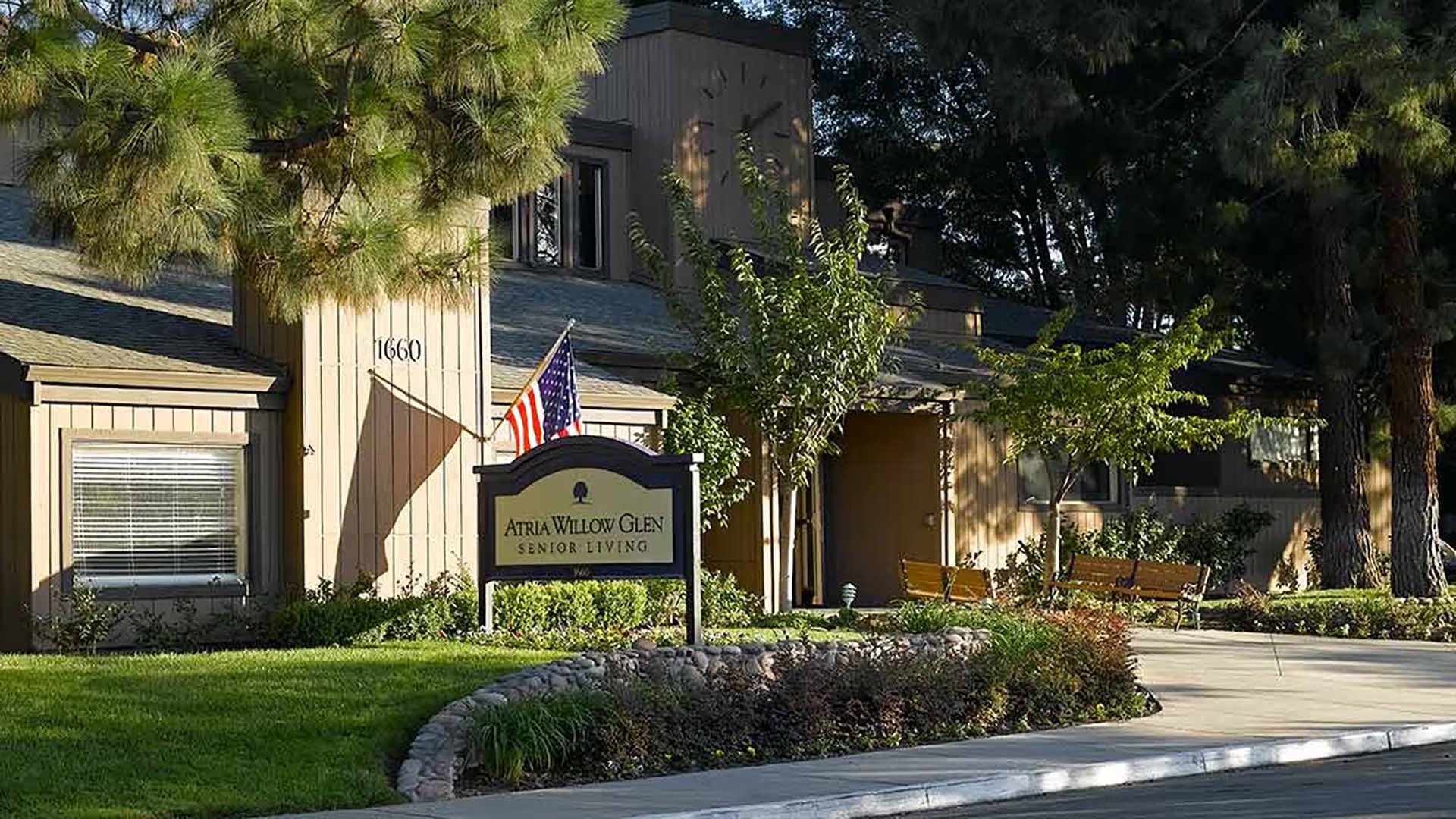
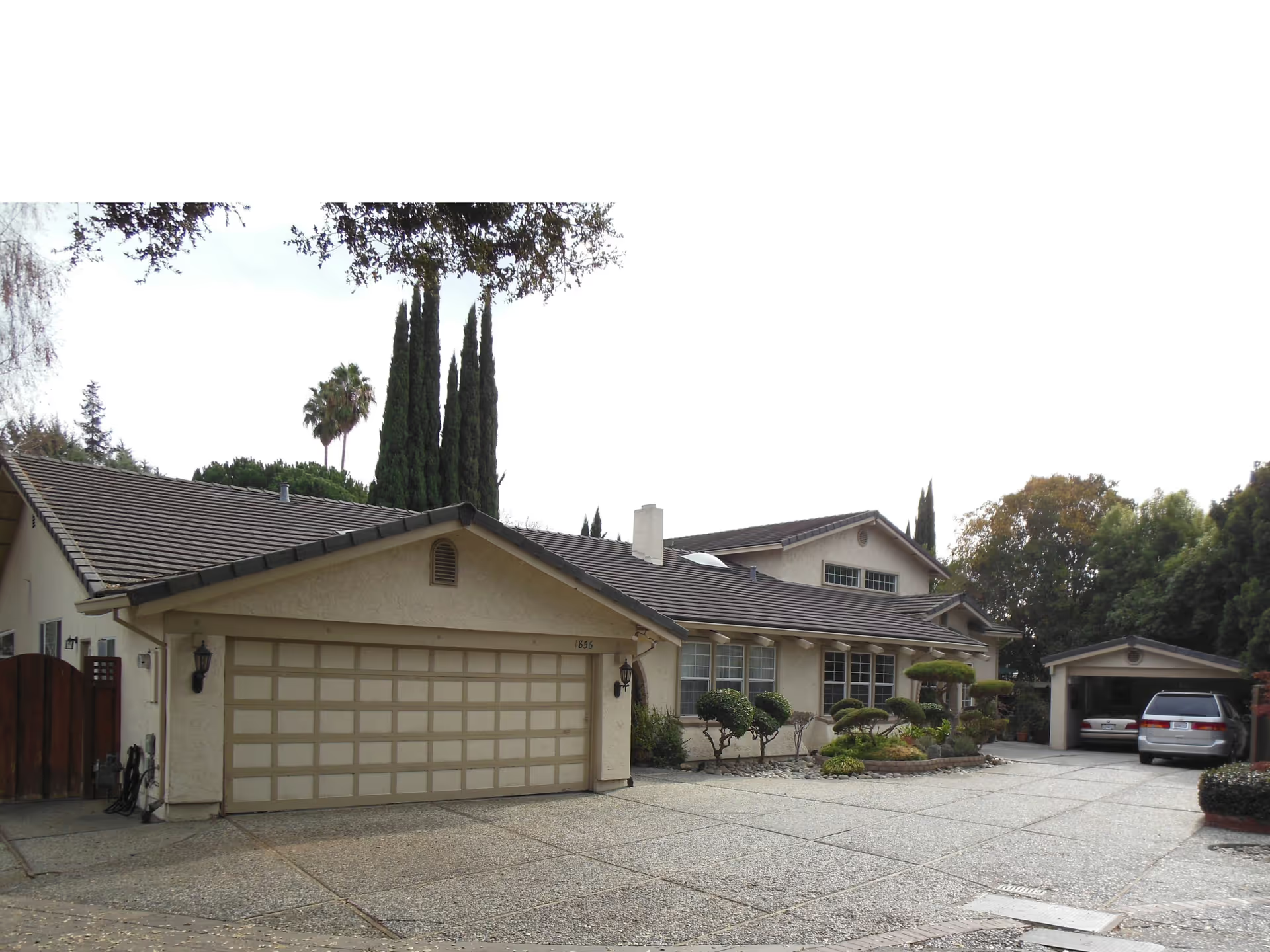
Empress Care Center elicits a broadly mixed but coherent set of impressions: many families praise the personal warmth and professionalism of direct-care staff while others raise operational concerns that relate to clinical escalation, responsiveness, and communication. Strengths cited repeatedly include long-tenured caregivers, attentive nurses and CNAs, a clean and welcoming interior, and programming that promotes social engagement. Several reviewers described an environment that feels home-like and supportive, and external quality ratings were noted positively by some families.
Care quality at the unit level is generally described as compassionate and capable. Reviewers referenced nurses and CNAs who provide hands-on assistance and who can improve residents' quality of life through daily support and activities. At the same time, a number of accounts point to intermittent failures in timely clinical assessment and escalation — for example, delays in addressing changes in condition and delayed notification of physicians — which suggest the facility's clinical-response processes may be uneven.
Staff strengths center on tenure, friendliness, and professionalism: many comments praised accommodating reception and charge nurses, and highlighted staff members who 'go the extra mile.' Conversely, operational complaints clustered around slow responsiveness to repeated requests, variability in staff tone (including instances described as dismissive), and limited mechanisms for documenting or escalating family concerns — reviewers specifically noted a lack of a clear complaint form or process.
Activity and communal life are described positively; activities such as group games create a social atmosphere that families find comforting. Dining was not a frequent focus in the provided summaries, so there is insufficient detail to characterize meal quality or service patterns with confidence.
Facility features are a mix of positives and trade-offs. The building is described as older but cozy and well maintained, with a clean, odor-free presentation. Shared rooms with curtain dividers and a somewhat clinical or hospital-like aesthetic were mentioned as reducing privacy for some residents; families considering private vs. shared accommodations should weigh that factor against the facility's atmosphere and staffing strengths. Several reviewers noted the location and overall cleanliness as advantages.
Management and communication show a divergence between managerial demeanor and operational follow-through. While some families found the director and administrative staff personable during tours, others experienced inconsistent follow-up and difficulty obtaining clear medical documentation (including questions about lab or infection-result communication). Cost was raised as a concern by some reviewers, who perceived room rates as high relative to the facility's age and layout.
Notable patterns: there is a clear consensus that direct caregivers are a primary strength, but recurring operational themes — inconsistent clinical escalation, communication gaps with families and external clinicians, variable responsiveness, and privacy trade-offs in shared rooms — are important to consider. Prospective residents and families should prioritize a focused conversation on the facility's incident-response protocols, complaint and documentation procedures, room-configuration options, and billing/room-rate structure during tours and intake discussions to align expectations with observed strengths and weaknesses.