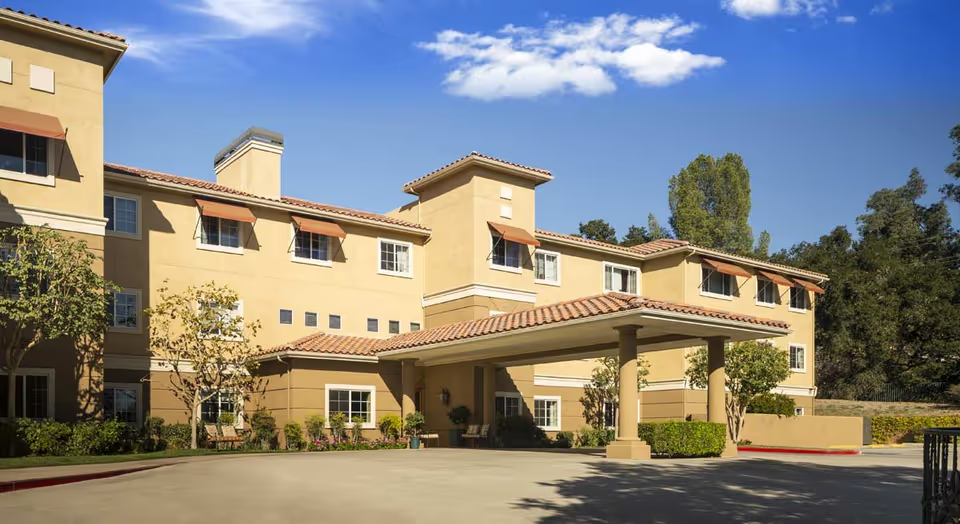
Oakmont of Santa Clarita presents as a high-end, recently built senior living community with a wide range of amenities and services. Reviewers consistently note the facility’s hotel-like appearance, well-maintained grounds, bright common areas, and apartment-style accommodations that are often larger than typical units. The community offers many physical resources — theater, exercise room, raised gardens, pet-friendly areas, a sizable activity room, and on-site therapy and visiting clinicians — which together create a resort-like environment for residents and families seeking a full-service option.
Staffing and care are frequently highlighted as strengths. Many accounts emphasize compassionate, attentive caregivers, capable nurses, and engaged front-office personnel who know residents by name. There are repeated mentions of strong clinical supports such as on-site physical therapy, insulin administration, fall-detection systems, and memory-care features tailored for residents with cognitive needs. Administrators and staff are also noted for responsiveness in numerous instances — quick issue resolution, personalized gestures, and proactive family communication are cited as positive behaviors.
Dining and activities are prominent features of the community. The dining program is described as chef-driven with varied menus, restaurant-style service, and special events; several reviewers praised creative offerings and all-day dining options. At the same time, food quality appears variable by meal or shift: some families described excellent, inventive meals while others were less satisfied with particular lunches or shifts. The activity calendar is broad and active — book clubs, music and entertainers, exercise classes (including adapted options), day trips, and regular off-site outings are frequently mentioned and generally well-regarded.
Despite these strengths, there are operational patterns prospective residents should consider. The community’s premium positioning carries a high cost that places it out of reach for many families; affordability and price sensitivity are recurring themes. Several accounts describe inconsistent staffing levels or coverage, and a few reviewers connected expansion or higher occupancy to strain on staff resources — implying that growth has not always been matched with proportional staffing increases. Relatedly, communication and transparency are uneven: while some families report clear pricing and proactive updates, others reported marketing or tour experiences they judged misleading or encountered lapses in advance clinical notifications.
Other practical concerns raised include occasional mishandling of resident belongings during transitions, wayfinding or site-access difficulties (entrance directions and signage), and the facility’s large scale, which may feel overwhelming or impersonal for residents who prefer smaller communities. Experiences with end-of-life and hospice coordination were mixed, indicating variability in how those services are managed and communicated. Taken together, these patterns suggest a generally high-quality environment with meaningful strengths in care, amenities, and activities, tempered by operational variability in staffing, dining consistency, communications, and cost.
For families considering Oakmont of Santa Clarita, a focused tour and direct questions will be important. Recommended topics include current staffing ratios and how they scale with occupancy, meal-sampling at different meal times, procedures for handling and documenting resident possessions during moves, hospice and end-of-life coordination processes, contract terms and pricing transparency, and whether the community’s size and activity level are a good fit for the prospective resident’s preferences and needs. These targeted inquiries will help align expectations with the community’s substantive strengths and the operational areas where reviewers describe variability.