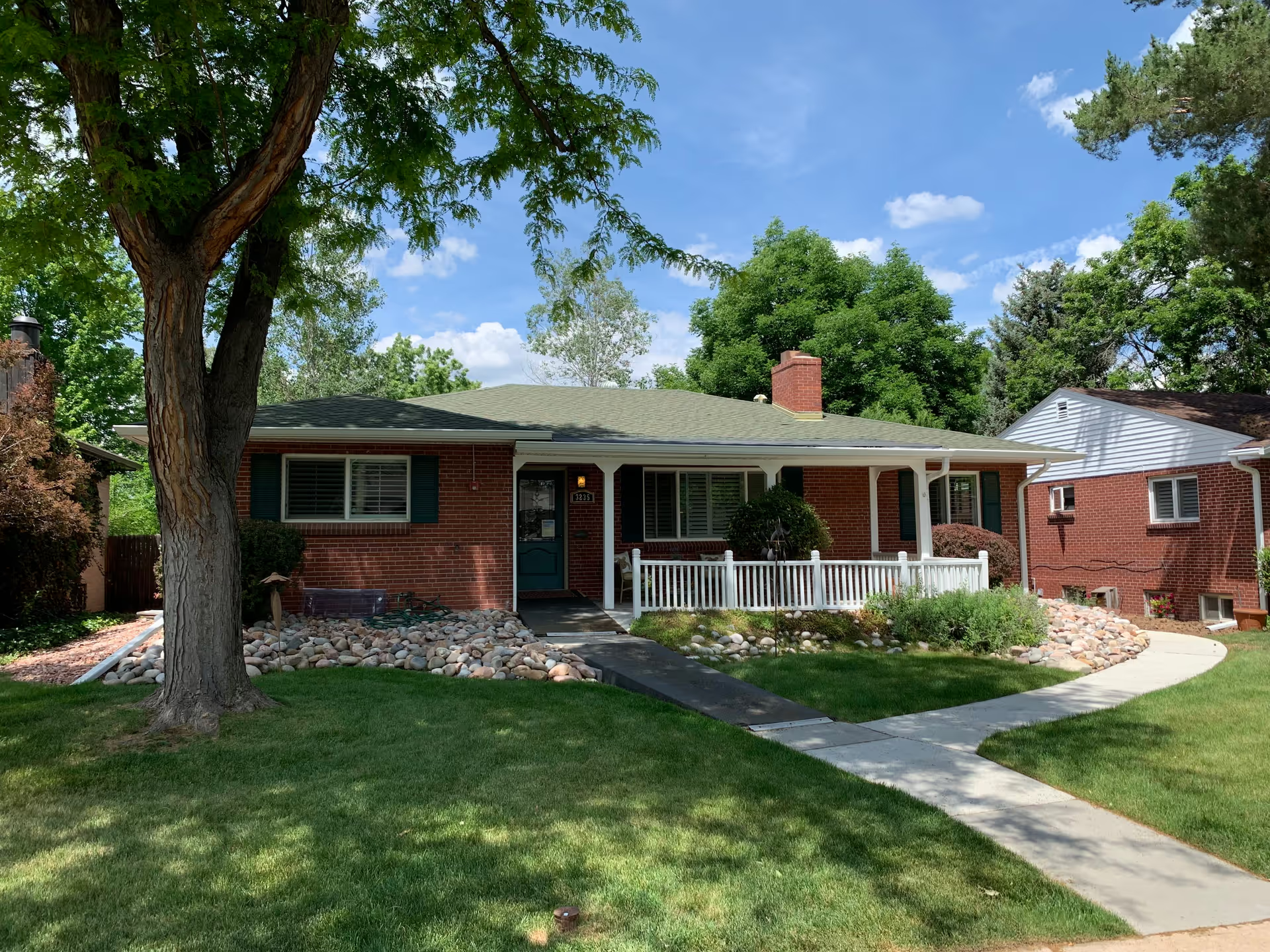
The reviews present a polarized picture of The Heights Post Acute. Many families and former residents praise the compassion and attentiveness of direct-care staff, the quality of therapists and short-term rehabilitation services, and visible facility investments such as renovated wings, updated entry seating, and improved grounds. Reviewers describe engaging social programming, bi-monthly or holiday events, and helpful social-work support, and some highlight a notably positive turnaround after recent management changes.
At the same time, a significant number of comments point to operational weaknesses that affect resident experience and safety. Staffing levels and shift coverage are described as inconsistent, with instances of slow response to care needs; this ties to broader concerns about clinical oversight, medication management, and documentation practices. Several narratives raise issues with incontinence care and repositioning, and others describe lapses in cleanliness and odor control in particular rooms or areas. Meal quality and nutritional monitoring are repeatedly described as variable, and some families reported weight loss or feeding difficulties for residents.
Communication and staff conduct are recurring themes. While many reviewers commend individual staff members and therapists by name, others describe poor family communication, curt interactions, and uneven responsiveness from management. There are also mentions of administrative lapses such as lost or incomplete records and contested medication decisions; a small number of serious allegations about medication removal and unsafe clinical choices have been made and have prompted calls for oversight. These concerns coexist with accounts of improved transparency and responsiveness under new leadership.
For prospective residents and families: the facility shows strengths in compassionate caregiving, rehabilitation services, and physical improvements to the building and grounds, especially under recent management. However, there are documented operational patterns — inconsistent staffing, gaps in clinical oversight, variable sanitation and dining quality, and uneven family communication — that merit direct inquiry. When evaluating the facility in person, consider asking about current staffing ratios, medication administration and documentation protocols, incontinence-care and repositioning routines, recent infection-control and sanitation audits, the availability and scheduling of therapy services, and examples of how management has addressed prior incidents. These questions can help determine whether recent improvements have been sustained and whether the facility’s current practices align with your standards for safety and comfort.