Overview Beacon Brook Health Center elicits a mixed but thematically consistent set of impressions. Many families and patients praise the facility for its compassionate direct-care staff, skilled therapists, and improvements made under recent operational changes. At the same time, recurring operational shortcomings—most notably inconsistent staffing, medication- and meal-service issues, and uneven cleanliness—appear across reviews. Prospective residents and families should weigh the facility’s clear strengths in therapy and interpersonal care against several persistent systems-level weaknesses.
Care and staff Strengths center on individual caregivers: reviewers frequently describe nurses, aides, and therapists as caring, dedicated, and effective. Multiple comments highlight long-standing nursing staff who provide continuity, therapists (occupational and physical) who create individualized home-exercise programs, and activities staff who engage residents. These relationships are cited as providing residents with comfort, progress in rehabilitation, and peace of mind.
However, operational staffing inconsistencies affect care reliability. Several accounts point to reduced staffing overnight and delays in responding to call bells and care needs. There are also concerns about medication management: pharmacy-related medication delays, occasional dosing errors or supply lapses, and instances where medication administration and family notification processes were questioned. Communication tone from some administrative and clinical staff was described as condescending by some families, indicating room for improvement in family-facing interactions and clinical coordination with outside specialists.
Dining and nutrition Feedback on dining is mixed. Some reviewers noted improvements in dining arrangements, better food presentation, and specific positive comments about meals. Conversely, other reviewers described inconsistent meal preparation, missing items or supplies, and dissatisfaction with certain menu items. These comments suggest meal-service processes are uneven and may vary by shift or unit.
Therapy and activities Rehabilitation services receive generally positive marks, with outpatient therapy and several therapists singled out as effective and creative. That said, some family members perceived therapy intensity as limited (for example, one-hour daily sessions), and others felt short-term rehab outcomes were inconsistent. Activities staff receive praise for delivering meaningful programs and being a highlight of the day for some residents, but availability and variety of activities appear uneven across units.
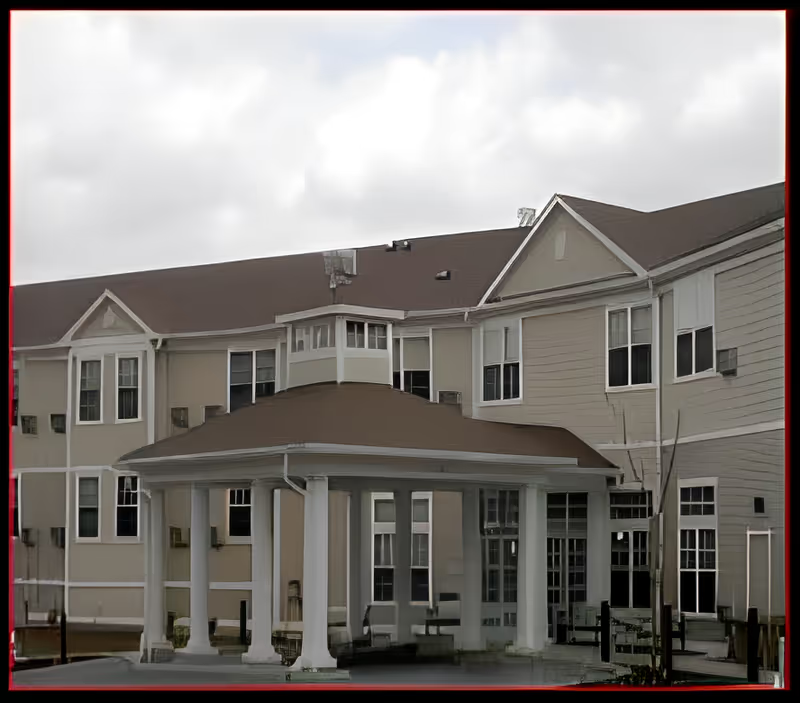
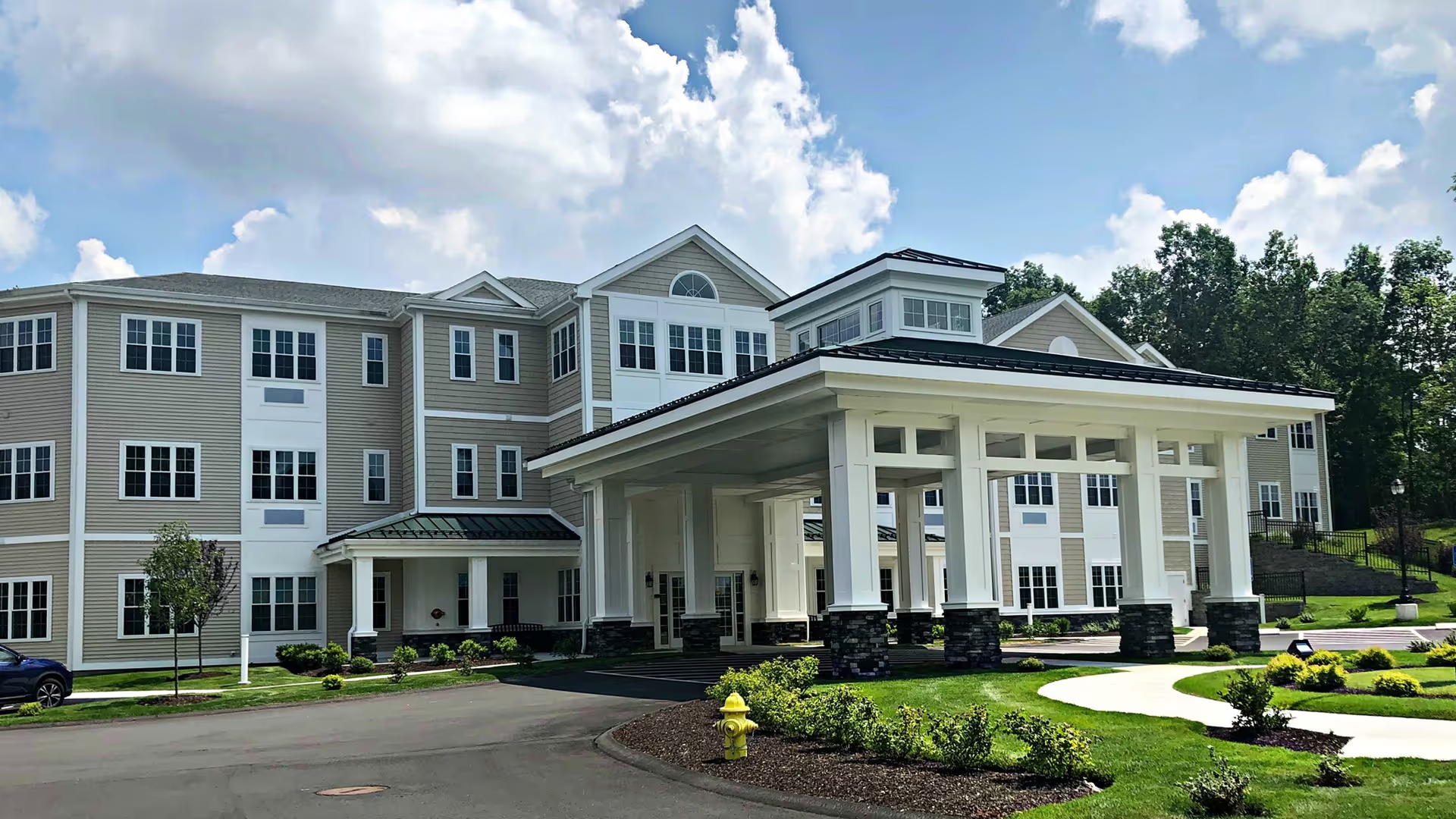
Facilities and cleanliness Several reviewers praised a clean, odor-controlled environment in many common areas and noted facility upgrades such as improved entryway, touchless sign-in, paper-towel dispensers, and updated ice/condiment stations. Conversely, other reviewers described sanitation concerns in particular units, laundry-service shortcomings, and leftover maintenance issues (for example, rugs or broken equipment). Overall, the facility appears to be improving physical plant and infection-control measures, but consistency across all units is not uniform.
Management, communication, and trends Reviews indicate management changes and cost-cutting measures have been implemented; some observers see these as contributing to recent improvements (cleanliness, technology updates, better entry systems), while others associate them with staffing reductions and service cutbacks. High staff turnover and variability in staff competence/communication were noted as recurring operational issues. Several reviewers raised serious concerns about specific clinical incidents (including pain management and communication following a resident’s death) that point to gaps in clinical-incident response and family notification processes. These items suggest an opportunity for stronger clinical governance and standardized protocols.
Notable patterns and guidance for families - Strengths to consider: compassionate direct-care staff, skilled therapists, engaging activities on some units, and recent infrastructure and administrative improvements. These factors can meaningfully improve a resident’s experience—especially for those seeking rehabilitation services or a supportive daily program. - Operational risks: inconsistent staffing and responsiveness (particularly at night), medication- and supply-management gaps, and variability in meal quality and cleanliness. These are system-level issues that may affect safety and quality of life and merit direct discussion with facility leadership.
Recommended questions for families visiting Beacon Brook - What are typical staffing ratios on the unit at night and on weekends? How are call-bell response times monitored? - How does the facility manage pharmacy orders, medication reconciliation, and family notification for medication changes? - What is the usual daily therapy schedule for my loved one’s diagnosis and how flexible is therapy intensity? - Can the facility show current infection-control measures, laundry processes, and recent maintenance/cleaning logs? - How does management handle family concerns, staff conduct issues, and care coordination with outside specialists?
Conclusion Beacon Brook demonstrates clear strengths in interpersonal care, rehabilitation expertise, and recent infrastructure improvements. Those positives coexist with operational variability—particularly in staffing, medication and meal services, and consistency of cleanliness—that prospective residents and families should explicitly address when evaluating placement or developing a care plan. Direct conversations with leadership about the facility’s current staffing, quality-monitoring practices, and recent corrective actions will help clarify whether the facility’s strengths align with an individual resident’s needs.