Overall assessment Reviews for Unique Rehabilitation & Health Center are highly polarized: many families describe effective rehabilitation, warm personal attention, and engaged leadership, while other accounts identify significant operational and clinical shortcomings. The pattern suggests that the facility can deliver strong outcomes in therapy, activities, and family engagement, but that these strengths coexist with variability in day-to-day care quality and facility operations.
Care quality and clinical operations Positive commentary centers on robust rehabilitation services and individualized therapy plans that contributed to measurable recovery for many patients. Several reviews also highlight compassionate nursing and aide staff who provided attentive bedside care. Conversely, recurring concerns include delayed medication administration, slow clinical response to acute needs, inconsistent monitoring (including post-fall follow-up), and instances of wound-care and pressure-injury management that were perceived as inadequate. Equipment and supply issues—oxygen devices, treatment machines, and personal-protective equipment—were described as intermittent problems that can affect clinical care continuity.
Staffing, conduct, and management Many reviewers praised specific administrators and floor leaders for visibility and accountability, noting that active leadership improved communication and patient experience. At the same time, the facility appears to experience high staff turnover and variable skill levels among unit managers and nursing staff. This contributes to inconsistent service quality, longer response times during shift changes, and uneven staff conduct. Communication breakdowns with families, including delayed notifications and difficulty reaching clinical or social-service staff by phone, were commonly reported. A small number of reviews referenced alleged criminal-level incidents and potential legal action; these elevated claims indicate the need for external review when families are evaluating the facility.
Dining, activities, and social programs Dining services receive largely positive remarks for accommodating individual dietary needs and providing thoughtful meal planning in some cases. Activities programming is frequently cited as a strength—regular group activities, outings, and faith-based engagement were associated with improved resident morale. However, a few comments raised concerns about meal-service continuity and security of personal items, which may reflect operational inconsistencies rather than systemic failure of the dining program.
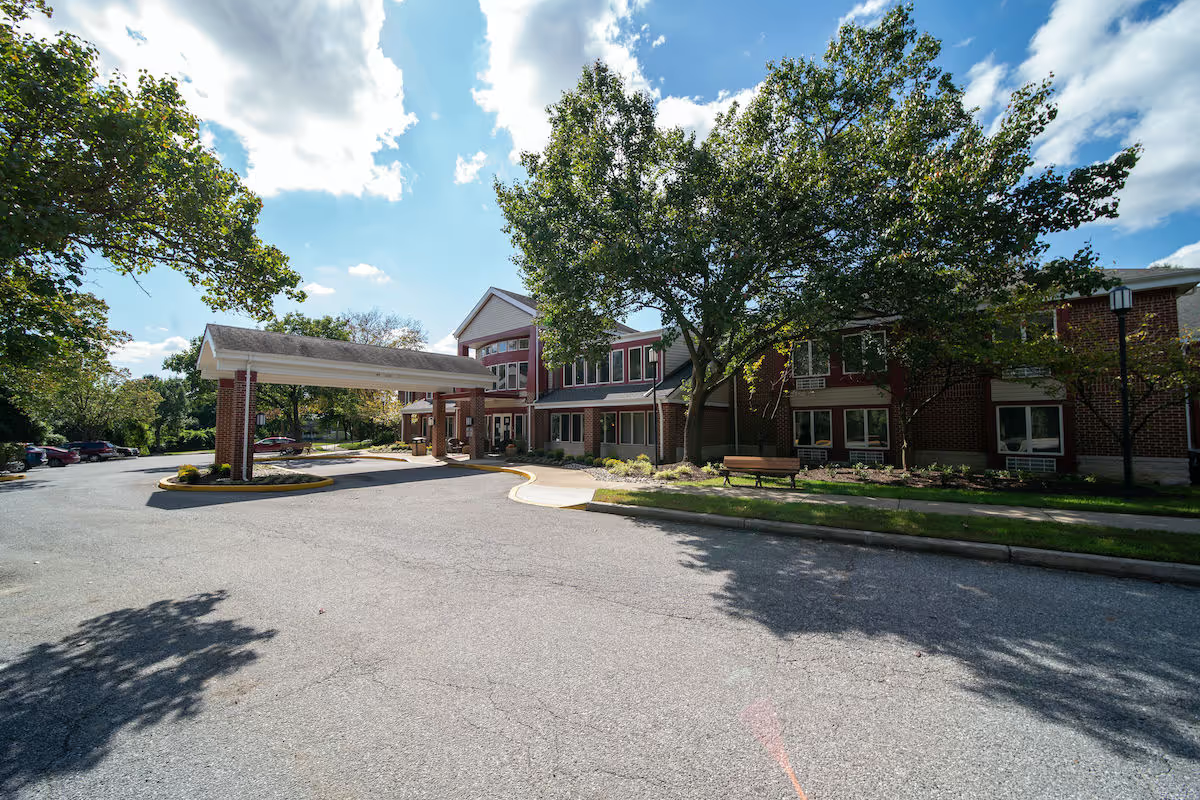
Facility condition and environment Common areas, therapy spaces, and entry/security functions are often described as clean and well-managed. At the same time, reviewers identified localized sanitation and odor concerns in certain rooms or corridors, issues with room crowding, and visible wear in parts of the physical plant (peeling paint, plumbing problems, nonfunctional televisions, and occasional mold/mildew concerns). Parking constraints and periodic elevator downtime were also noted as visitor-access limitations.
Notable patterns and guidance for families The overall picture is one of a facility capable of providing high-quality rehabilitation and family-oriented programming when staffing and leadership are stable, but susceptible to operational variability tied to turnover, equipment/supply lapses, and communication failures. Prospective residents and families should consider verifying current staffing ratios, asking about equipment maintenance and incident-reporting procedures, observing meal service and an activity session during a visit, and confirming lines of communication (direct nurse contact, case manager availability, and administrator responsiveness). If there are specific clinical vulnerabilities of concern—medication timing, wound care, or monitoring needs—families should ensure those are addressed in the care plan and that escalation protocols are clearly documented.