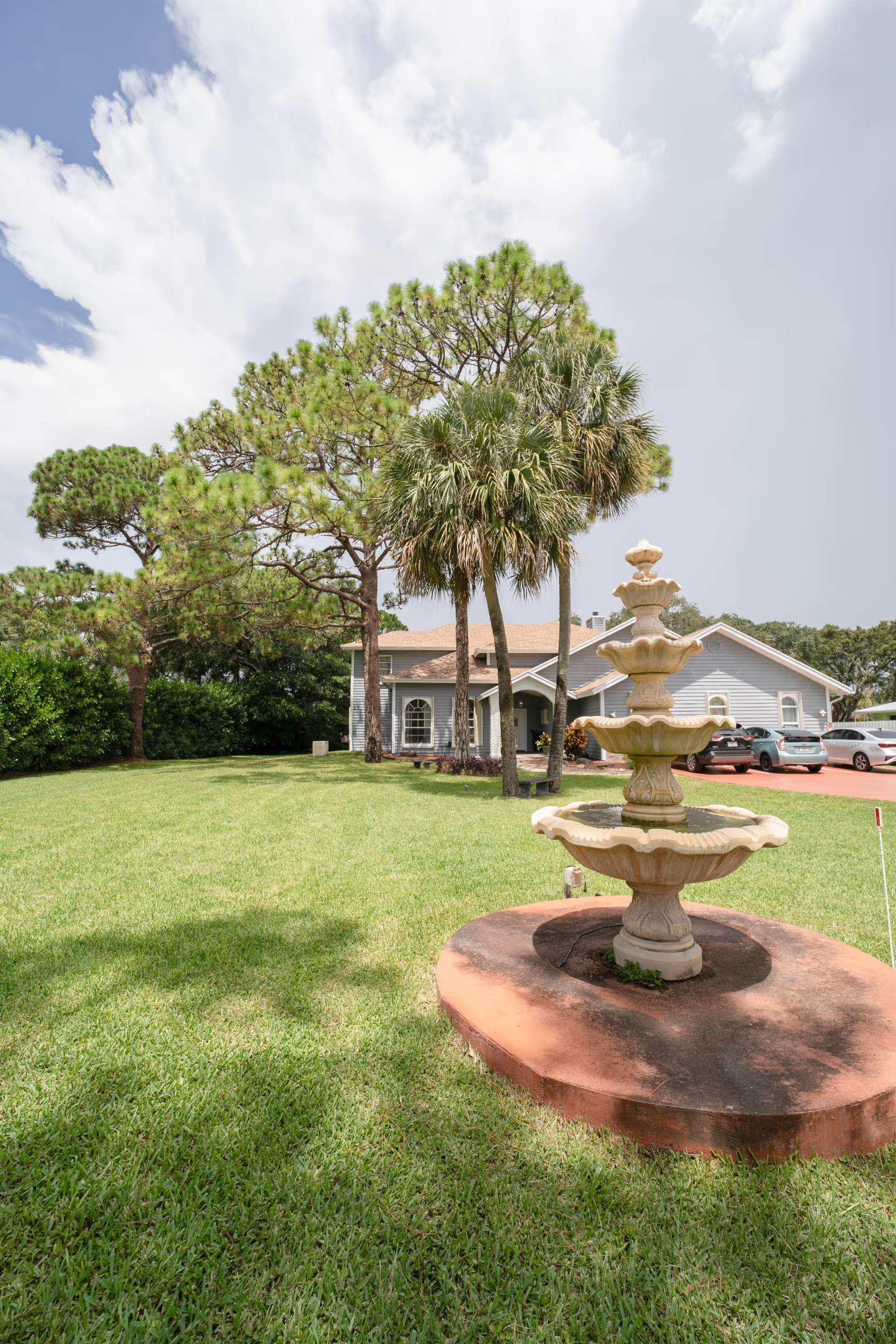
Overall impression Barrington Terrace is consistently described as a staff-forward, small-to-midsize community with many families praising the compassion and attentiveness of direct-care teams, nursing leadership, and therapy staff. Reviewers highlight a home-like atmosphere created by warm common spaces, decorative touches, fountain and garden areas, and an active social calendar. Physical therapy and rehabilitation receive repeated positive mentions for measurable improvement in mobility and successful short-stay outcomes.
Care quality and staff Clinical and caregiving strengths are a recurring theme: families frequently describe caring nursing staff, engaged CNAs, and accessible leadership who follow up with families. The facility benefits from experienced therapists and visible executive involvement, which reviewers credit with maintaining care standards and smoothing transitions. However, there are consistent operational concerns around staffing variability — particularly in memory-care neighborhoods and during certain shifts — which reviewers link to slower responses, limited bathing/shower frequency, and occasional inattention on the floor. While many reviewers commend long-tenured employees and a family-like staff culture, others note instances of staff distraction, understaffing, or perceived undercompensation that may affect day-to-day reliability.
Dining and nutrition Dining is often described positively: home-style meals, restaurant-like dining rooms, accommodating kitchen staff, and chefs who engage with residents. Several families report improved appetite and strength after placement. That said, food quality is described as variable over time; some residents experience menu limitations (notably gluten-free accommodations) and intermittent lapses in consistency. Meal service continuity appears to be generally reliable, but reviewers advise prospective families to verify specific dietary needs during the tour and after move-in.
Activities and social life Activities programming is a major strength for many residents. The community offers frequent live music, bingo, crafting, religious services, parties, and regular outings that support social engagement. The activities leadership is singled out for creating varied and cognitively engaging options. In contrast, activity offerings within some memory-care neighborhoods are described as limited or more passive (e.g., movies, basic crafts), and promised outings are not always observed—indicating an unevenness in programming across neighborhoods.
Facilities and housekeeping Public spaces, grounds, and many resident areas are characterized as clean, light-filled, and attractively furnished. Maintenance responsiveness and on-site improvements (TV brackets, artwork, minor room upgrades) receive praise. At the same time, several reviewers identify cleanliness and sanitation issues in specific areas: carpet or odor concerns in hallways, uneven housekeeping in resident rooms/bathrooms, and signs of wear in some furnishings and smaller units. Unit size and layout are a recurrent tradeoff — studios and shared rooms can feel cramped, while private rooms command a premium.
Management, admissions, and communication Management and admissions staff receive mixed assessments. Numerous families commend sales and leadership staff for informative tours, patient guidance, and proactive coordination during placement. Conversely, some reviewers describe high-pressure sales approaches and inconsistent front-desk interactions that produced a negative first impression. Communication with families is often praised—timely updates, calls about changes in condition, and visible problem-solving—but there are also reports of slower clinical communication in certain situations, which prospective families should clarify in advance.
Notable patterns and cautions The dominant pattern is positive: a compassionate staff, active programming, and strong rehab services create a community that many families recommend. Prospective residents should, however, confirm specifics during a visit: staffing levels and staffing ratios (especially for memory care), housekeeping and laundry schedules, how dietary restrictions are handled, the extent of memory-care programming and outings, and the exact dimensions and condition of available units. Reviewers also suggest asking about sales policies and expected move-in timelines to avoid pressure. Finally, while most feedback is favorable, a small number of serious clinical incidents and end-of-life concerns are present in the commentary; these merit direct discussion with clinical leadership and review of care protocols and emergency escalation procedures during any in-person evaluation.