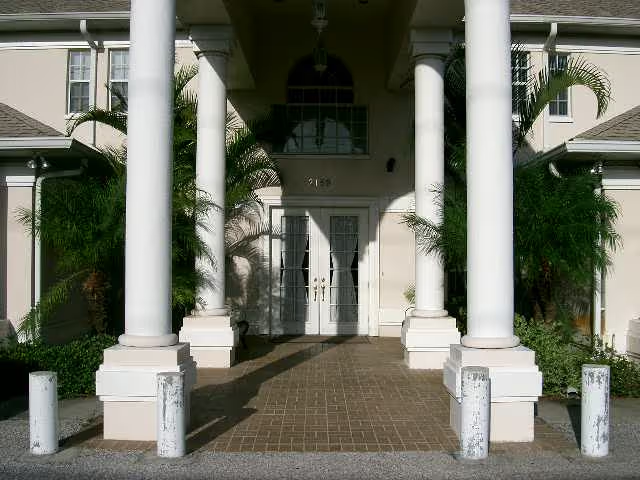
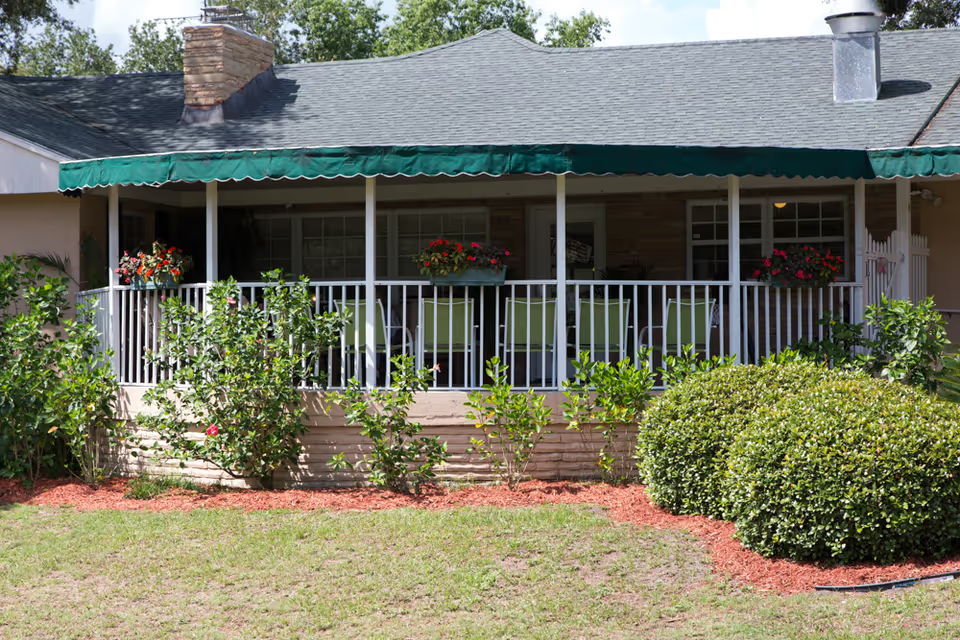
Regency Oaks presents as a large, well-appointed continuing-care community with many tangible amenities and strong appeal for independent-living residents. The campus and grounds are repeatedly described as attractive and meticulously maintained, with mature oak trees, outdoor leisure spaces, and a broad set of common-area amenities such as a pool, tavern/pub, woodworking shop, fitness center, and multiple social spaces. Apartment units are generally characterized as spacious and bright, with private lanais or balconies available in many floor plans. The continuing-care (CCRC) model and on-site rehab/therapy offerings are noteworthy features for families seeking long-term continuity of housing and clinical services.
Dining and social programming are frequent strengths cited by families. The community offers multiple dining venues, chef-driven menus, themed meal nights, and a variety of daily menu choices; several accounts describe a “cruise-ship” dining atmosphere. Activities and clubs are extensive and diverse—art, line dancing, theater, golf groups, and regular social events are part of the daily life offerings—supporting an engaged, social environment for residents who want frequent programming and opportunities for participation.
Direct-care staff and many clinical personnel receive consistent praise for friendliness, helpfulness, and attentive support. Numerous comments highlight accommodating CNAs, responsive nursing on many shifts, and positive interactions with therapists and wellness staff; rehabilitation spaces and equipment are described as modern and bright. At the same time, there is a contrasting pattern of concerns about clinical consistency: families describe variability in nursing and aide performance, delays or gaps in therapy scheduling, and inconsistent personal-care routines. These issues appear to cluster around certain shifts or transitions of care and have, in some accounts, led to adverse outcomes for individual residents.
Management and administrative practices are a mixed picture. Positive experiences with sales and move-in assistance are reported alongside significant concerns about transparency in contracts, buy-in refunds, and ongoing fees. There are allegations of retained buy-in funds after cancellations and a perception that financial disclosures were not consistently clear during the sales process. Administrative responsiveness is described as uneven—some families found staff proactive and supportive, while others experienced miscommunication around appointments, admissions, and event information. These patterns suggest that contract clarity and front-office coordination are important topics for prospective residents to review closely.
Operationally, the facility shows both high points and variability. Cleanliness and presentation are often praised—many areas are described as immaculate—yet there are also accounts indicating uneven sanitation standards and lapses at certain times or locations. Dining quality is generally strong but not uniformly consistent across all meals. Memory-care and dedicated assisted-living services are described as limited or unclear in availability; prospective residents needing those levels of care should verify program capacity and transitions in writing.
For families considering Regency Oaks, the key trade-offs are between a robust amenity set, attractive facilities, and a lively social environment versus variability in clinical consistency and administrative transparency. Visiting in person, reviewing the contract and fee schedules in detail, clarifying memory-care availability, and asking for written documentation of therapy plans and staffing patterns will help assess fit. Overall, the community offers a high-quality campus experience with the caveat that prospective residents and families should do targeted due diligence on clinical continuity, billing practices, and administrative responsiveness before committing.