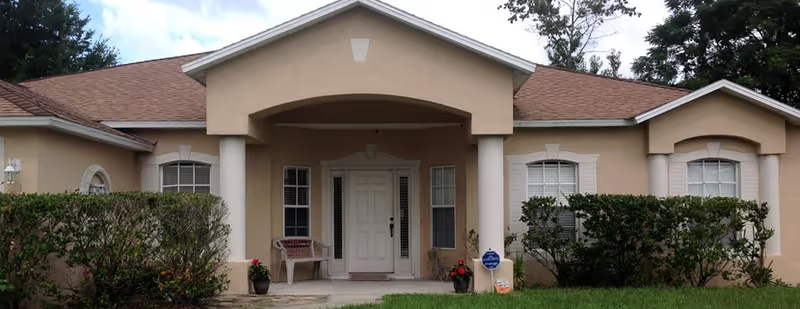
Reviews of Rose Manor present a mixed picture with clear areas of strength and notable operational concerns. Positive comments emphasize a homelike, small-scale environment where staff are described as kind and the facility appears clean and inviting. Several accounts describe residents as appearing content and social, and the setting is characterized as cozy and welcoming — attributes that can be attractive for families seeking a residential-style option rather than a large institutional setting.
Care quality and staff: Staff behavior is a polarizing element in the reviews. Many assessments praise staff as compassionate and attentive, supporting a personal, small-home care dynamic. However, other comments raise concerns about staff experience, particularly in dementia care. That pattern suggests variability in staff skill levels or training consistency; prospective families should verify staff qualifications, training programs, and staffing ratios for residents with cognitive impairment.
Activities and social engagement: There are consistent criticisms related to engagement and programming. Some reviewers indicate limited structured activities and a tendency to rely on passive television viewing, which can contribute to social isolation for some residents. For families prioritizing active engagement or therapeutic programming, asking for an activities calendar and examples of individualized engagement would be important.
Dining: Food and dining receive generally positive mentions, with the facility described as providing acceptable meals. Positive impressions about dining align with the homelike atmosphere noted elsewhere, though reviews do not provide detail on menu variety, special-diet accommodations, or meal-service consistency.
Facilities and cleanliness: The facility’s small scale is both a strength and a limitation. Its cozy footprint contributes to a residential feel but also results in limited private space, shared rooms, and a sense of crowding in some descriptions. A subset of reviews raises sanitation and cleanliness concerns; this is an operational area to assess in person through a tour, checking common areas, resident rooms, and housekeeping practices.
Management and communication: Management practices are another area of divergence. Some reviewers perceive management as prioritizing financial considerations over resident-centered care, and there are references to inadequate family communication, including during end-of-life situations. These indicate potential gaps in transparency and responsiveness that families should explore by asking about billing practices, visitation policies, and protocols for notifying families during clinical changes.
Notable pattern and guidance: The overall pattern is of a small, well-liked residential facility with polarized feedback: many families report positive experiences, while others describe significant operational shortcomings. Prospective residents and family members should arrange an in-person visit, review staff training and staffing levels (especially for dementia care), request an activities schedule, inspect room layouts for privacy, and inquire about housekeeping and communication policies to determine whether Rose Manor’s strengths align with their priorities and whether the noted concerns have been addressed.