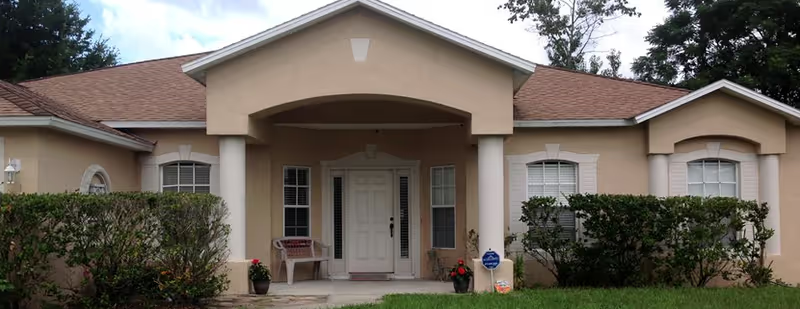
Reviews of Villa Health and Rehab Center describe a facility with a clearly strong rehabilitation footprint but uneven performance in several operational areas. The therapy departments (PT and OT) receive consistent praise for clinical skill, functional progress, and staff engagement; multiple families and residents credited therapy teams with measurable recovery outcomes and individualized mobility training. Several long-term residents and families also described compassionate CNAs and select nursing staff who provide attentive daily care and effective wound management.
At the same time, the facility shows recurring operational weaknesses that affect clinical reliability and family confidence. Medication administration and overall clinical oversight were flagged as inconsistent, with accounts of missed or delayed doses, problems arranging physician orders, and inadequate symptom management at times. These clinical issues are often linked to staffing shortages and uneven nurse responsiveness; reviewers describe periods when RNs and CNAs were stretched thin, which corresponded with delays in vital-sign checks, assistance with toileting and transfers, and emergency escalation.
Environmental and support-service concerns are mixed. Many reviewers praised clean, sunny common areas and an overall well-maintained appearance, but others described sanitation issues, pest-control concerns, and localized maintenance failures (damaged finishes, water-damaged items). Dining and personal-care services were inconsistent across stays: some residents enjoyed mealtime and regular showers, while others experienced limited bathing frequency, meal continuity problems, or dissatisfaction with food quality.
Discharge planning and administrative processes are further areas of variability. Positive transitions included coordinated equipment loans, transport to appointments, and effective home-health handoffs. Conversely, reviewers reported gaps in discharge coordination, delayed ordering of medical equipment, incomplete medication counseling at discharge, and administrative pains such as confusing billing or difficulty retrieving personal belongings. Communication with families was cited repeatedly as a driver of satisfaction or distress—timely, transparent contact from staff and leadership improved confidence, while poor follow-up and limited responsiveness compounded clinical concerns.
Safety and infection-control protocols also showed mixed adherence. Some accounts highlight good fall-prevention modifications and attentive care; others describe safety-process gaps such as inaccessible call buttons, inconsistent use of PPE, or concerns about pressure-injury prevention and timely incontinence care. A small number of reviews contained serious allegations around rights and visitation or post-mortem administrative handling; these are notable and indicate the need for prospective families to verify facility policies and escalation channels.
In summary, Villa Health and Rehab Center presents a polarized profile: a highly regarded rehab program and many dedicated caregivers coexist with operational inconsistencies in staffing, clinical oversight, sanitation, and discharge processes. Prospective residents and families would benefit from focused conversations with facility leadership about medication administration protocols, staffing patterns, discharge/equipment workflows, pest control and maintenance logs, and family communication practices before admission to align expectations with current performance.