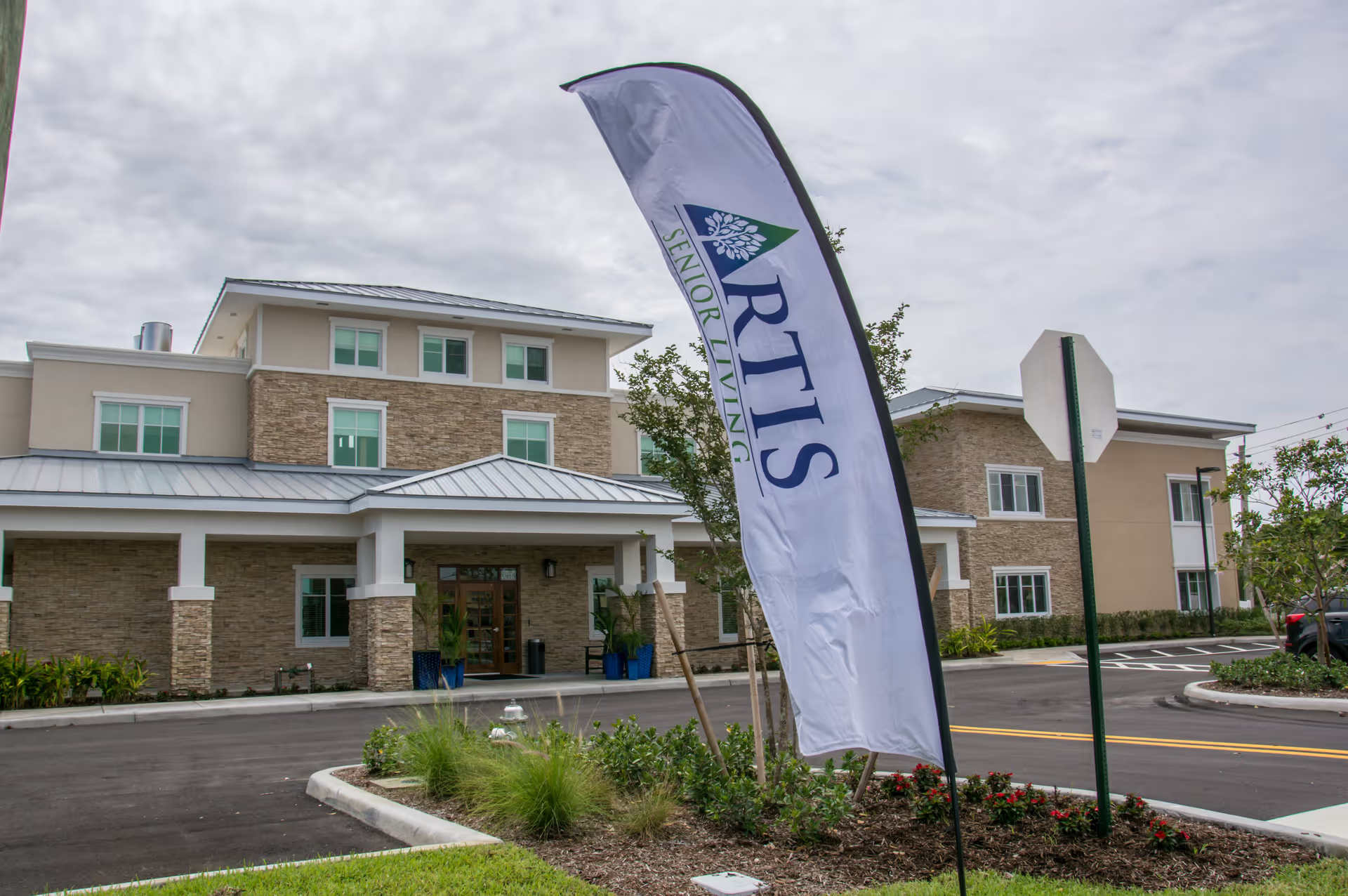
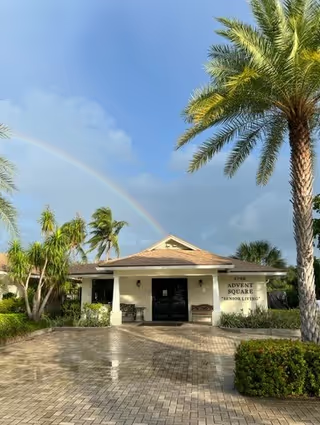
Abbey Delray South presents as a large continuing‑care community with a broad set of amenities and an active social program. Reviewers consistently praise the grounds, fitness offerings, on‑campus recreational options (bocce, shuffleboard, indoor pickleball, putting green), and a robust schedule of lectures, live music, and outings. The community operates under a life‑care / continuing‑care model with an on‑site health center and several reviewers highlighted successful rehabilitative outcomes and a highly regarded PT/OT department.
Care and staffing impressions are mixed. Many families and residents describe compassionate, attentive CNAs, nurses, and therapists and credit therapy teams with meaningful functional improvement. At the same time, patterns emerge pointing to inconsistent staffing levels (especially nights and during high census), variable clinical training and language proficiency, and delayed responses to call lights or assistance requests. Several comments indicate problems with medication administration and clinical documentation processes, and some reviewers described insufficient monitoring or gaps in clinical follow‑up. These items suggest variability in care quality that appears to fluctuate by unit, shift, and individual staff assignment.
Dining and activities are clear strengths for many residents: multiple meal choices, meal delivery or reheating options, social meals, and a full activities calendar contribute to community life. However, perceptions of food quality and value vary; some find the dining excellent while others perceive menu repetition or pricing that is not aligned with quality. The activities department and transportation services receive steady positive remarks for the variety and frequency of programming and off‑campus cultural trips.
The physical plant shows uneven conditions. The property and newer/renovated wings receive praise for cleanliness and modern amenities, while older sections are cited for maintenance issues, HVAC failures in individual rooms, and intermittent sanitation and pest‑control concerns. These disparities appear to create a divergent resident experience depending on building section or unit. Accessibility of the front desk and phone systems was mentioned frequently; reviewers described periods when telephones were unanswered or lines were out, which affected family communications and coordination of care.
Management and communication are areas of recurrent concern. While some reviewers describe responsive leadership and helpful admissions and front‑desk staff, others report difficulty obtaining timely responses from administration, unresolved grievances, and a sense that oversight declined after a change in ownership. A small number of serious individual claims — including theft of personal items and infection‑control events — were raised and contributed to perceptions of weak grievance resolution and accountability; these items increase the importance of asking prospective management about incident investigation processes and safeguards.
Overall, Abbey Delray South offers many features that attract residents seeking an active, amenity‑rich life‑plan community with strong therapy services and attractive grounds. Prospective residents and their families should prioritize a tour focused on the specific unit (old vs. new wing), ask for details about staffing ratios by shift, clarify dining contracts and meal quality expectations, inquire about pest‑control and maintenance schedules, and request written protocols for family communication, clinical documentation, and grievance resolution. These targeted questions will help determine whether the operational variability noted in reviews aligns with an individual’s care and lifestyle priorities.