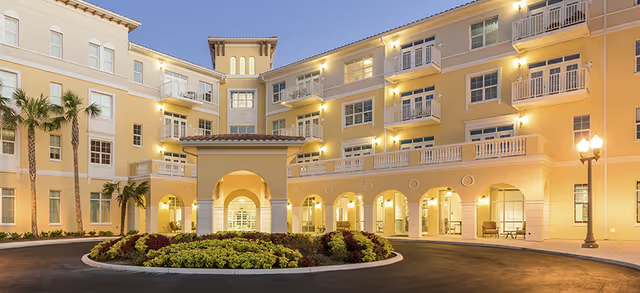
The Villages of Citrus Hills presents as a well‑amenitized independent living community in a rural/suburban Florida setting with a strong emphasis on active lifestyles. Its infrastructure supports a wide range of recreational options — multiple golf courses, courts for tennis, pickleball and other racquet sports, aquatics and water‑exercise programming, a fitness center and spa, and extensive club and social programming. On‑site dining includes several venue types and a clubhouse auditorium and performance space that support an engaged social calendar. Many reviewers describe the community as attractive, quiet, and well landscaped, and note proximate shopping and regional services as conveniences.
Staff and service impressions are mixed. Sales and some operational contacts receive positive mentions for being knowledgeable and helpful; several reviews single out dining waitstaff, specific construction-team contacts, and sales guides as responsive. At the same time, there are consistent concerns about management responsiveness post‑sale, including warranty follow‑up and communications. Clinical care and assisted‑living services are not commonly described in the material provided; prospective buyers seeking information about medical or long‑term care offerings will need to request specific documentation, as published details are limited.
Dining and activities are clear strengths for residents who prioritize social engagement and on‑site programming. The campus model favors restaurant‑style dining rather than pre‑planned meal service; cuisine quality appears to vary by venue and by visit, with some residents praising food and service while others describe limited customization and inconsistent experiences. Activities and clubs are robust, and many accounts emphasize an active, friendly resident culture that facilitates daily social connections.
Operational and management patterns are the principal source of concern. Multiple reviews indicate a sales‑and‑development orientation that can precede ongoing operational investment, with management choices that reviewers feel prioritize new home sales over maintenance of existing amenities. Specific operational themes include inconsistent upkeep of some golf courses and cart paths, variability in construction quality driven by subcontractor selection, and recurring issues with warranty resolution and post‑sale accountability. Financial transparency is another recurring theme: HOA dues, fee increases, and ancillary charges are described as unclear or higher than expected, prompting calls for clearer disclosure at the point of sale.
Overall, the community is likely to appeal to independent retirees who prioritize an active social calendar, a wide range of recreational options, and a landscaped, gated environment. However, the experience appears polarized: many residents express high satisfaction with amenities, staff interactions in certain departments, and community life, while others describe substantive frustrations with construction quality, warranty service, management responsiveness, and financial clarity. Prospective residents should perform focused due diligence: request the complete HOA fee schedule and recent assessment history, review warranty and post‑closing service procedures, inspect completed homes and common‑area maintenance records, speak directly with current residents about ongoing maintenance, and clarify dining models and visitor policies before committing.