Overall impression: Reviews present a mixed but informative picture. The community is frequently praised for warm, compassionate staff, an active social program, and a broad set of on-site amenities that support independent and assisted living lifestyles. At the same time, aggregated concerns point to operational inconsistencies—especially around housekeeping, maintenance of older building areas, dining continuity, and management communication—that prospective residents and families should evaluate directly.
Care and staff: Many families and residents describe staff as caring, attentive, and personalized in their approach; employees are often noted for learning residents' names and providing emotional support. There are repeated compliments for nursing and CNA teams, daytime nursing availability, and prompt maintenance interactions. Counterbalancing these positives are recurring operational issues: staffing continuity varies, some shifts show higher turnover, and reviewers describe delays in responding to call systems or providing routine personal-care tasks. There are also specific concerns about memory-care routines and the facility’s handling of cognitively impaired residents that suggest families should ask targeted questions about dementia-care protocols, staffing ratios, and supervision on higher-acuity floors.
Dining: Dining is commonly highlighted as a strength—many reviewers commend the variety, occasional chef interactions, and popular items (for example, fresh-baked rolls and home-style entrees). At the same time, there are numerous comments about variability in food temperature, portion size, and presentation; some families described use of disposable service items and missing condiments during lower-quality service periods. Prospective residents should sample meals, review menus and service models, and confirm expectations around dining presentation and meal service continuity.
Activities and social life: The community’s activity calendar is a consistent positive. Reviewers note a wide range of on-site classes, group exercises, religious study, outings (mall trips, holiday light tours, mystery tours), entertainment, and transportation that enable an active social life. The activity staff and directors receive frequent praise for creativity and engagement. Participation levels vary by resident, but the breadth of programming is a clear strength for those seeking social engagement and regular outings.
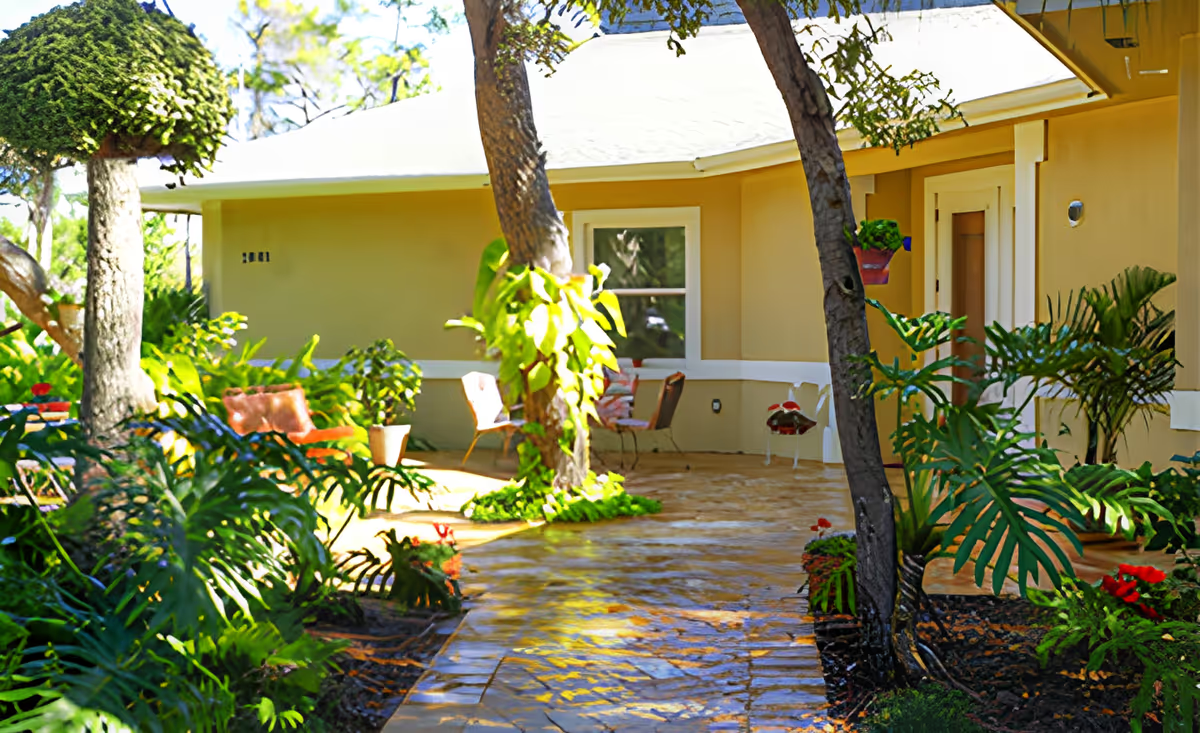
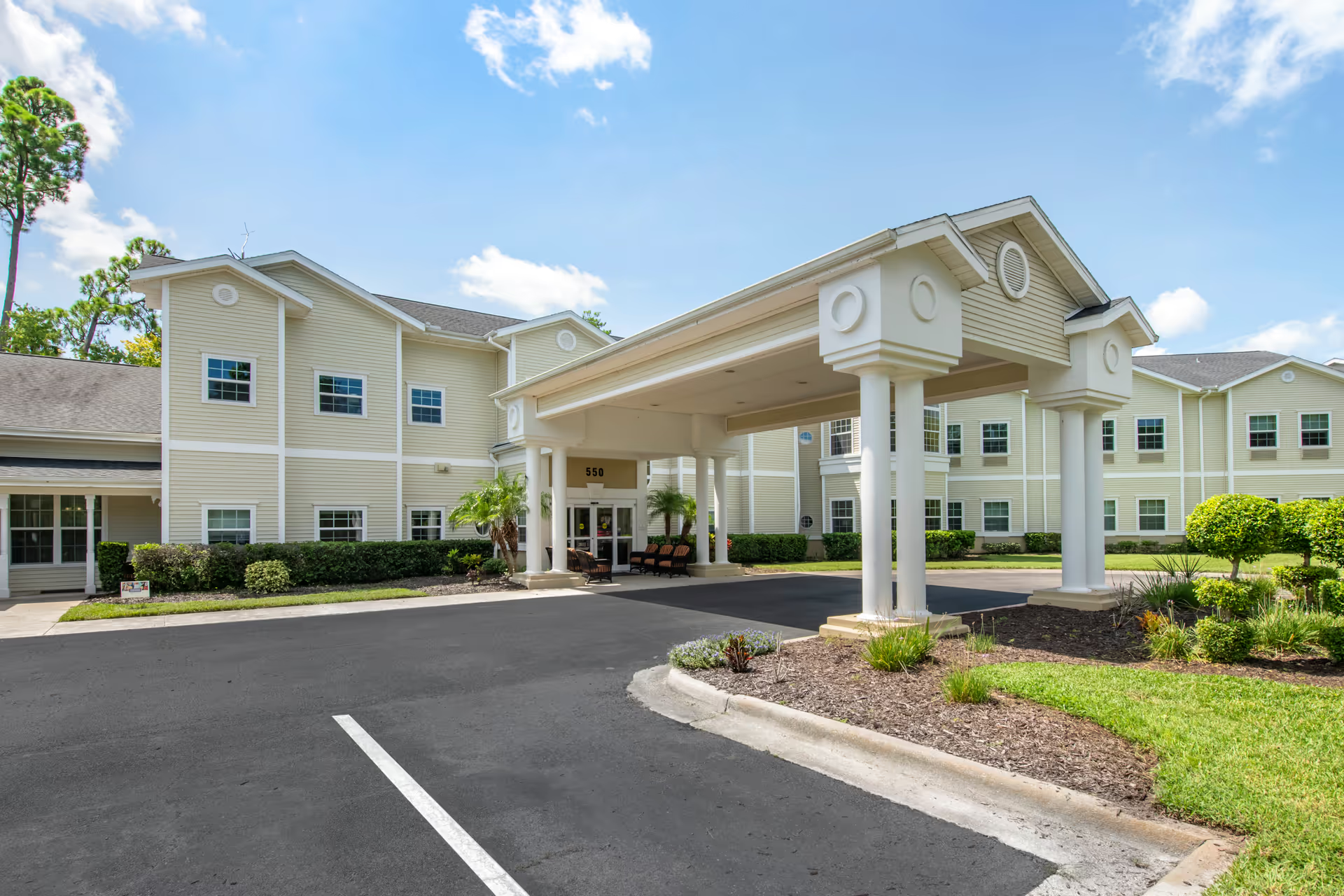
Facilities and amenities: Ormond in the Pines offers many desirable amenities—pool, salon, fitness/exercise classes, library, theater/game rooms, and on-site therapy services—plus outdoor courtyards and landscaped grounds. Several reviewers emphasize apartment sizes with kitchenettes or full kitchens and ample storage. However, the physical plant shows signs of age in areas: dim hallways, dated carpeting and décor, occasional leaks or mold-like odors, and uneven cleanliness in certain common areas and individual apartments. Planned renovation projects and occasional remodeling were mentioned, but timelines and management follow-through appear uneven.
Management and operations: Management impressions are mixed. Some residents and families praise front-line leadership, move-in coordination, transparent orientation, and responsiveness; others cite opaque billing practices, delayed refunds, rate increases after ownership transitions, and periods when senior managers were less visible. There are also administrative inconsistencies such as front-desk phone coverage gaps, variability in housekeeping standards, and occasional conflict-management issues in communal spaces. These patterns suggest that prospective families should confirm contract terms (including any six-month clauses), ask about recent ownership or management changes, and request written details on what services are included and how price increases are handled.
Notable patterns and recommendations: The strongest and most consistent positives are staff warmth, robust activities, and a wide set of amenities that support active living. The most persistent negatives are operational: inconsistent housekeeping/sanitation oversight, dining variability, aging interiors, and management/communication lapses—in some cases linked to staffing turnover or ownership transitions. Prospective residents should tour at different times of day (including meal periods), speak directly with nursing and activity leadership about dementia care and emergency-response procedures, inspect apartment cleanliness and hallway lighting, and clarify billing, refund, and renovation timelines before committing. Overall, the community offers many elements that families value—particularly social programming and engaged staff—but it also presents operational trade-offs that deserve careful vetting based on a family’s clinical and comfort priorities.