The reviews present a mixed picture of Promedica Heartland Health Care Center–Prosperity Oaks. Several families and residents praised the therapy teams and day-shift caregivers for producing measurable improvements in mobility, mood, and self-care. At the same time, multiple accounts describe operational and clinical shortcomings that affect overall care consistency.
Care quality appears uneven. Positive notes emphasize effective physical and occupational therapy, encouraging self-feeding, weight gain, and increased resident engagement. Conversely, there are repeated descriptions of delays in medication administration and pain management, gaps in documentation and charting, and inconsistent physician availability. Reviewers also raised concerns about incontinence-care processes and other sanitation-related issues that suggest uneven execution of basic care routines.
Staffing and staff conduct emerge as a major theme. Daytime staff, including therapists and some nurses, are frequently described as compassionate and attentive. However, families reported variability between shifts: night and evening staff were characterized as less engaged, with reports of confusion about procedures and an unfriendly tone in some interactions. Several accounts point to high turnover, staffing shortages, and what reviewers perceive as limited training, which together create inconsistent resident experiences.
Dining and activities receive mixed feedback. The facility’s menu and dining offerings were mentioned positively by some reviewers, and successful therapy programs were credited with improving residents’ appetites and participation. At the same time, there are concerns about inconsistent adherence to therapeutic diets (for example, diabetic or heart-healthy restrictions) and occasional issues with food quality or meal service continuity.
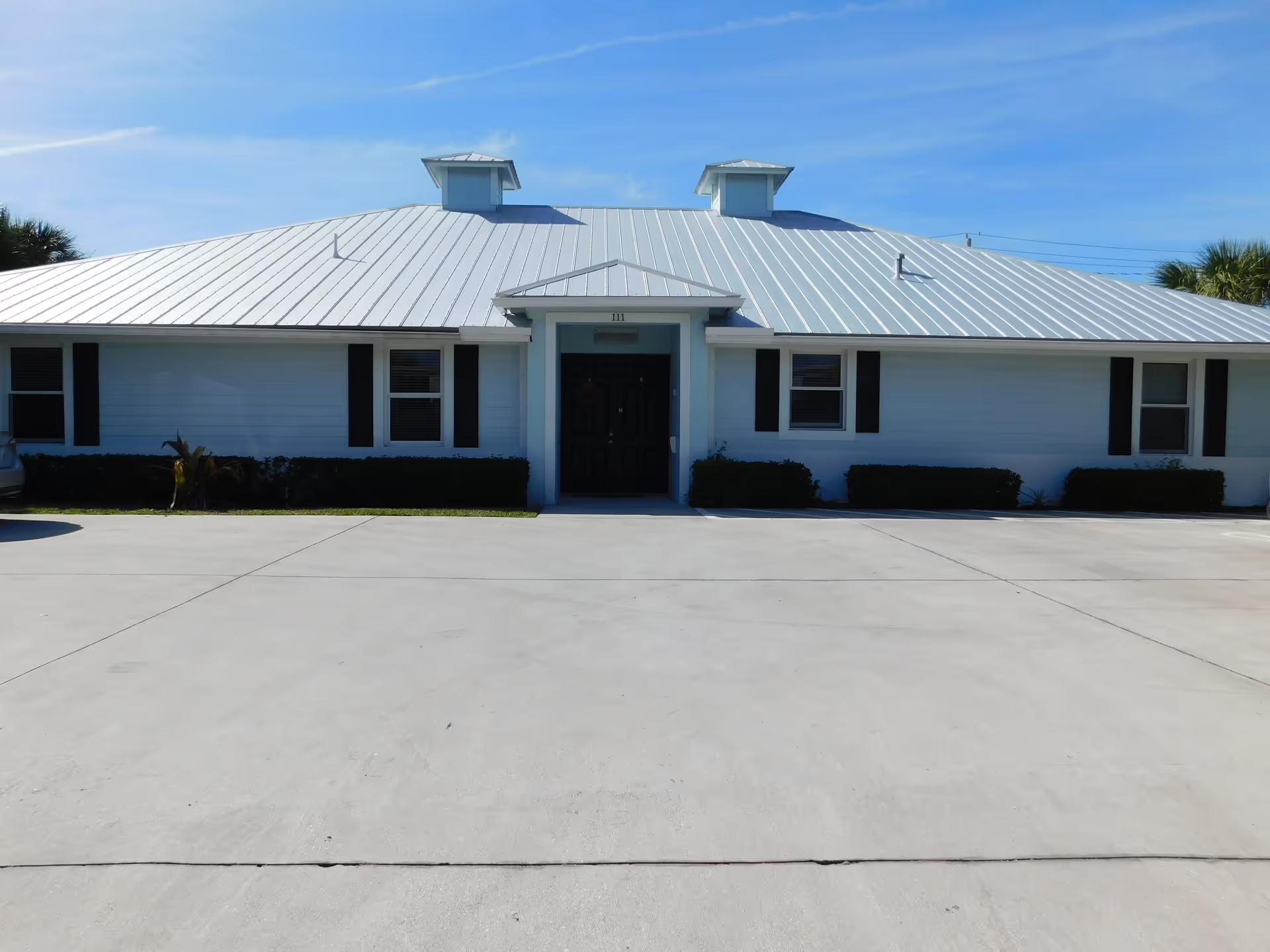
Facility condition and environment are also mixed. Common areas and parts of the community are described as clean and attractively appointed, but private rooms and some physical plant elements were reported as older or small. Reviewers specifically noted limited therapy space and small resident rooms, occasional delays in room readiness, and resource supply problems (linens, towels, specialty items). A small number of accounts raised infection-control concerns, including one allegation of an infection that required hospital transfer, which suggests attention to infection prevention and sanitation protocols is important for prospective families to confirm.
Management and communication issues were highlighted repeatedly. Families reported difficulty reaching physicians or administrative staff, a recent phone outage that was not promptly resolved, and uneven responsiveness to complaints. Some reviewers described an organizational emphasis on cost control and staffing reductions that they perceive as affecting care quality. Overall, the pattern is one of strong therapeutic capability and compassionate daytime caregivers coupled with operational weaknesses—particularly inconsistent staffing, communication breakdowns, documentation lapses, and environmental limitations.
For prospective residents and families: the facility may offer effective rehabilitation and supportive daytime care, but it would be prudent to evaluate shift coverage, medication and pain-management processes, infection-prevention practices, and how the facility enforces therapeutic-diet protocols. Asking management for staffing ratios by shift, recent infection-control audit results, documentation/charting policies, and examples of how family concerns are handled may clarify whether the facility’s strengths are reliably applied to a particular resident’s needs.