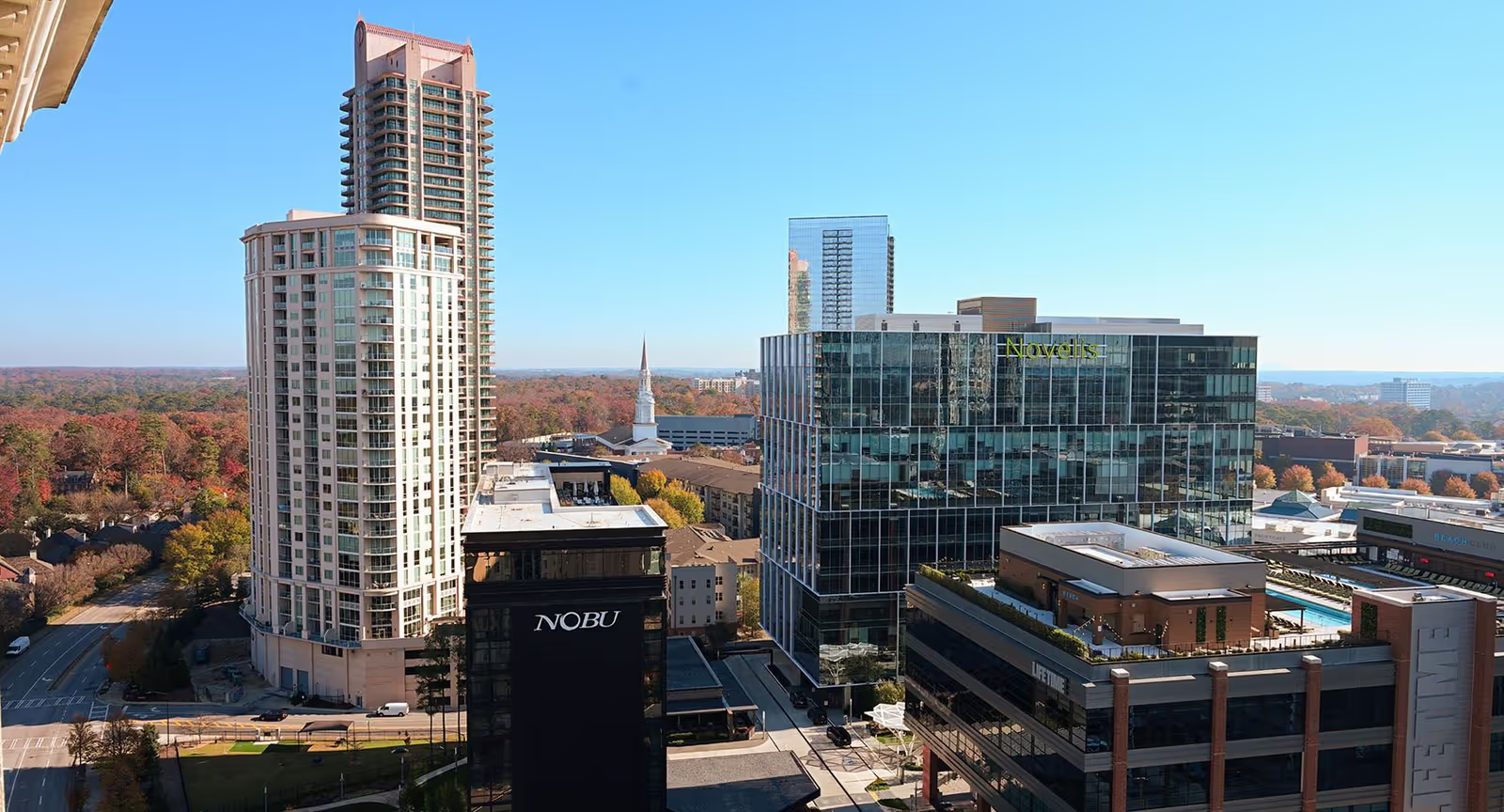
Dunwoody Place presents a mixed profile with several operational strengths alongside recurring operational concerns. Positively, the community offers restaurant-style dining with menu ordering and an anytime dining option, an on-site nursing presence and weekly primary-care coordination, and on-site rehabilitation and exercise/PT–OT resources. The property is located near major hospitals and maintains multiple outdoor courtyards, a welcoming lobby, and renovated common areas in parts of the building. Many reviewers described friendly, compassionate direct-care staff, active resident social life, and conveniences such as transportation to appointments, an on-site salon, chapel/library spaces, and pet-friendly policies.
Care and staffing are uneven themes. Numerous families praised individual caregivers and nursing staff for attentiveness and quality clinical work, and several accounts highlight strong staff–resident relationships and effective care coordination. However, a recurring operational pattern is inconsistent staffing levels and elevated staff turnover. This translates into variability in responsiveness to care requests, delays in scheduled personal-care services (for example, bathing or haircut appointments), and the need for families to repeatedly follow up on routine needs. Clinical follow-through and communication with families are described as reliable in some cases and unpredictable in others.
Dining and activities are areas of clear divergence. Some reviewers praise above-average meals, dietary flexibility, and a lively dining atmosphere; others describe long waits, inconsistent food quality and presentation, and limited meal variety. Activity programming produces enjoyment when it is active and well-staffed, with concerts, group classes, and socials cited positively; yet several reviewers describe a decline or inconsistency in the activity calendar, audiovisual/technology problems with scheduled entertainment, and gaps in staff-led engagement.
Facility and services show both upkeep and aging-in-place challenges. Many public areas and units have been refreshed, and the community is described as clean and well maintained by many residents. At the same time, reviewers raised infrastructure issues including dated unit finishes, moisture problems from windows that do not close fully, intermittent maintenance follow-through, and small one-bedroom footprints with limited natural light. Laundry, housekeeping, and some maintenance tasks are available but applied inconsistently across residents.
Management and safety patterns merit attention. Several reviewers reported management and leadership lapses, especially tied to post‑acquisition transitions: higher fees, unclear extra-service charges, and communication shortfalls. Security-related concerns are reported, including unattended entry points and allegations of theft or unsecured access; these were serious enough that some families modified supervision or hired external caregivers. Pricing transparency and sudden rent or fee increases were also highlighted as an area of concern by multiple families.
Overall, prospective residents and families should weigh the community’s clear advantages—medical convenience, onsite nursing and therapy, welcoming common spaces, and an engaged resident population—against operational inconsistencies in staffing, dining, maintenance, activity delivery, and security. A focused tour should include discussion of current staffing ratios, ancillary-care pricing and contract terms, active-case examples of clinical follow-through, meal-service logistics, security and access-control protocols, and unit-level maintenance commitments to assess whether Dunwoody Place’s present operational status matches the expectations and care needs of the prospective resident.