Overview: Feedback for Majestic Care of Lafayette is notably mixed, with recurring praise for therapy and many frontline staff alongside recurring operational and quality-control concerns. Families and former residents frequently describe strong, individualized rehabilitation outcomes and several staff members by name as especially caring. At the same time, reviewers raise consistent operational issues that affect day-to-day resident experience and safety.
Care quality and clinical operations: Therapy services are a clear strength: reviewers emphasize effective physical and occupational therapy programs, a well-equipped gym, and successful functional gains for many residents. The facility also offers in-house dialysis with upgraded equipment, which is highlighted as an asset for residents with renal needs. Conversely, nursing and aide performance is described as inconsistent across shifts. Common clinical concerns include slow response to call lights, delays in attending to toileting or hygiene needs, inconsistencies in bathing schedules, and gaps in fall-prevention practices. There are also recurring mentions of medication-administration and laboratory-sample management issues, as well as instances of missed or delayed clinical treatments — all of which point to opportunities to strengthen clinical processes and handoffs.
Staff, communication, and leadership: Many reviewers emphasize compassionate, family-oriented staff and point to engaged unit-level leaders and admissions personnel who provide helpful navigation. Specific staff members and activity/therapy leaders are frequently singled out for positive contributions. At the same time, the facility appears to experience variable leadership effectiveness and elevated staff turnover; reviewers describe uneven accountability, occasional outsourcing impacts, and inconsistent staff conduct and tone. These mixed impressions suggest that culture and supervision vary by unit and shift.
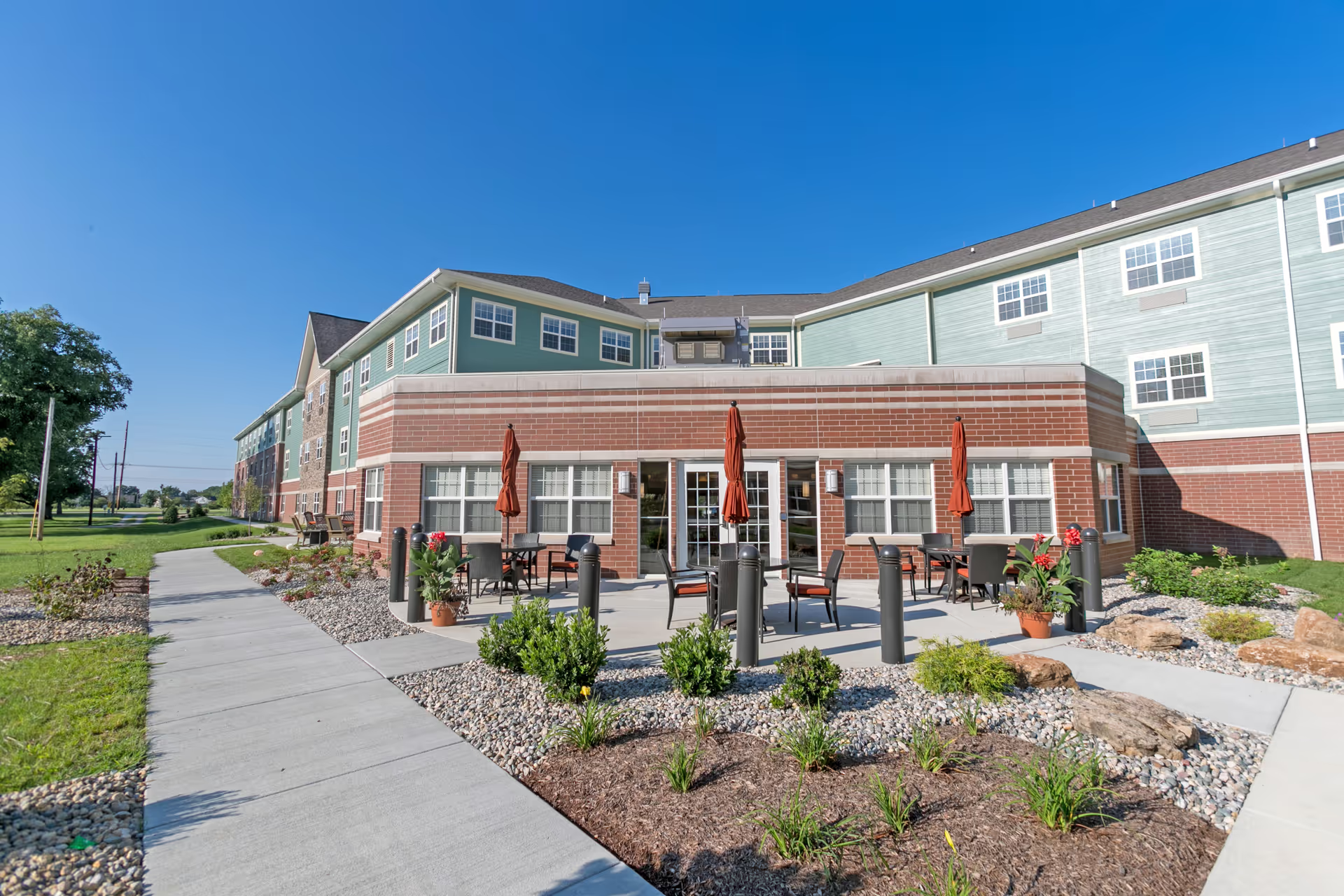
Dining, sanitation, and amenities: Dining impressions are mixed: some praise the food and accommodations for diet needs, while others cite meal-timing problems, temperature/quality variability, and nutritional balance concerns (notably for residents with dietary restrictions). Sanitation and pest-control concerns are raised in multiple accounts, alongside complaints about laundry handling, missing or mishandled personal items, and occasional housekeeping lapses. The campus includes positive amenities — activity programs, beauty services, outdoor visiting spaces, and a strong activities department — but physical maintenance issues (air conditioning and heating problems, intermittent comfort-system outages) have also been noted.
Notable patterns and considerations: Two broad patterns emerge: (1) consistently strong rehabilitation and many compassionate frontline staff who create a positive daily experience for some residents; and (2) recurring operational shortcomings that affect safety, hygiene, medication/lab handling, scheduling continuity, and resident comfort. Serious individual incidents and end-of-life concerns were referenced in some accounts; these underscore the importance of examining the facility's current corrective actions, state oversight, and quality-improvement efforts.
Recommendations for prospective families: When evaluating this facility, consider direct observation of current staffing levels, medication and lab-handling protocols, infection-control and pest-management practices, laundry and personal-item safeguards, and the facility's approach to call-light response and fall prevention. Ask about recent leadership changes, staff turnover rates, and specific quality-improvement initiatives related to the operational concerns outlined above. Balance the documented strengths in therapy, dialysis capability, and staff rapport against the operational risks to determine suitability for your loved one.