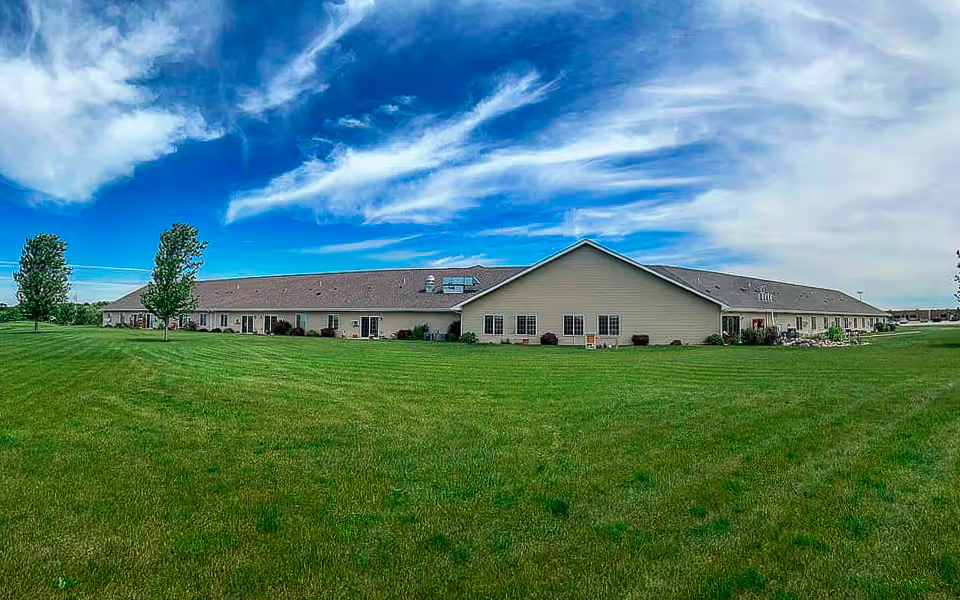
Reviews of Embassy Rehab & Care Center present a strongly polarized picture: several families describe compassionate, peaceful experiences while others report operational and clinical shortfalls. Strengths most frequently cited include a responsive maintenance team, generally clean and well-maintained interiors, a warm, family-like atmosphere from certain staff, and specific frontline employees (housekeeping, laundry, an activity director, and a cook named Leslie) who are characterized as helpful and reliable.
Care quality appears variable. Positive accounts describe attentive nursing, comfortable end-of-life care, and situations where residents’ needs were met in a respectful manner. Conversely, other accounts raise concerns about medication-administration inconsistencies, missed medication doses, delays or failures to provide timely assistance, and instances in which residents were not brought to meals. These contrasting experiences suggest uneven performance in clinical processes and resident-attention routines rather than a uniformly consistent level of care.
Staffing and day-to-day operations also show a mixed pattern. Maintenance, housekeeping, laundry and activity staff are commonly praised for responsiveness and for creating a supportive environment. At the same time, reviewers describe inconsistent caregiver behavior and variable training or competence across shifts and roles; comments about brusque or inattentive conduct translate to concerns about staff responsiveness and communication tone. The combination points to strengths in certain teams alongside gaps in staffing consistency and supervision.
Dining and activities are often listed among the facility’s positive features. The cook and kitchen staff receive direct praise in multiple accounts, and the activity program and director are seen as contributing to resident well-being. Operationally, however, there are gaps in meal-assistance continuity for residents who require help, which has contributed to negative experiences in some cases.
Facility-level systems and leadership draw repeated concern. Several reviewers indicated dissatisfaction with management and ownership priorities, including perceptions that leadership did not adequately address problems. A number of accounts referenced prior regulatory complaints and a sense that corrective actions were limited. At the same time, a subset of reviewers described a noticeable positive turnaround in the past year and expressed confidence in bringing family members to the facility, indicating possible recent improvements or variability over time.
Overall, prospective residents and families will see tangible strengths in maintenance, cleanliness, certain caregiving teams, dining, and activities, but should also be aware of documented variability in clinical consistency, medication practices, meal-assistance continuity, and management responsiveness. These patterns suggest it is important to ask targeted questions during a tour (for example, about medication controls, staffing patterns, recent inspection findings, and who is responsible for supervision) and to seek current information on staffing and corrective actions to understand the facility’s present performance.