Overall impression: Commentary about Accura HealthCare of Toledo is mixed, with clear strengths in certain areas of care coordination and social services alongside persistent operational concerns. Several comments highlight competent, personable medical staff and long-standing caregivers who provide attentive support; at the same time, others describe variability in day-to-day clinical care and responsiveness.
Care quality and clinical practices: Clinical care is portrayed unevenly. Positive remarks emphasize attentive, personable nursing and medical personnel who organize care effectively and respond to resident needs. Countervailing feedback indicates variable care quality, with specific concerns about lapses in responsiveness and staff follow-through. These points suggest inconsistent execution of clinical routines and monitoring rather than a uniformly high or uniformly poor standard of care.
Staffing and culture: The staffing picture is mixed. There are references to experienced, long-term staff who contribute institutional knowledge and continuity, and social-services staff who actively pursue resources for residents. Conversely, high staff turnover and descriptions of uneven staff conduct are prominent themes. This combination commonly produces variability in resident experience: some residents benefit from stable, engaged caregivers while others encounter less attentive or insensitive interactions. Notably, there are expressed concerns about discriminatory staff conduct and the need for non-discriminatory care practices.
Management and leadership: Management perceptions are polarized. Some remarks praise current administration for taking constructive steps and being a positive force for change, suggesting leadership attention to improvement. Other commentary assigns responsibility for care problems to administrative and supervisory staff and characterizes managerial accountability as inconsistent. Together these observations point to a leadership transition or uneven supervisory oversight that may be affecting staff performance and resident experience.
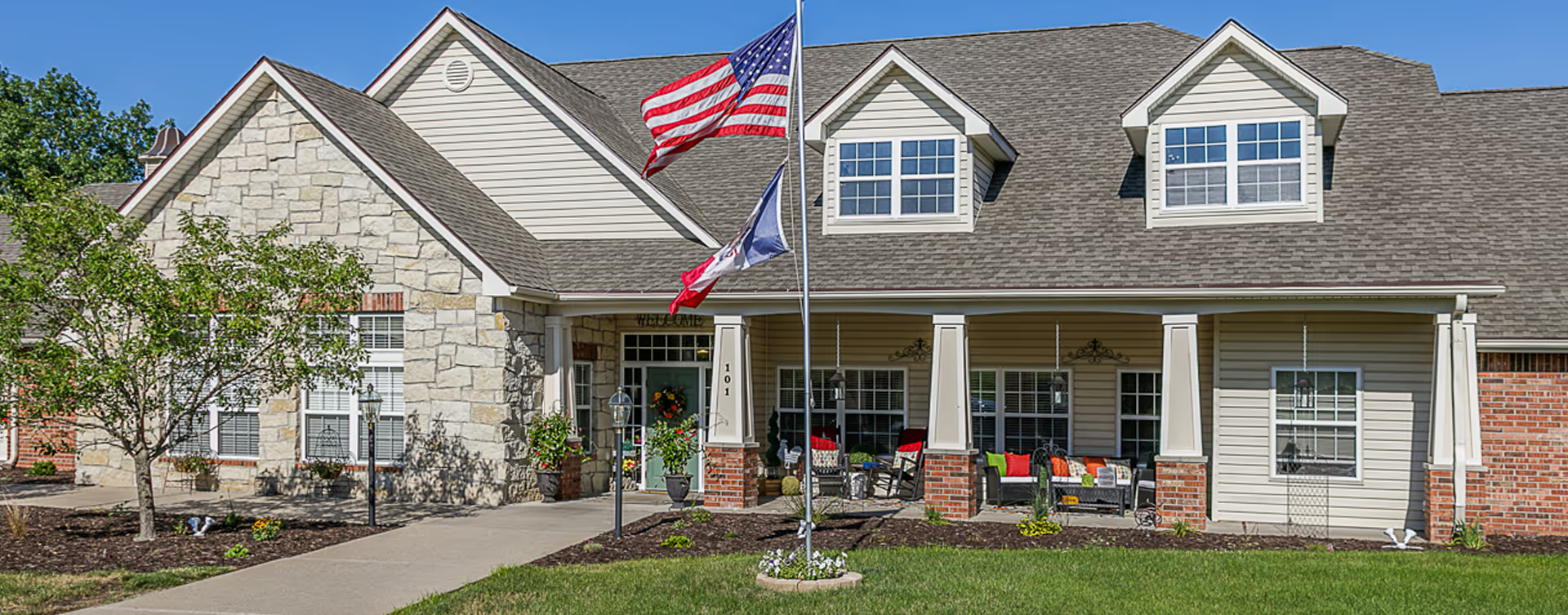
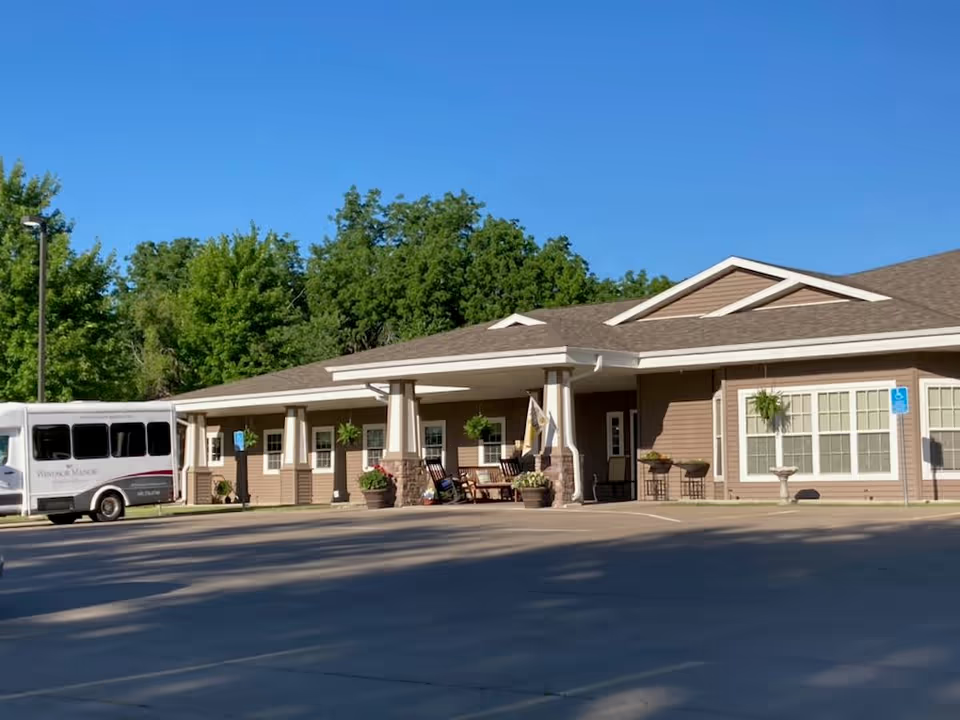
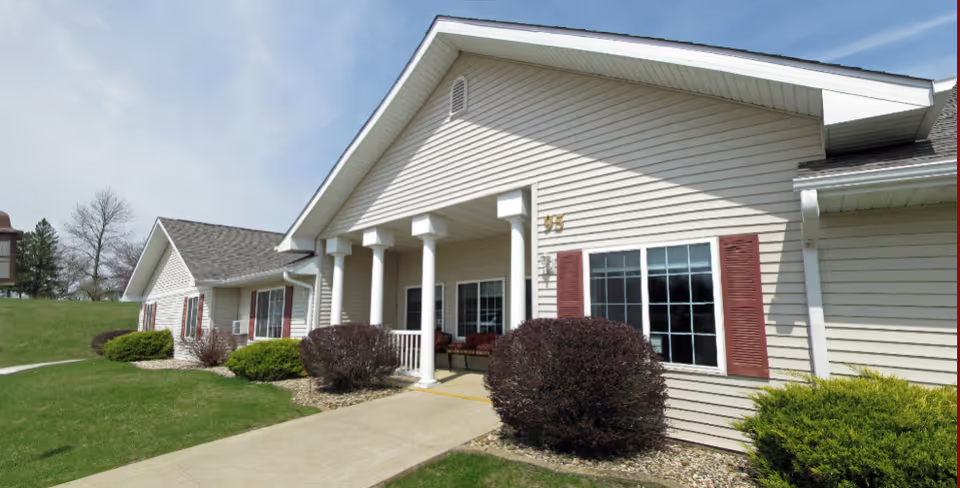
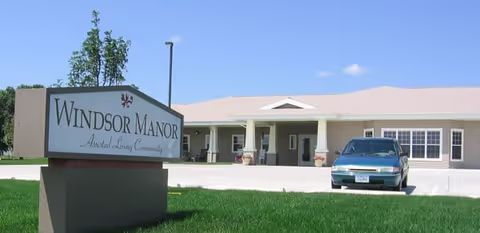
Dining, activities, and facilities: Review language about dining, activities, and physical plant is limited and largely neutral — often summarized as "okay, not great." There is no detailed, consistent feedback about meal quality, programming depth, or facility maintenance. Given this lack of detail, prospective families should verify menus, activity schedules, and common-area conditions during a visit to assess whether these services meet expectations.
Notable patterns and recommendations for visitors: The dominant patterns are (1) polarized resident experiences driven by staff variability, (2) strengths in care coordination and social-services advocacy, and (3) leadership that is perceived both as a potential improvement driver and as inconsistently accountable. For families considering the facility, recommended next steps include in-person observation of direct-care interactions, asking about staff turnover and supervision practices, reviewing steps the administration has taken to address conduct and equity concerns, and requesting specifics on staffing levels and activity/dining offerings to confirm current operational status.