Vintage Park at Tonganoxie presents a mixed but informative picture for prospective residents and families. Many families praised the interpersonal side of care: staff are frequently described as friendly, attentive, and professional, with specific praise for nursing staff and activity leaders who create engaging, celebratory events. The facility offers three meals a day with short-order customization and a dining experience that some families compared favorably to restaurants. Medication supply processes are generally seen as reliable, and emergency-button response times and common-area cleanliness are commonly cited strengths. Financially, fixed-fee pricing and perceived value are noted positives, and room sizes are competitive for the price point.
Care quality is viewed as competent in several respects: nursing staff and on-site clinicians receive commendation for encouragement and routine care, and pharmacy/medication stocking appears dependable. However, there are operational concerns that affect consistency of care. Reviewers describe occasional communication lapses around medication delivery and move-in coordination; these indicate a need for clearer admission checklists and tighter care-coordination processes. There are also mentions of unmet mental-health support needs and variability in responsiveness when leadership changes occur, suggesting families should ask about current care protocols and clinical oversight during tours.
Dining and activities are a clear strength but uneven. The activities program—including social events, music, and resident-centered celebrations—receives repeated positive comments and contributes strongly to resident quality of life. At the same time, kitchen staffing instability has produced inconsistent meal quality and occasional cold or insufficient portions. Prospective families should inquire about current kitchen staffing plans, menu variability, and portion policies to understand day-to-day dining reliability.
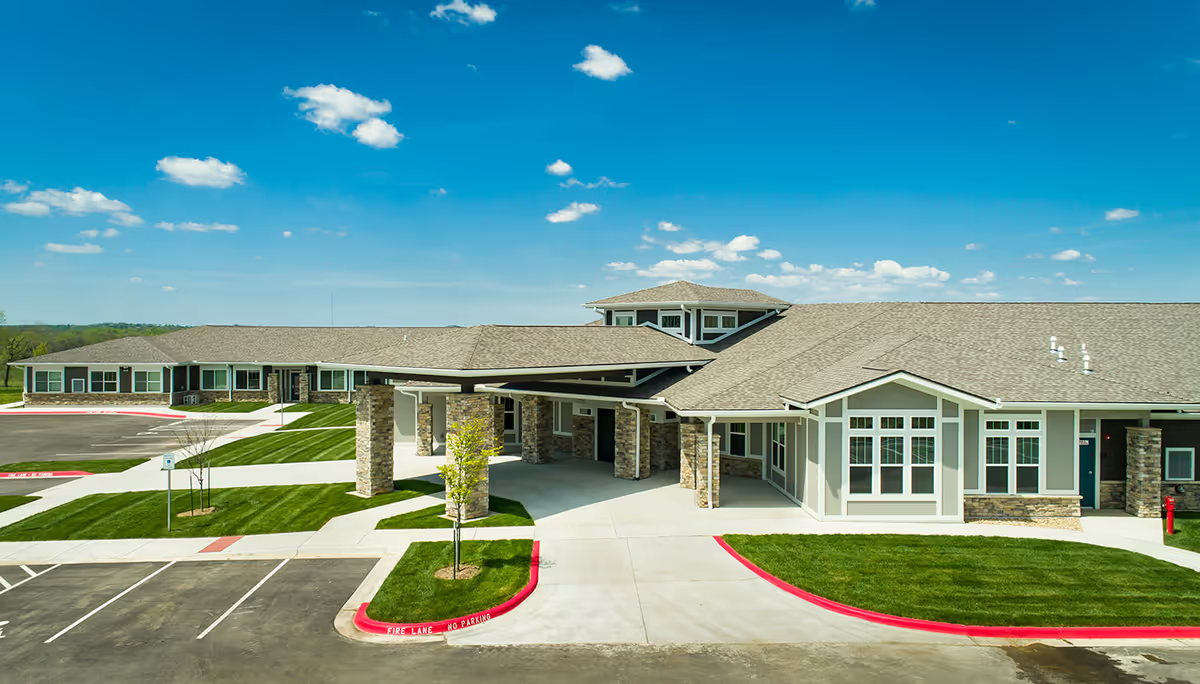
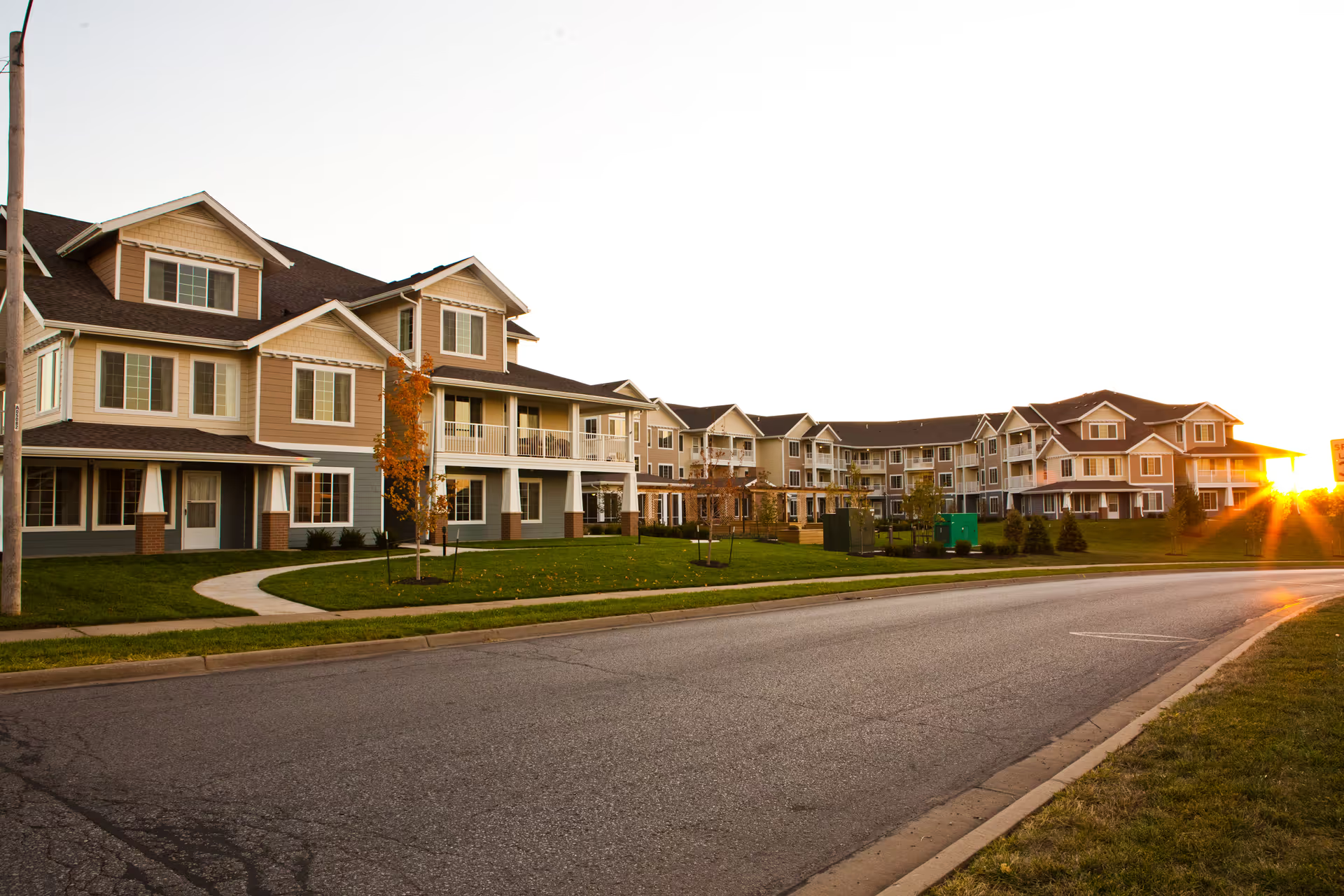
Facility condition and operations show mixed signals. Common areas are often described as clean and homelike, but several reviewers identified unit-level sanitation issues such as mold-control gaps, unclean refrigerator spaces, and HVAC maintenance needs. There are also pest-control concerns cited for resident rooms. Housekeeping is generally attentive, yet maintenance and remediation processes (including cleaning-product policies) may limit how quickly certain sanitation issues are resolved. These items point to a need to review maintenance schedules, pest-control logs, and cleaning protocols during a visit.
Management and staffing patterns are notable themes. Positive experiences correlate with stable, present site management and named staff leaders who are responsive. Conversely, leadership turnover, perceived uneven management presence, and strained staff–management relations have been linked to short-staffing, reduced responsiveness, and lower overall consistency. Several reviews describe initial move-in preparation or administrative handoffs that required correction. Families should ask about leadership tenure, staff turnover rates, staffing ratios, and how the community handles grievances and staff performance concerns.
Overall, Vintage Park at Tonganoxie offers important strengths—engaging activities, caring staff, reliable medication supply, and good dining when operations are steady—but also shows operational weaknesses that can affect resident experience, particularly around kitchen continuity, maintenance/sanitation remediation, and management stability. When evaluating this community in person, consider focused questions on current staffing levels (kitchen and nursing), maintenance and pest-control records, admission/move-in checklists, and examples of recent management improvements to gauge how the facility is addressing the patterns identified above.