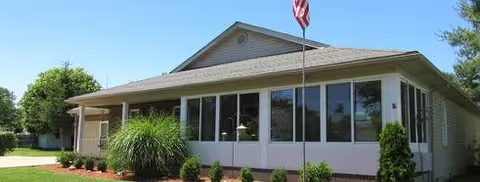
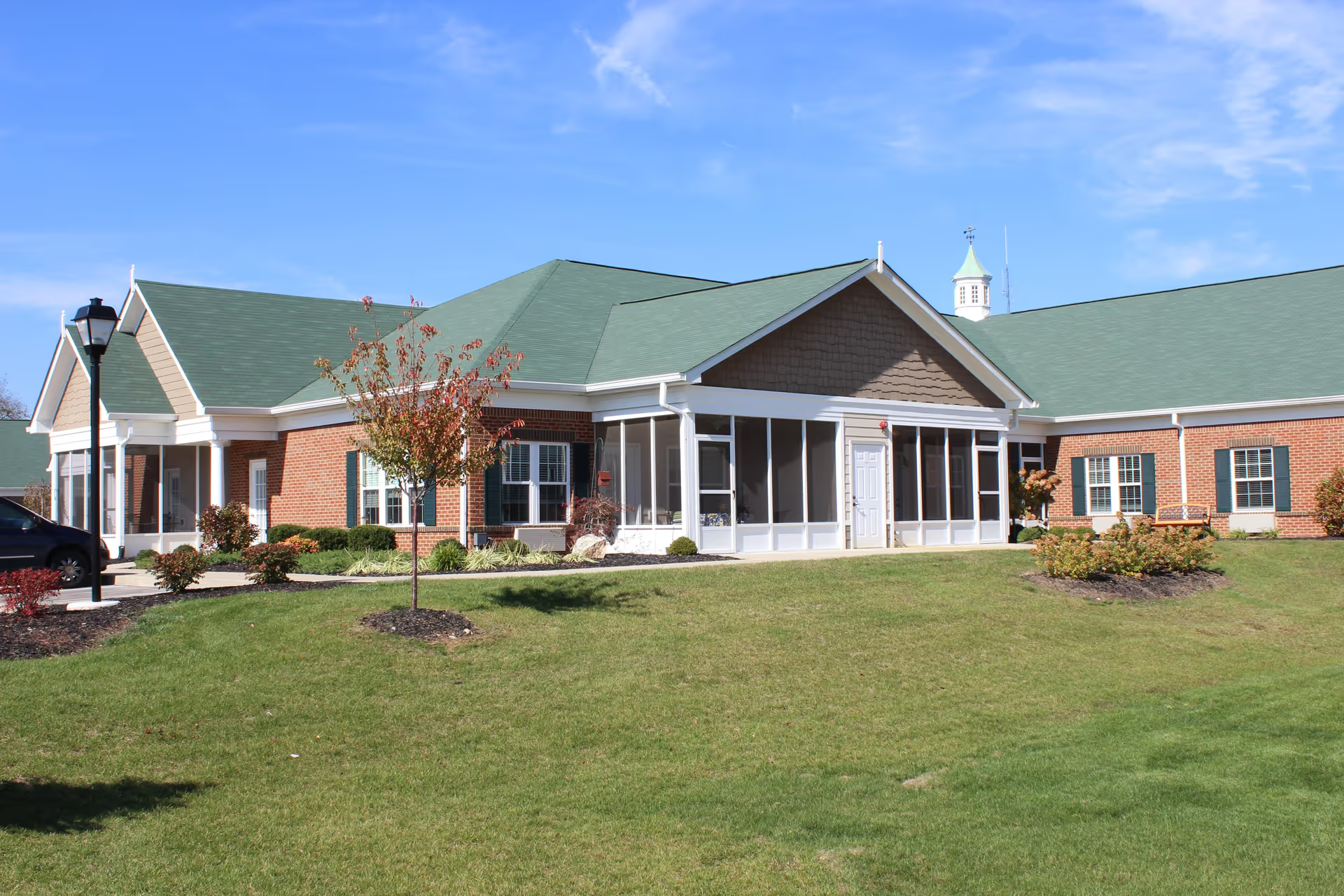
Overall impression The Lantern at Morning Pointe Alzheimer's Center of Excellence in Frankfort presents as a small, memory-care–focused community with a strong emphasis on personalized, home-like care. Families frequently praise the compassionate tone of the caregiving team, the presence of on-site clinical resources, and a broad activities program tailored to residents with dementia. The facility offers multiple clinical and lifestyle amenities (on-site physician and nursing support, PT/OT, podiatry, salon services, and a chef-led dining program) alongside an adjacent secure memory unit branded as The Lantern.
Care and staff Care quality is often described as attentive and empathetic; many families highlight staff who are responsive, respectful in communication, and willing to provide individualized touches (celebrations, hair-styling, and helping couples remain together). On-site nursing and physician coverage, proactive medication administration, and availability of rehabilitation services are cited as clinical strengths. At the same time, reviewers also describe variability: staffing continuity and turnover appear uneven, and there are operational lapses in personal-care assistance and housekeeping in some instances. Those patterns suggest that day-to-day resident support can depend on staffing levels and shift coverage.
Dining and nutrition Dining is a consistent positive. The community emphasizes three meals per day with snacks, an elegant dining room, and a chef on staff. Families comment on pleasing meal presentation, dietary accommodations (including attention to celiac needs), in-unit conveniences (refrigerator, microwave), and beverage/hydration stations. Meal quality and dining-room atmosphere are recurring strengths that support resident satisfaction.
Activities and environment Activity programming is a notable asset: music therapy, pet therapy, cooking clubs, gardening, spontaneous dance events, devotional services, and other life-enriching options are regularly offered. The outdoor enclosed garden with raised beds and accessible landscaping is frequently mentioned as valuable for resident engagement. Overall, the community projects a small, family-style environment with hotel-like rooms and pleasant common spaces.
Facilities and clinical systems Facility-level amenities — secure memory-care unit, salon, on-site specialists, and clean public areas — are frequently cited positively. However, some reviews point to housekeeping and sanitation inconsistencies and to instances where clinical follow-up and infection-prevention processes did not meet expectations. There are also mentions of hospital transfers and urinary-tract–related care needs that families found concerning; these indicate opportunities to strengthen clinical monitoring and preventive protocols.
Management and communication Family communication practices are mixed. Some reviewers praise transition assistance, weekly update calls, and an engaged admissions/executive director, while others describe limited administrative visibility or inconsistent family updates. Leadership transitions have been noted and appear to have affected perceptions of programmatic consistency (some families describe improvements under new administration). Cost is a clear, consistent consideration: the community operates as a higher-cost, private-pay option.
Notable patterns and decision factors For prospective residents and families, strengths to weigh include the facility’s memory-care specialization, robust activity offerings, clinical resources on-site, and generally positive dining experience. Potential concerns to investigate in a tour and contract discussion include staffing continuity, consistency of personal-care assistance and housekeeping, protocols for infection prevention and clinical follow-up, visitation policy flexibility during infectious outbreaks, and total private-pay cost. Visiting in person (when possible), speaking directly with nursing leadership about staffing ratios and clinical protocols, and requesting recent housekeeping and incident/transfer summaries can help clarify whether the community’s operational practices match the aspects families most value.