The Pines Retirement Center of Baton Rouge elicits strongly mixed impressions. Reviews include substantial praise for frontline caregivers, unit nurses, and certain leaders who create a welcoming, family‑oriented environment. At the same time, there are recurring operational themes indicating uneven performance: variability in clinical care, housekeeping, and administrative follow‑through. Prospective families will find examples of both reliable, compassionate service and instances of system‑level gaps.
Care quality and clinical oversight present a clear contrast in the reviews. Positive accounts emphasize attentive nursing, quick responses to routine needs, and staff who provide emotional support. However, other accounts identify inconsistent care across shifts, missed medication administrations, delayed clinical follow‑up, and insufficient support for higher‑acuity residents. There are also repeated descriptions of incontinence‑care delays and laundry management issues that affect resident comfort. These mixed signals suggest that clinical performance may depend heavily on staffing and leadership on a given shift.
Staffing and staff conduct are central drivers of both praise and concern. Many reviewers highlight caring, dedicated aides and nurses who form trusting relationships with residents and families. Conversely, there are reports of high turnover, frequent leadership changes, and lapses in responsiveness—in particular during afternoon and other peak times. Training variability, inconsistent engagement, and communication breakdowns with families and during admissions were noted as contributors to perceived quality variation.
Dining and nutrition are another area of divergence. Several families describe good, home‑style meals and accommodating kitchen staff; others report cold food, inconsistent meal service, and limited plant‑based or higher‑nutrient options. Placement of meals (for example, delivered to bedside rather than in the dining room) and inconsistency in meal quality point to operational issues in food service continuity rather than a uniformly poor kitchen operation.
Activities and social programming exist and are appreciated by many residents—bingo and group events were specifically mentioned as enjoyable—but the breadth and quality of programming appear uneven. Some reviewers describe an active, engaging calendar and improved activity offerings under new management; others find the schedule sparse or poorly organized. There are also comments about limited social work or counseling resources for families seeking case management support.
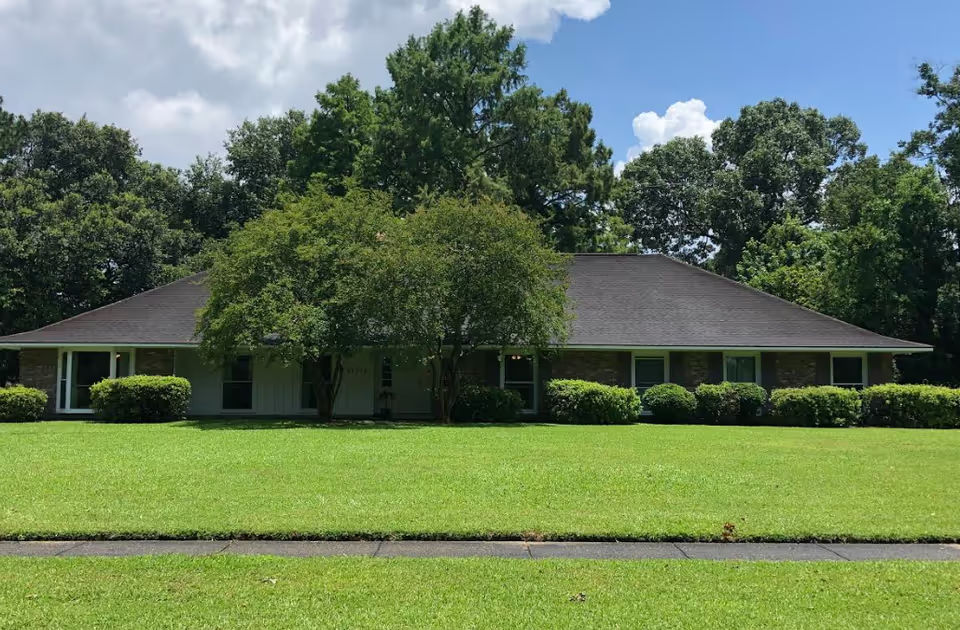
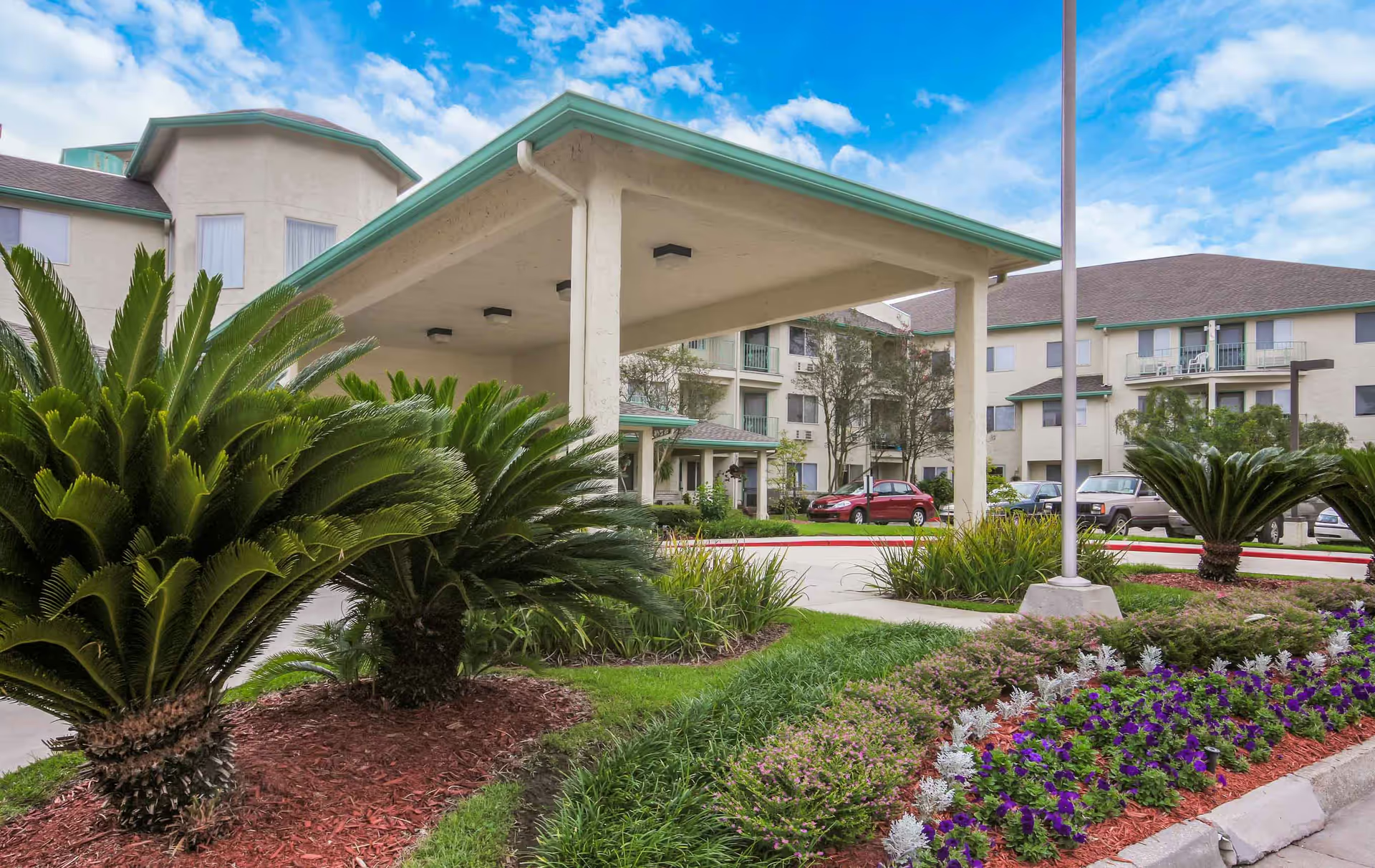
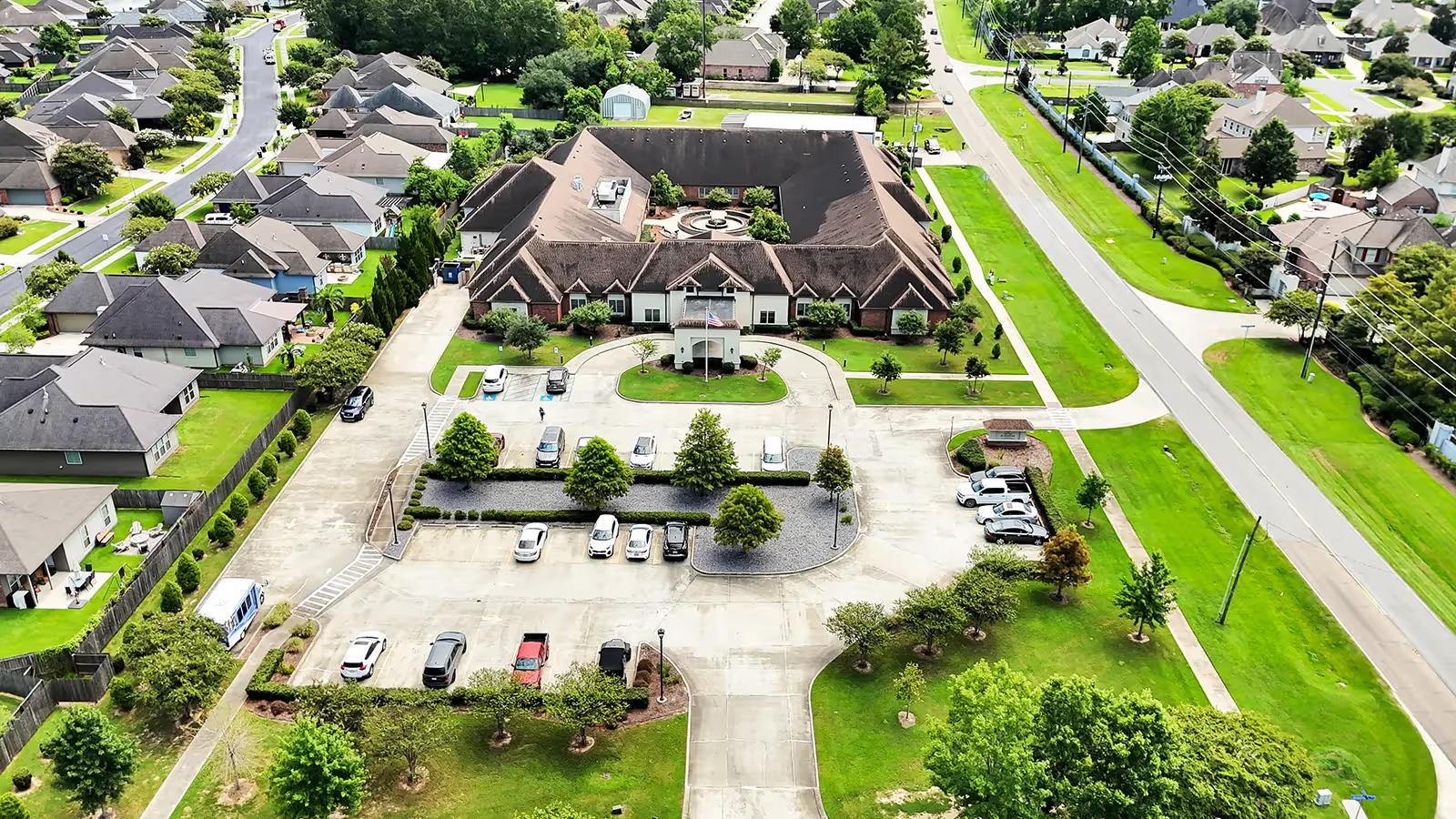
The physical plant is described positively in many accounts—spacious apartments, a new courtyard, and generally clean common areas are strengths. At the same time, the facility is older in parts, and there have been intermittent sanitation and odor concerns in entryways, rooms, and certain common areas, as well as isolated pest‑control issues. Housekeeping and laundry consistency emerge as operational areas needing attention to ensure a uniformly comfortable environment.
Management and governance show a pattern of change. Several reviewers note recent leadership transitions and state that new administrators have addressed cleanliness, activities, and atmosphere improvements. Simultaneously, persistent critiques focus on admission coordination, administrative follow‑through, poor phone responsiveness, and unresolved family concerns. There are also serious individual claims, including allegations of theft and missing belongings, which families should treat as matters requiring prompt administrative investigation.
In summary, The Pines demonstrates strengths that include warm, attentive caregivers, a homelike setting, reasonable pricing options, and on‑site clinical and rehabilitation resources. However, the facility exhibits operational variability tied to staffing, leadership stability, housekeeping, and administrative processes. For families considering The Pines, recommended due diligence includes an on‑site visit during multiple shifts, direct questions about staffing levels and turnover, clarification of medication‑management and incident‑response protocols, inspection of housekeeping and laundry procedures, inquiry about dining menus and nutrition options, and confirmation of how allegations or property concerns are investigated and resolved.