Reviewers describe a facility with a notably strong rehabilitative identity and an active social program, alongside recurring operational weaknesses. The therapy department is consistently identified as a core strength: families and residents cite effective rehab outcomes, attentive therapists, and rapid functional improvement. Many reviewers praise individual caregivers — nurses and CNAs who are described as compassionate, personable, and committed — and housekeeping and amenities such as a large dining room, beauty shop, daily activities, bingo, and chapel services contribute to a positive, social atmosphere for numerous residents.
At the same time, nursing care and clinical responsiveness are described as inconsistent. While some staff deliver high-quality, attentive care, others are perceived as slow to respond or uneven in execution, and night-shift coverage is repeatedly characterized as thin. Reviewers raised concerns about lapses in monitoring and acute clinical response, including situations that prompted questions about timely recognition of changes in condition. These accounts suggest variability in clinical oversight and escalation processes across shifts.
Dining and activities are polarizing: the activities program and overall social offerings are frequently praised, and many residents report enjoyable meals and a pleasant dining environment. However, meal quality is described as unpredictable by other reviewers, with variability in seasoning and portioning noted. Prospective residents should anticipate both strong recreational programming and possible inconsistency in daily meal preparation.
Facility-level operational issues appear in several domains. Sanitation and cleanliness concerns are reported in specific areas rather than uniformly across the facility; housekeeping is praised by some, but others describe episodic sanitation issues and problems with personal-item management. There are allegations of missing personal belongings and concerns about the security of residents' items, indicating a need for clearer property-management procedures. Physical-plant observations include small semi-private rooms and occasional hazards such as wet floors, which reviewers linked to increased fall risk.
Management and care coordination are additional areas of concern. Multiple accounts describe poor communication between staff and families, difficulty reaching staff, and ineffective discharge planning — including home-health, oxygen, or equipment arrangements not being ready at the time of discharge. Reviewers describe administrative responses that feel bureaucratic or focused on titles rather than frontline problem-solving, and some cited inconsistent infection-control and PPE practices during heightened infection periods.
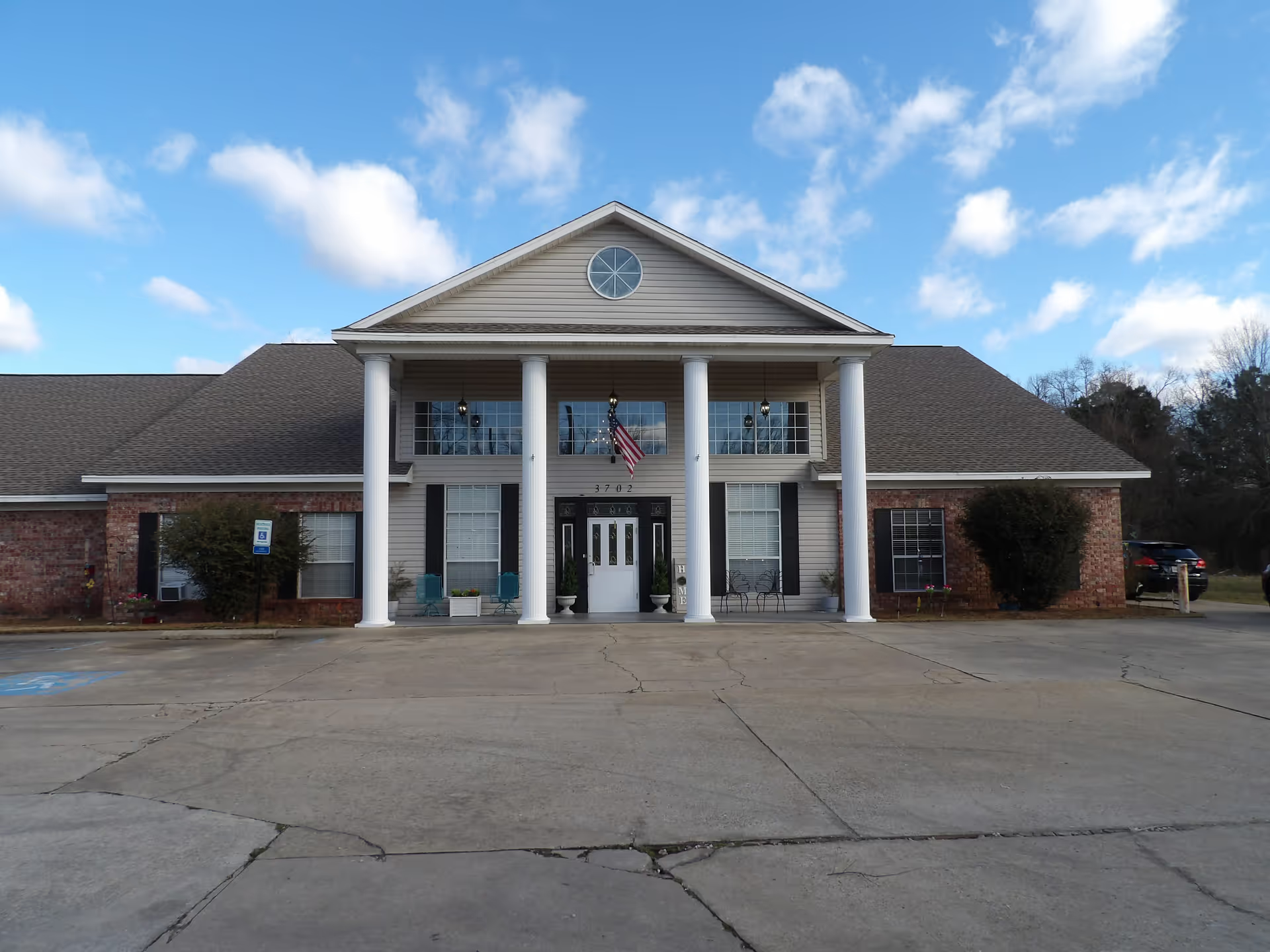
Overall, Landmark Nursing & Rehabilitation Center of West Monroe appears to offer strong rehabilitative care, engaging activities, and several highly regarded frontline caregivers. However, prospective residents and families should weigh that against documented variability in nursing continuity, night staffing, discharge coordination, communication, and episodic sanitation and property-management concerns. Recommended due diligence includes asking for current staffing ratios (especially at night), reviewing discharge and home-health coordination procedures, confirming property-safeguarding practices, and visiting during different shifts to assess consistency of care and cleanliness firsthand.