Rossville Rehabilitation and Healthcare Center elicits a mixed assessment from families and former residents. Many accounts highlight strong clinical and rehabilitative strengths: motivated therapists, measurable therapy progress, effective wound care, and helpful discharge planning. Numerous reviews praise specific staff members, friendly front-desk personnel, and administrators who are accessible and engaged. The facility also receives positive comments for its activity program — themed days, church services, poets, and varied recreational offerings — and for episodes of high-quality dining, particularly during special events.
At the same time, reviewers describe persistent operational inconsistencies. Staff responsiveness is a frequent area of concern; several accounts indicate slower responses during nights and weekends and long waits during shift changes. These responsiveness issues are tied to perceptions of understaffing and uneven staffing deployment, which reviewers connected to delays in assistance, delayed or omitted medication doses, and inconsistent adherence to prescribed diets. There are also recurring comments about medication-administration gaps and occasional medication mix-ups, which suggest opportunities for stronger medication-safety processes and oversight.
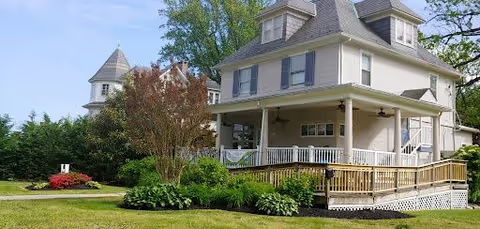
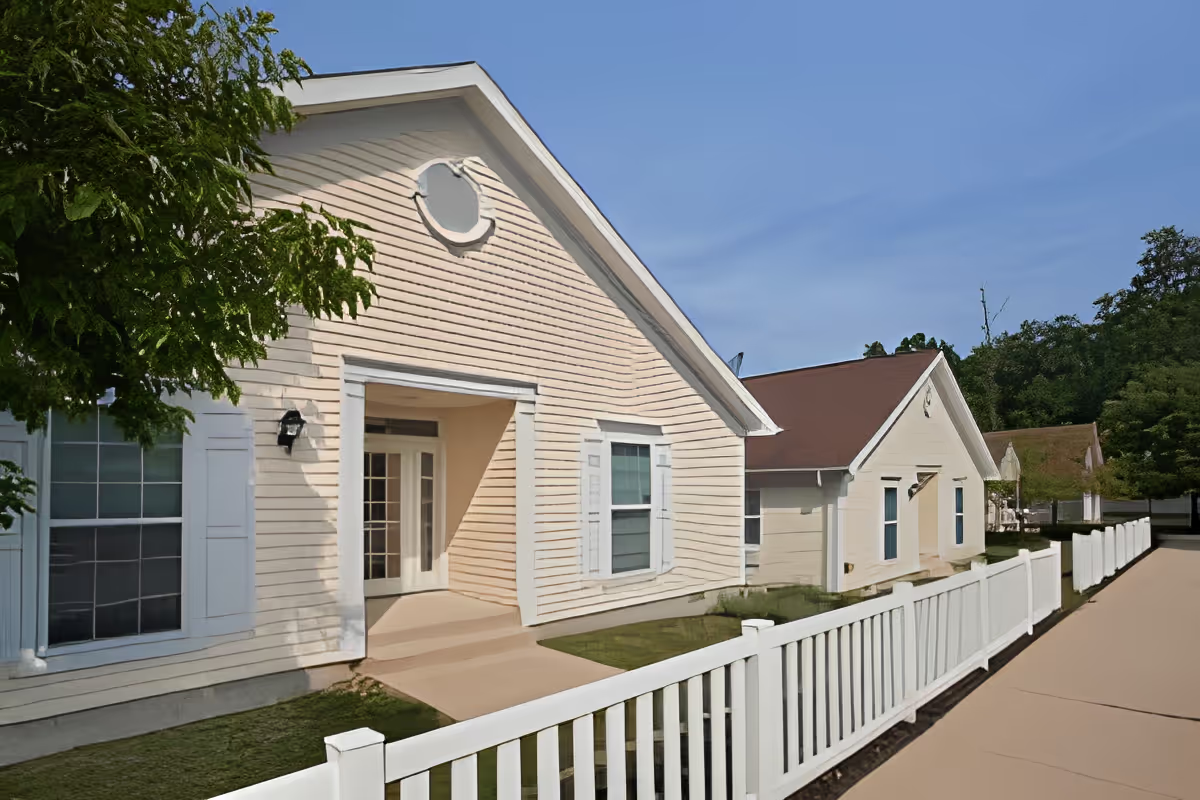
Cleanliness and facility condition are described in contrasting terms. Many families note clean rooms, maintained floors, and a well-kept first floor; however, other reviewers raise sanitation and housekeeping concerns, odor issues in particular areas, and pest-control concerns. The building’s exterior and some rooms are characterized as dated, and a number of reviewers mention cramped shared rooms or multi-resident rooms as a limitation for privacy and comfort.
Dining feedback is highly variable: while special-event meals and some menu items draw enthusiastic praise, a substantial number of reviewers describe inconsistent meal quality, portion size complaints, and failures to consistently meet dietary restrictions. Activity programming is frequently cited as a strength — staff-led crafts, games, and services are appreciated — but some families express that activity reminders and individual engagement can be inconsistent, especially for residents who need prompting.
Management and communication show a split pattern. Several families commend specific administrators and leaders for being proactive and supportive, and cite positive interactions around care planning and transitions. Conversely, other reviewers describe unresponsive management, poor follow-up on complaints, billing concerns, and at least a few serious allegations involving financial misconduct; those allegations may warrant direct inquiry and verification with oversight bodies. Clinical oversight concerns are also highlighted in reports of limited on-call physician availability and inconsistent monitoring practices.
Notable patterns for prospective families: rehabilitation services and many direct-care staff receive strong praise and can deliver meaningful functional gains, but operational variability—especially around staffing levels, medication safety, and nighttime responsiveness—appears to drive most negative experiences. When evaluating this facility, families may find it useful to ask about staffing ratios by shift, medication-administration protocols, on-call physician coverage, infection-control and housekeeping procedures, dining accommodation processes, and options for private or less-dense rooming. Observing a mealtime and an activity, and seeking recent survey or inspection records, can help clarify whether the strengths highlighted by many reviewers are consistent with the experience you or your loved one require.