The body of reviews presents a highly polarized picture of Fox Chase Healthcare: many accounts describe competent, compassionate care, effective short-stay rehabilitation, and an active activities program, while other accounts identify operational and clinical shortfalls that families should assess carefully.
Care quality and clinical operations: Several reviewers praised attentive nursing and successful rehabilitation outcomes, crediting on-site therapy services and a nursing leadership presence. At the same time, a consistent pattern of concerns appears around clinical responsiveness (including delayed responses to alarms or requests), gaps in medication and tube‑feeding management, and inconsistent hygiene and incontinence-care practices. These concerns point to variability in day-to-day clinical execution rather than a uniform level of care across all shifts or units.
Staff and culture: Staff behavior is described both positively and negatively. Many reviews highlight friendly, respectful caregivers, helpful reception staff, and engaged social-work and admissions personnel. Specific staff members and activities leaders received strong praise for resident engagement. Conversely, reviewers describe variability in staff training, supervision, and communication tone, with some shifts perceived as less coordinated or less responsive. Language and communication barriers on some shifts were also noted as a factor affecting clarity with residents and families.
Dining and nutrition: Feedback on dining is mixed. Some families reported pleasant meals and attentive service, while others noted inconsistencies in meal continuity and kitchen responsiveness. A few reviewers opted for private aides to guarantee timely feeding and hydration support, which suggests dining and feeding processes can be uneven depending on staffing and acuity.
Activities and social programming: The facility’s activities program is consistently cited as a strength. Reviewers praised active calendars, special events, and specific activities staff for improving resident engagement and morale. Therapeutic and social programming appears to be a reliable positive across many accounts.
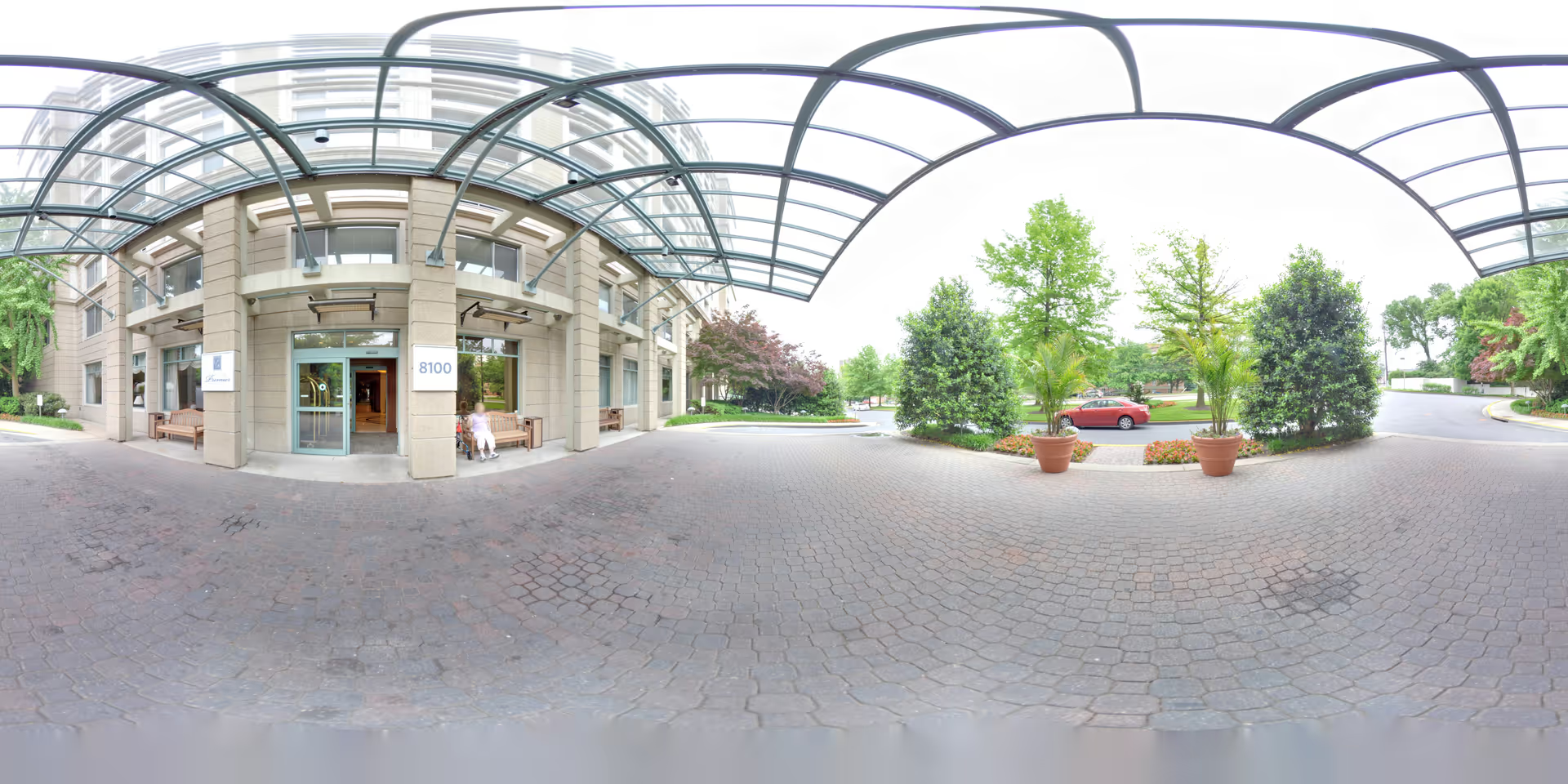
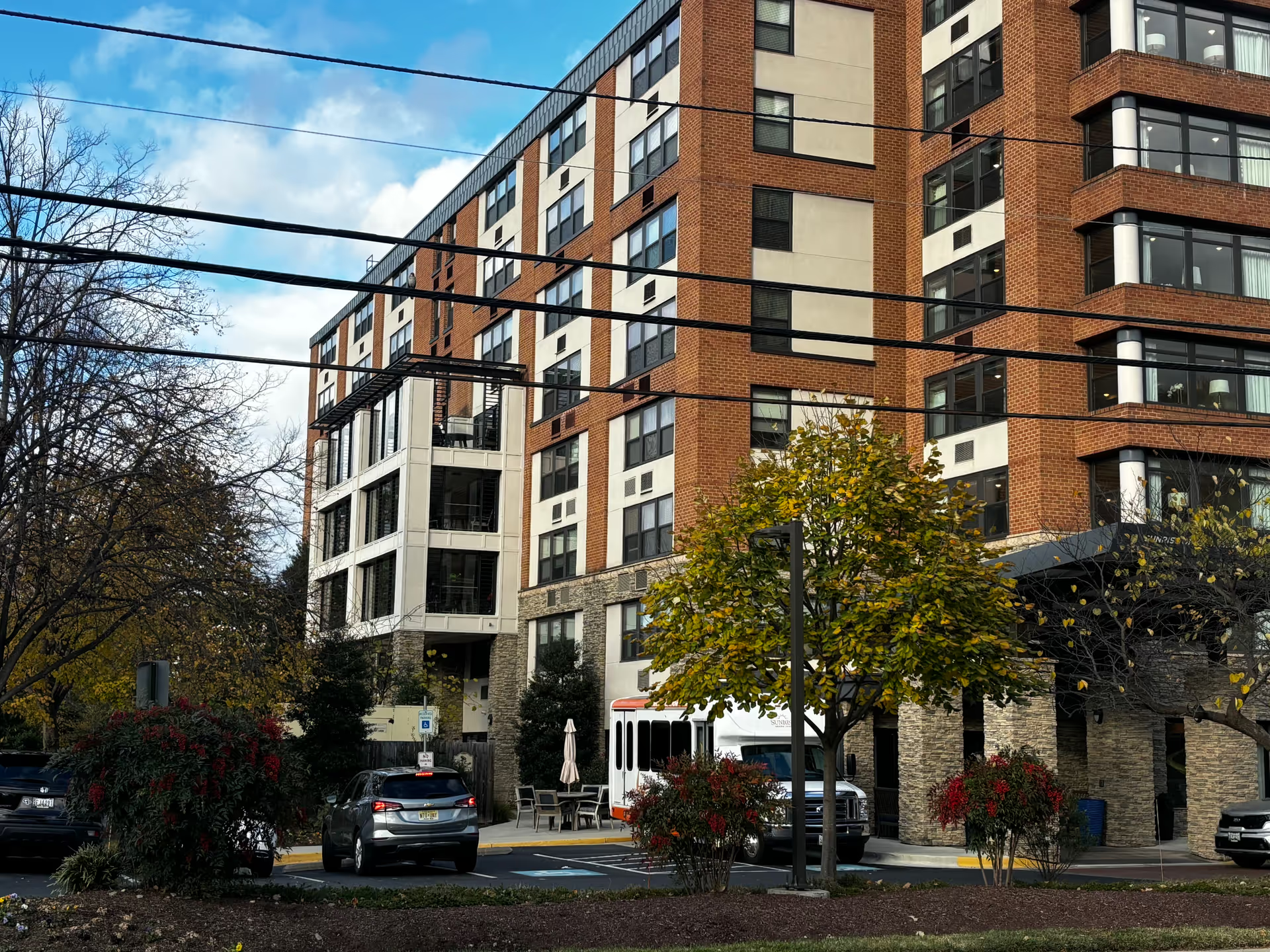
Facilities and environment: Many visitors and families described clean rooms and well-maintained common spaces, a welcoming reception area, and general sanitation practices. However, other reports raised environment-related concerns including odor issues in some areas, pest-control questions, hallway clutter that could obstruct egress, and dated rooms in need of renovation. Safety-related observations included emergency-response processes and fire-safety considerations that families flagged for further review.
Management, administration, and billing: Several reviewers described visible administrative responsiveness and recent management efforts to improve operations. At the same time, recurring themes included disorganized billing/proration, disputes over charges, and concerns about personal-belongings tracking. More serious allegations involving financial exploitation and inappropriate influence over power-of-attorney decisions were raised in a limited number of reviews and have led some families to contact external oversight bodies. Overall, perceptions of corporate responsiveness and corrective action are mixed.
Notable patterns and guidance for families: The reviews suggest that experiences at this facility can vary widely by unit, shift, and individual staff. Praise centers on rehabilitation success, active programming, and compassionate caregivers; criticisms center on inconsistent clinical responsiveness, process controls (medication, feeding, hygiene), communication, billing, and certain environmental issues. Prospective residents and families should tour in person, observe mealtimes and activity sessions, ask to see recent inspection or incident reports, verify call-bell and alarm escalation procedures, review medication- and feeding-management protocols, inquire about pest-control and housekeeping schedules, and request clear billing/proration policies. For higher-acuity needs, clarifying staffing ratios, transfer-safety practices, and emergency-response timelines is advisable. If there are serious financial or consent concerns, families should consider involving ombudsman resources or regulatory authorities to verify protections and documentation.