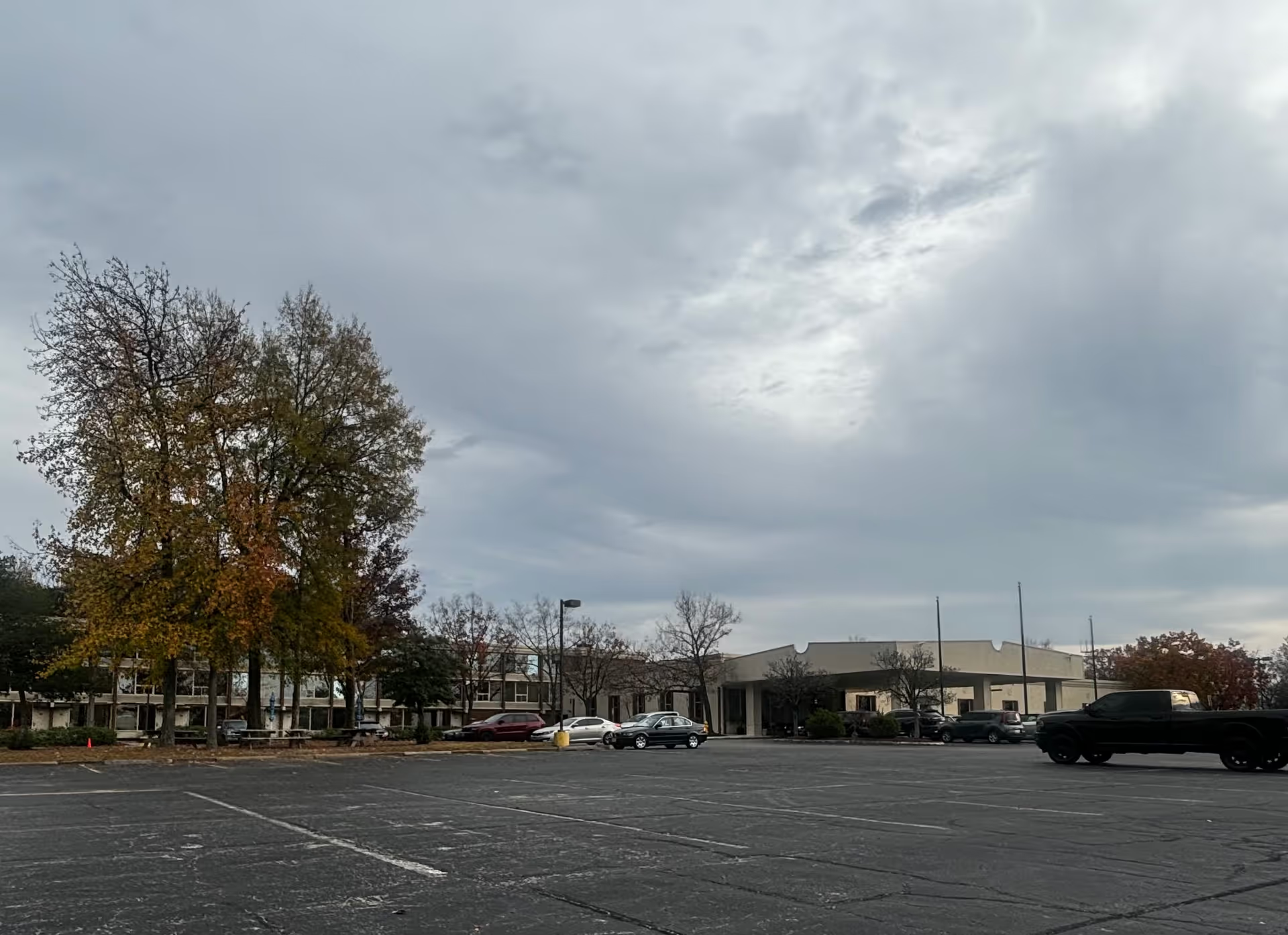
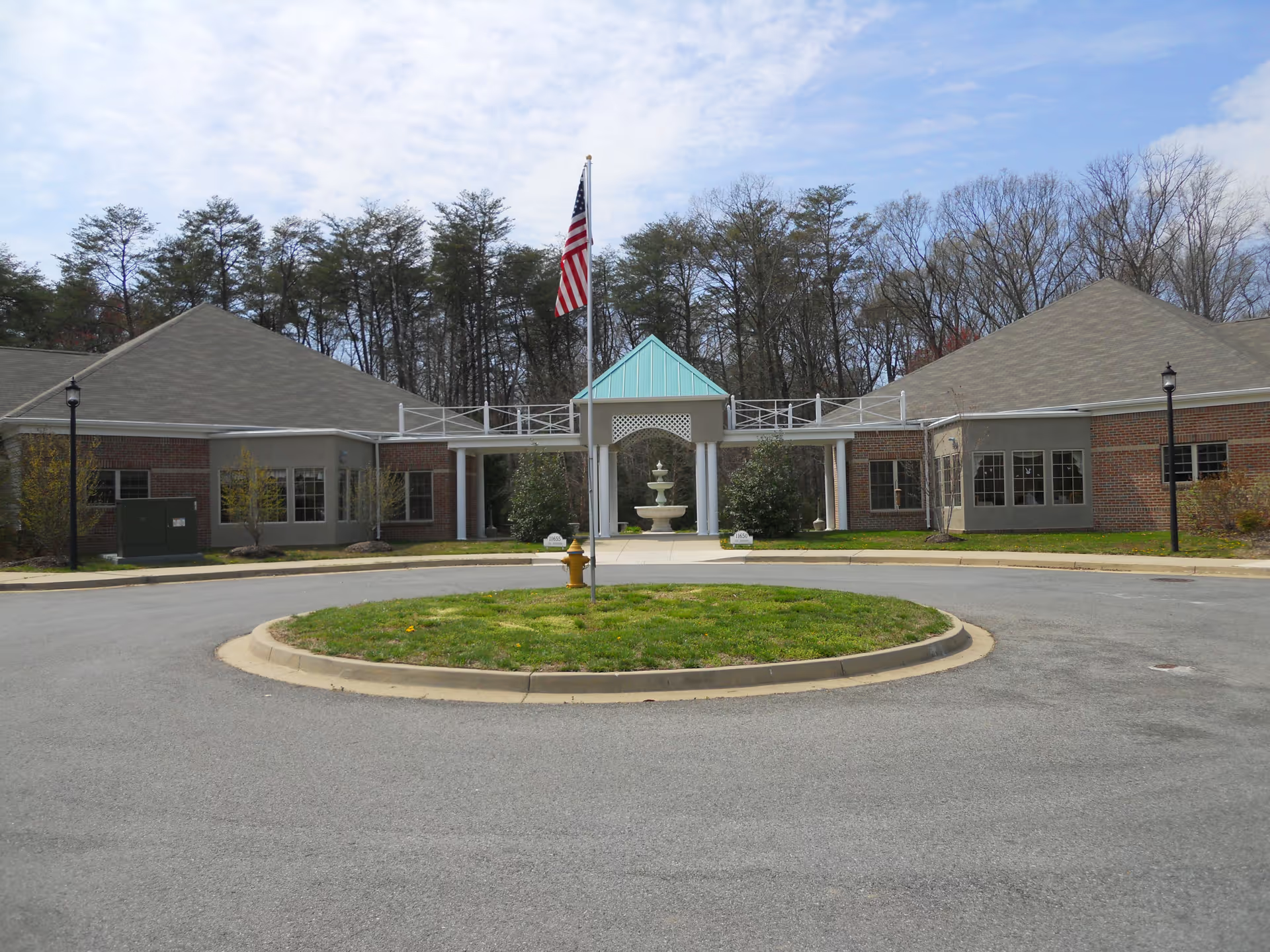
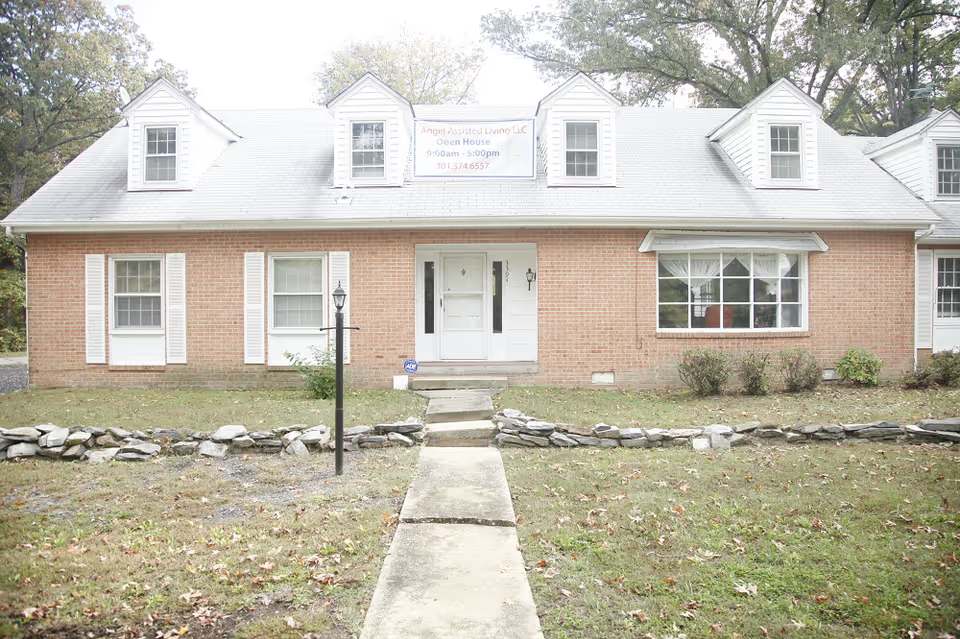
Harmony at Waldorf presents as a new, well-appointed senior living community with strong aesthetic and amenity strengths. Review content consistently highlights a clean, modern building, apartment-style units with full kitchens and in-unit laundry, and a broad set of common-area amenities such as a movie theater, game rooms, fitness space, salon, and pool. Public spaces, landscaping, and dining rooms are frequently described as well-maintained and attractively furnished. Front-desk and concierge staff, maintenance responsiveness, and individualized touches (staff calling residents by name, monthly family meetings) are repeated strengths.
Staff performance and clinical care present a mixed picture. Several comments praise attentive, compassionate caregivers—particularly in aspects of memory care where staff are described as knowledgeable and engaged—but reviews also identify variability in clinical skill and experience, especially on assisted-living floors and during evening/night shifts. Patterns in the feedback suggest concerns about delayed personal care tasks and gaps in clinical responsiveness; there are also references to variable staff training and turnover among administrative and caregiving roles. Prospective families should clarify staffing ratios, clinical coverage hours, and staff training practices when evaluating whether the facility meets a given resident’s medical and personal-care needs.
Dining and food service are another clear area of contrast. The facility’s dining rooms are described as restaurant-like, and menus offer plated dining with a la carte options. At the same time, reviewers cite recurring operational issues: slow service, cold meals on occasion, limited waitstaff during peak times, and inconsistent portioning. These issues have led some families to question the value proposition relative to the facility’s pricing. Prospective residents should ask about meal staffing, timing expectations for dinner service, which meals are included in monthly fees, and recent steps management has taken to improve kitchen operations.
Activities programming and social life show strengths and limitations. The community offers many scheduled activities, outings, and on-site entertainment spaces; memory-care programming and safety features are noted as positives. However, some reviewers observed limited visible resident engagement at certain times (especially in a newer, not-yet-full building) and cited staffing shortages that can reduce activity frequency. Visitors are advised to observe programming on multiple days and inquire about activity staffing and participation levels for the specific care neighborhood they are considering.
Operational and management themes include generally positive tour experiences and an emphasis on hospitality, but also recurring concerns about administrative consistency. Feedback references admissions-process issues (including deposit and refund disputes), scheduling difficulties, and leadership turnover. Security and access procedures are also described as unclear in places (sign-in protocols, camera visibility, and limited outdoor-sitting areas). Given these operational patterns, it is advisable to review contract language carefully, confirm refund and deposit policies in writing, and ask for specifics about admission timing and pre-move assessments.
Overall, Harmony at Waldorf appears to offer a high-quality physical environment and a range of lifestyle amenities, with many staff members who deliver warm, resident-focused service. The principal areas for deeper inquiry are assisted-living clinical readiness, staffing consistency (nights/evenings and dining service), and administrative processes related to admission and billing. Prospective residents and families should plan visits across different shifts, request current staffing and clinical-coverage data, review written meal- and care-inclusion policies, and confirm contractual deposit and refund terms before deciding.