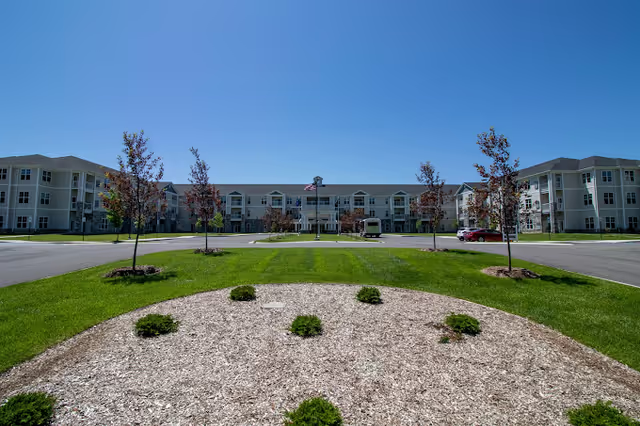
The Parkdale Senior Living receives strongly mixed feedback. Many families and residents praise the community’s appearance and social environment: common areas are frequently described as clean and hotel-like, apartment layouts are spacious, and onsite amenities (salon, transportation, and some clinical/wellness access) are noted as convenient. A substantial portion of reviewers highlight compassionate, resident-focused caregivers and an active calendar of events and entertainment that many residents find stimulating and socially engaging. Several reviewers also emphasize positive director-level engagement, with staff who listen and make efforts to address family concerns.
At the same time, a consistent pattern of operational weaknesses emerges. Staffing instability and high turnover are repeatedly linked to unpredictable care delivery: families describe inconsistent assistance with bathing and personal care, delayed attendant response times, and gaps in daily-care routines. Medication-management and record-keeping deficits are a recurrent concern; reviewers cited missed documentation, medication-administration errors, and inconsistent clinical communication. Emergency-response and incident-reporting processes are also described as inconsistent, and there are mentions of pendant system unreliability and delays in escalation.
Dining and nutrition are polarizing. Some families praise a new chef and homemade meals, but many others report inconsistent meal quality, limited high-protein or diabetic-appropriate options, cold or late deliveries, and an unreliable meal schedule. Housekeeping and maintenance present a similar split: common spaces are often well maintained while room-level cleaning and some maintenance tasks are described as variable. Reviewers also cite equipment outages (laundry and dishwashing), intermittent laundry-service problems, and room temperature-control limitations that affect resident comfort.
Memory-care and programming quality appear uneven across units. The community offers a dedicated memory-care unit and several families report clear cognitive benefits from daily activities; however, other families describe a lack of dementia-specific training, limited or poorly tailored programming for memory-care residents, and general overstimulation in large common spaces. Sanitation and odor concerns in specific areas, along with allegations of mishandled resident property and occasional safety-related incidents, are serious themes that prospective families should verify directly with the community and through state inspection records. Reviewers also referenced regulatory complaints and an investigation (most recent citation noted March 28, 2025), underscoring the value of checking current compliance status.
In summary, Parkdale offers many features that appeal to residents seeking an attractive, activity-rich assisted living environment with onsite services and personable caregiving teams. However, the facility also demonstrates several operational inconsistencies—particularly around staffing stability, medication and documentation controls, meal-service reliability, and room-level housekeeping—that materially affect some residents’ experiences. Prospective families should conduct multiple visits at different times of day, ask detailed questions about staff turnover, dementia training, medication-safety protocols, emergency response and pendant reliability, meal scheduling and nutritional options, laundry services, and recent inspection or complaint history before making a placement decision.