Sterling Place presents as a community with several enduring strengths alongside recurring operational weaknesses. Reviewers consistently praise the staff’s interpersonal approach — descriptors such as friendly, personable, and attentive recur across accounts — and many families note reliable medication administration and regular wellness checks. On-site clinical supports, including nursing and outpatient physical therapy, are available and valued by residents who require periodic clinical oversight. Transportation, an array of amenities (salon, library, game and piano rooms), and laundry facilities contribute to convenience for residents who retain a high degree of independence.
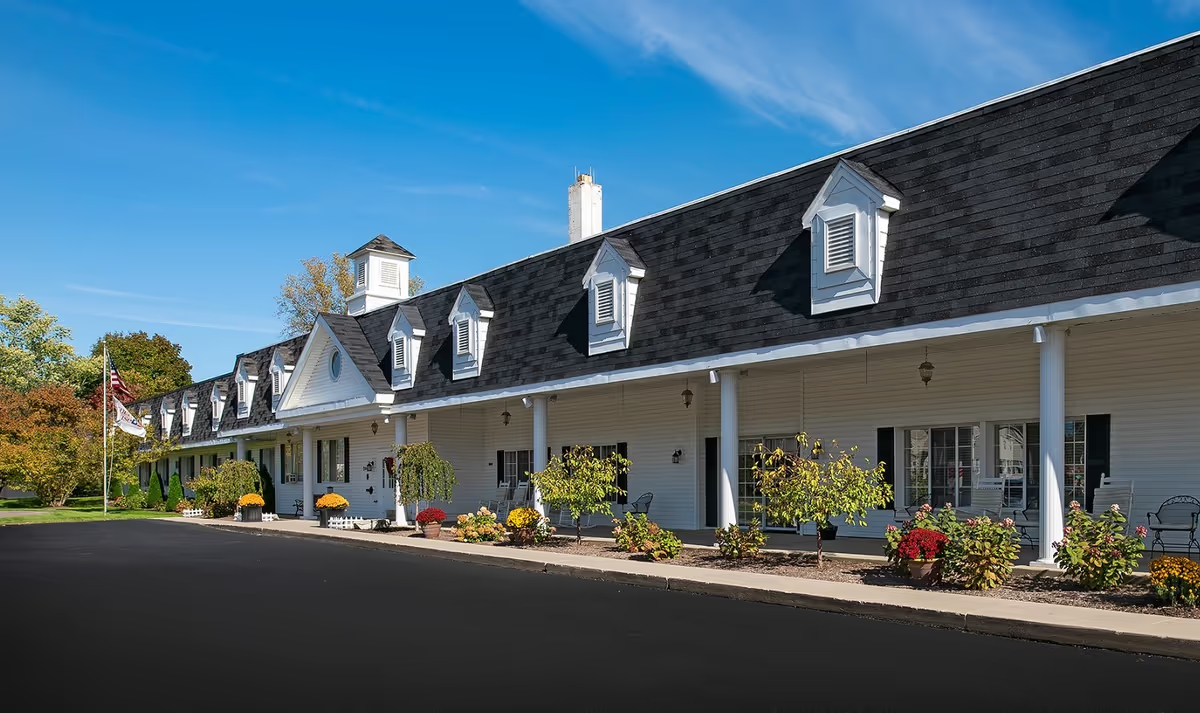
The community’s social programming is a clear asset. The calendar of activities, outings, church services, concerts and games is extensive and often highlighted as a reason residents feel engaged and socially connected. Several reviewers also point to personalized programming and staff members who take initiative to involve residents. Renovation and modernization efforts in common areas and units have been noticeable to many visitors and residents, and attractive grounds and outdoor spaces receive favorable mention.
Dining is a mixed picture. Some reviewers enjoy the food and credit new culinary staff with improvements, while a substantial number cite inconsistent meal quality, small portions, high sodium content, and limited accommodations for special diets (for example, low-sodium or diabetic needs). Meal service timing and continuity have been problematic at times: reports describe early kitchen closures, slow delivery to apartments, and reduced menu options. Prospective residents should clarify current dining practices, menu flexibility, and special-diet provisions during a visit.
Operationally, the community has experienced variability. Ownership and management transitions are frequently mentioned and appear to correlate with changes in service levels: some reviewers note improvements under new management, while others describe reduced services or inconsistent oversight. Staffing instability and short-staffing have affected meal service, activity coverage, and responsiveness at times. Maintenance responsiveness is uneven — routine tasks (carpet replacement, painting, wall repairs) and infrastructure items (heating/cooling, boiler replacements) have been addressed in some cases but follow-through is inconsistent in others. There are also references to pest-control concerns and laundry equipment odor/efficiency problems; these speak to sanitation and facilities maintenance areas that merit direct inquiry.
Care coordination and communication show variability across accounts. Many families praise helpful administrative staff, social workers, and hands-on caregiving; however, there are repeated mentions of gaps in communication between staff, care teams, and families, and of billing or discharge disputes in isolated cases. There are also isolated allegations of mishandling of resident belongings and confrontational administrative interactions; these are not presented as systemic regulatory actions but are items families may wish to probe further during a tour and caregiver conversations.
Recommendations for prospective residents and families: schedule an in-person visit that includes a meal observation, a review of the most recent activity calendar, and a walk-through of a unit at the size you expect to occupy. Ask specific questions about current staffing ratios, recent management changes, pest-control protocols, medication-administration procedures, dietary accommodations, maintenance response times, and accessibility modifications for common-area bathrooms. Given the variability documented in reviews, obtaining contemporaneous evidence of operational consistency (recent menus, sample activity lists, and maintenance logs or work-order turnaround times) will provide a clearer sense of whether Sterling Place’s strengths align with your needs and expectations.