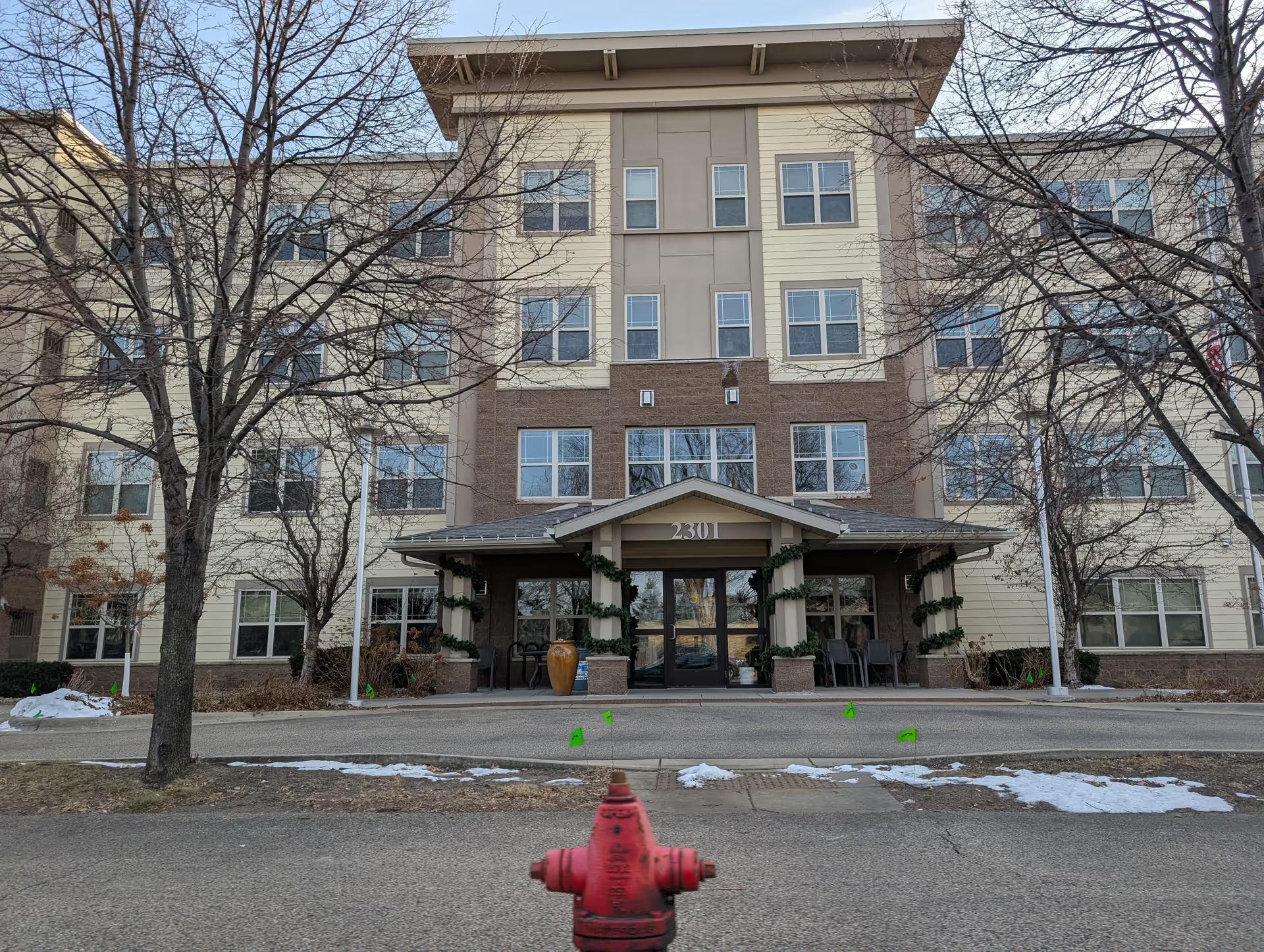
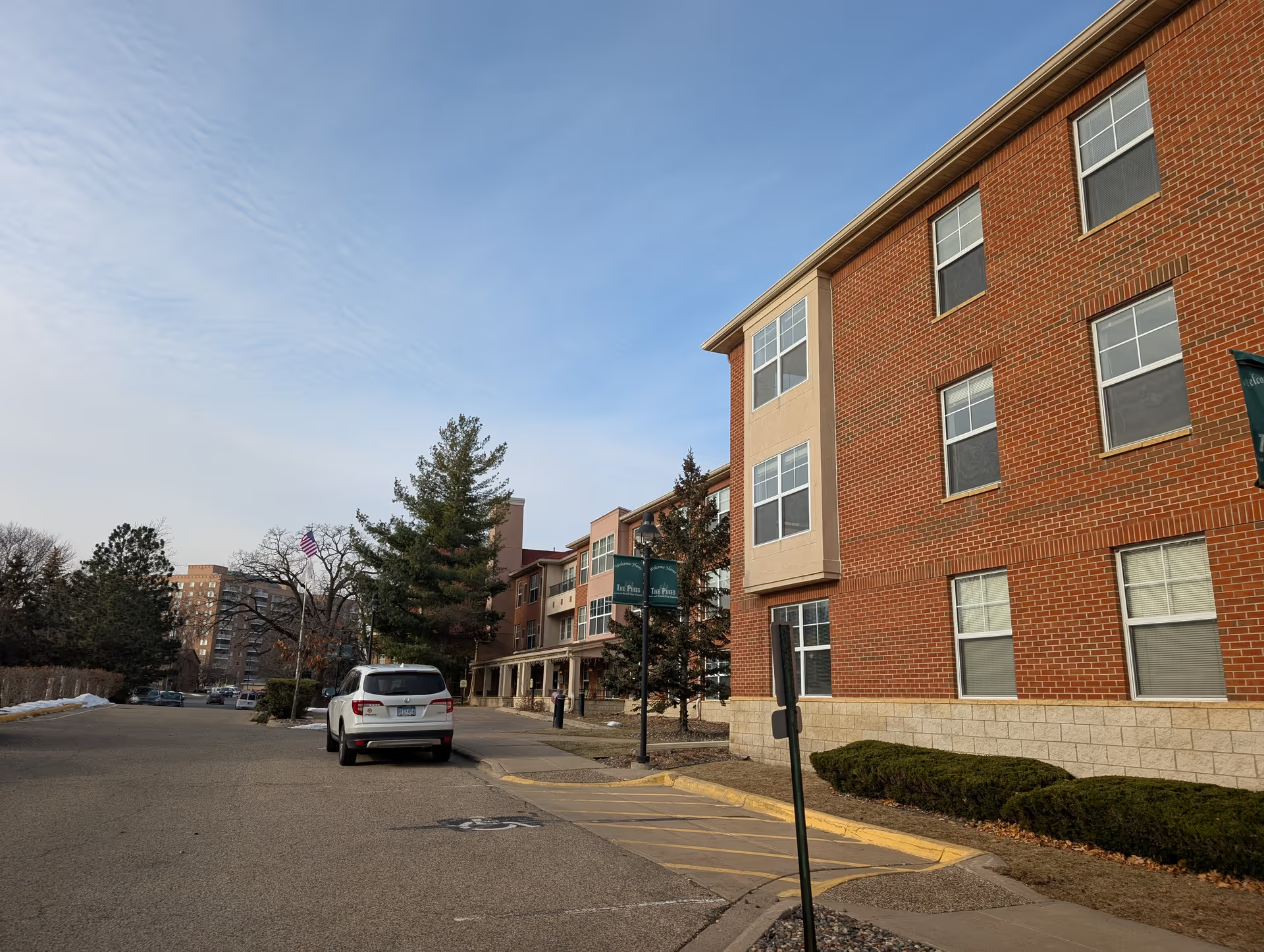
Martin Luther Campus presents a mixed but instructive profile for prospective residents and families. Many reviewers praise the physical campus — described as attractive, well maintained and homey — and highlight a pleasant, restaurant-style dining room and comfortable communal spaces. The facility also receives frequent positive comments about its rehabilitation services, with multiple mentions of effective PT/OT care and smooth transitions for short-term stays. Admissions and transitional processes are often characterized as efficient and helpful.
Direct-care staffing elicits polarized feedback. Numerous accounts describe compassionate, attentive aides and nurses who build rapport with residents, provide coordinated end-of-life care, and facilitate strong in-house clinical relationships with hospice and primary practitioners. At the same time, consistent operational concerns appear around staffing levels and coverage: delayed responses to call lights or bathroom assistance, variable night-shift attentiveness, and intermittent lapses in routine personal-care tasks. These staffing inconsistencies also affect hygiene-related routines and bathing schedules, producing uneven experiences across residents and units.
Clinical-safety and medication management are recurrent themes in the negative feedback. Several reviewers describe delays or errors in medication administration, slow pain-med response, and broader frustrations with medication-management processes and documentation. Families also note gaps in communication between staff and outside providers and occasional inaccuracies in discharge paperwork. These issues, when combined with delayed response times for urgent requests, create identifiable safety and continuity-of-care risks that warrant attention.
Dining and activity programming are strengths in many accounts. Multiple reviewers commend the nutritious meals, accommodations for residents with utensils or other needs, and a lively schedule of activities that ranges from arts and crafts and singing groups to partnerships with music education programs and virtual-reality experiences. However, meal-service consistency is uneven in practice; some accounts cite incorrect orders, meals delivered without confirmation, and temperature/taste issues.
Memory care and secure units emerge as an area of notable variability. Reviewers report constrained room size, limited activity engagement for some residents, language barriers with staff, and concerns about supervision and individualized care in those units. These comments suggest that the memory-care program may not be delivering the same level of consistency observed in other parts of the campus.
Operational and management themes are mixed. Several families describe responsive managers who addressed concerns and implemented improvements, while others describe difficulty getting callbacks, unresolved billing/coordination issues, and adversarial interactions. Personal-belongings security and inventory control is another recurrent operational weakness, with multiple accounts of missing hearing aids, clothing, or other items; one summary-level characterization uses the term "allegations" to indicate serious individual claims regarding missing personal items. Cleanliness and sanitation are likewise inconsistent across reports: some reviews describe tidy, clean areas while others raise sanitation concerns and infection-related consequences.
Overall, Martin Luther Campus appears to offer many institutional strengths — a pleasant physical environment, strong rehabilitation services, varied enrichment programming, and many compassionate caregivers — but also shows recurring operational weaknesses that materially affect resident safety and family confidence. Prospective residents and families should balance the facility’s clear programmatic and environmental assets against documented variability in staffing, medication administration, memory-care consistency, meal-service accuracy, and personal-property controls. Those considering the campus would be well advised to visit the specific unit of interest, ask for recent staffing and incident metrics, review medication- and care-plan procedures, and discuss bedside-staffing patterns and belongings-security protocols with management prior to placement.