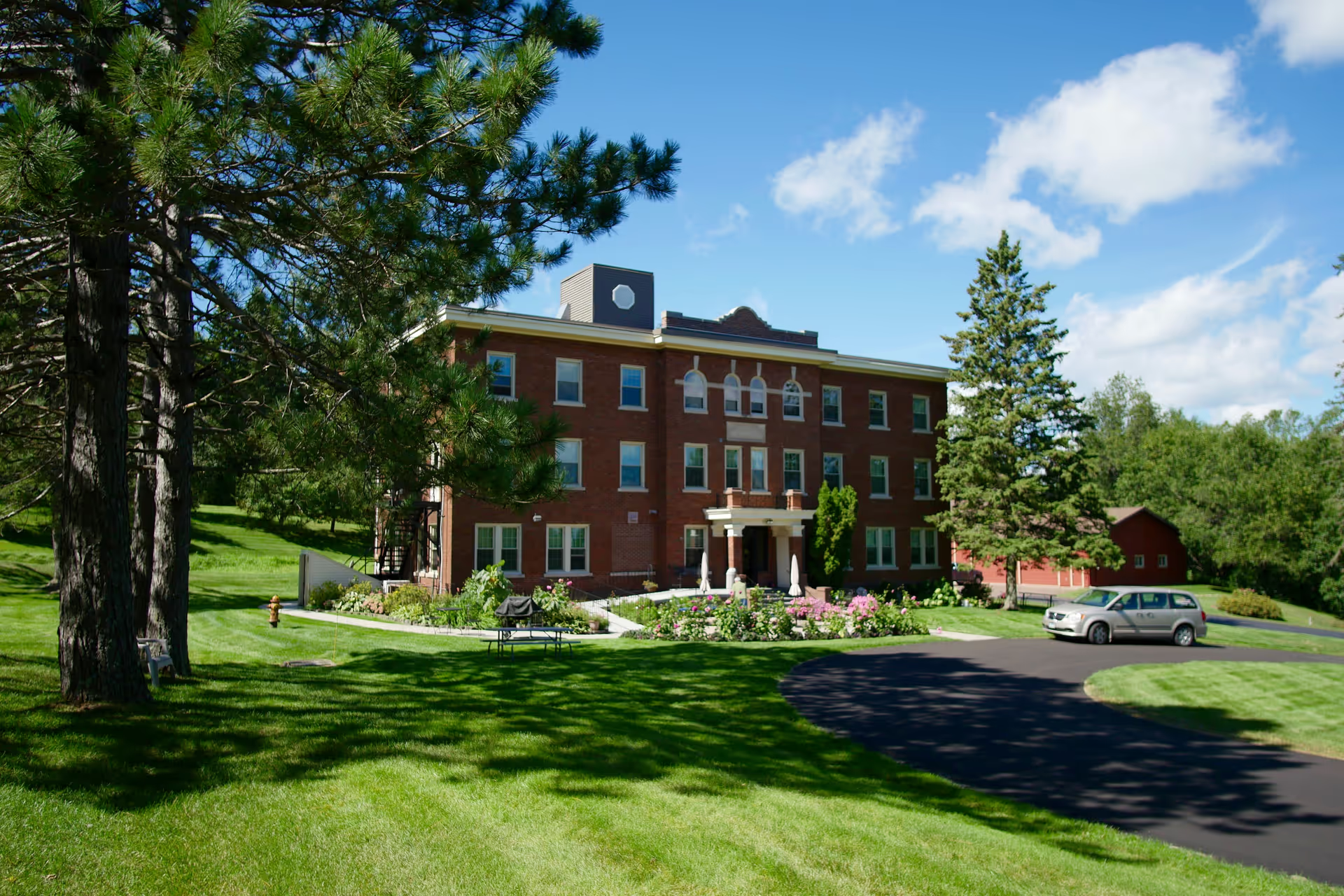
The collected reviews present a mixed picture of the facility. Positive comments emphasize a warm interpersonal environment, including friendly and respectful interactions between staff and residents, a pleasant resident community, and a building with historic character located centrally near parks, shops, and transit. These aspects may appeal to prospective residents who prioritize location, neighborhood access, and a socially congenial setting.
Care quality and staffing are the most recurrent areas of concern. Several reviews describe inconsistent or limited hands-on assistance; reviewers raised issues that align with chronic understaffing and resulting delays in resident care. Specific operational patterns noted include inconsistent personal-care routines and limited bathing assistance. There are also concerns about staff conduct and responsiveness to residents’ needs, which reviewers framed as problems with tone, attentiveness, and timeliness of care. Together these items suggest variability in day-to-day caregiving rather than a single, uniform experience across all shifts.
Dining and nutrition are another area of notable variability. Multiple reviewers described problems with meal temperature, preparation, and limited menu variety. While some reviewers used strong language about food quality, the pattern points to inconsistent meal service and limited culinary options rather than steady, high-quality dining. Families who prioritize robust nutrition programs and menu variety should seek clarification from management and request sample menus or a meal observation during a visit.
Activity programming and amenities were described as limited by a number of commenters. Several reviewers indicated few structured activities and low engagement opportunities beyond television and informal socializing, which may not meet expectations for residents seeking active programming. In contrast, the facility’s central location and historic interior were seen as positives for residents who value walkability and proximity to community resources.
Management, communication, and safety protocols drew sharp commentary in some reviews. Reviewers reported weak responsiveness from management when concerns were raised and called for investigations in relation to specific serious incidents. There are also indications of gaps in supervision and safety protocols for residents with cognitive impairment, including instances of wandering and related safety events. These items point to both operational and communication-process weaknesses — prospective residents and families should ask management for incident-reporting policies, staffing ratios by shift, supervision protocols for memory-impairment care, and examples of how the facility follows up with families after incidents.
In summary, the facility appears to have strengths in staff-resident rapport, community atmosphere, and location, but also has repeated operational concerns around cleanliness, staffing levels, personal-care consistency, meal service, activity offerings, and incident management. Those considering residency should schedule an in-person visit that includes mealtime observation, a tour of common areas and resident rooms, discussion about staffing levels and supervision protocols, and a clear explanation of how the facility handles complaints, investigations, and family communication.