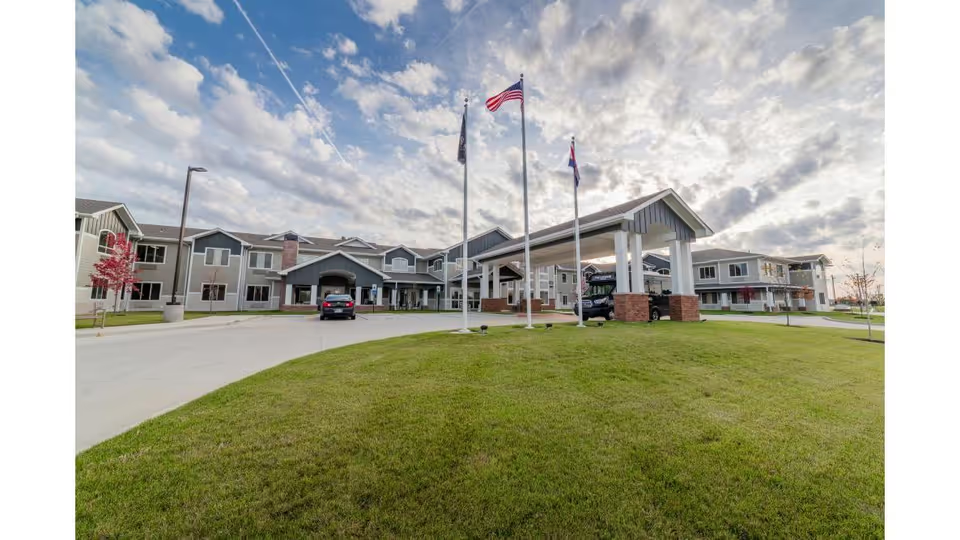
The reviews present a mixed picture of Villages of St. Peters. Positive feedback centers on a well-appointed physical environment, a broad slate of activities, and a strong therapy/rehabilitation program. Multiple accounts praise individual caregivers, therapists, reception staff, and certain nursing personnel for being compassionate, communicative, and effective in helping residents meet recovery goals. The facility’s interiors, private and semi-private room options, and available amenities (dining spaces, event programming, on-site services) are frequently described as bright, comfortable, and hotel-like.
Alongside these strengths are recurring operational concerns that families and prospective residents should weigh. Staffing consistency appears to be a major issue: many narratives describe reliance on agency staff, frequent turnover, and periods when fewer staff are available than expected. That pattern is reflected in slow call-light responses, delayed clinical interventions, inconsistent personal-care routines (including bathing and continence support), and variability in meal delivery and quality. Several accounts also describe lapses in medication and pain-management processes and in safe transfer/turning practices, which contributed to escalation of medical needs in some cases.
Sanitation and environmental maintenance are another pattern-level concern. While the building and many public areas are praised as clean and well-kept, other areas and specific units were described as having odor and cleanliness issues and aging carpeting in need of attention. Relatedly, reviewers cite problems with centralized administrative practices — unclear communication about care plans, delays in releasing medical information, and uneven responsiveness from management. Some reviews referenced regulatory inspection findings and expressed concerns about leadership stability and corporate cost-management decisions that may affect staffing and supply levels.
Given the polarized feedback, the facility may deliver excellent care in therapy and in units staffed by experienced, stable teams, while performance appears inconsistent across shifts and wings. Prospective residents and families should consider an in-person visit, guided tour of the specific unit under consideration, and direct questions about current staffing ratios, use of agency personnel, medication-safety protocols, personal-care schedules, and recent inspection history. Ask to meet therapy staff and nursing leadership, request examples of recent care-plan communication with families, and confirm infection-control and visitation policies. Those steps can help determine whether the facility’s strengths align with an individual resident’s needs and risk profile.