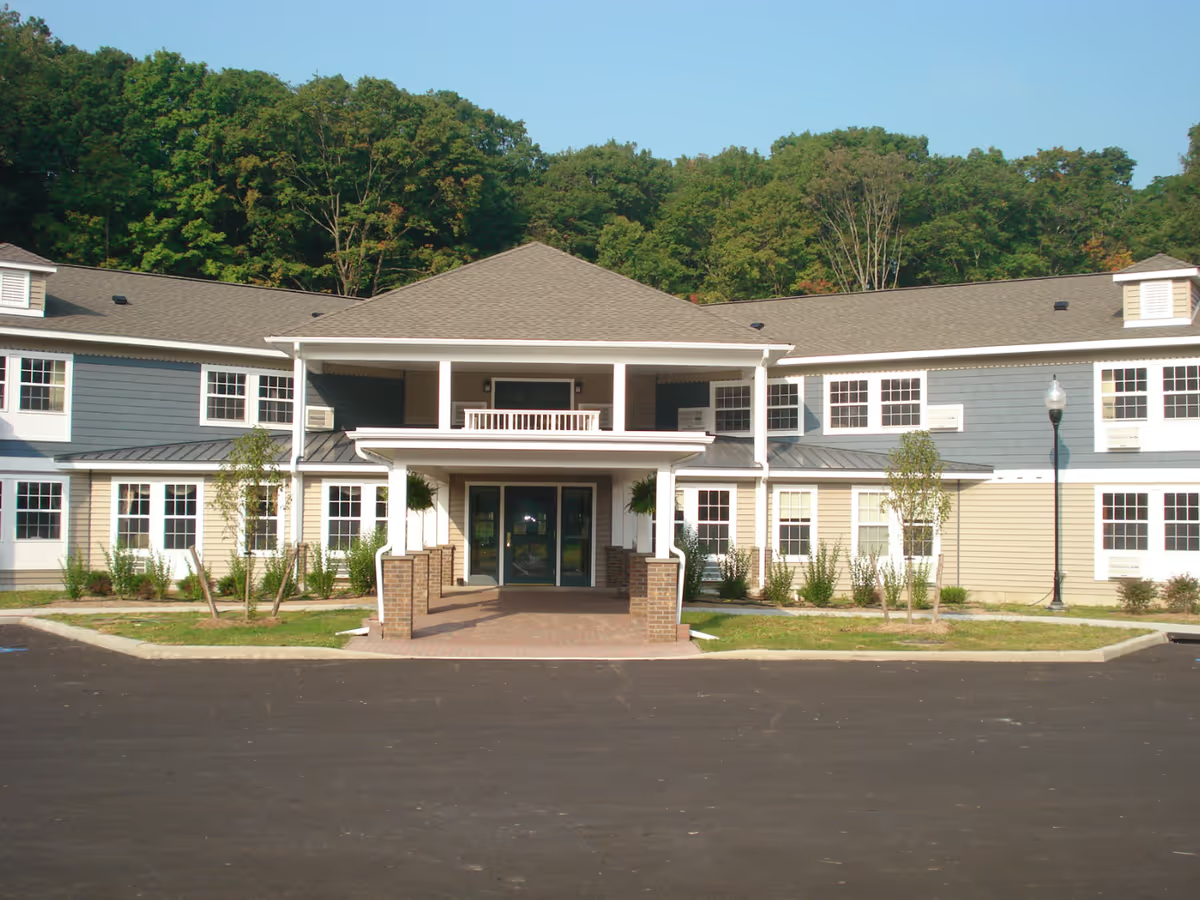
Home Sweet Home of Athens presents as a small, home-like assisted living option with a consistently clean, intimate interior and strong social connections among residents. Many families highlight compassionate, helpful staff and an involved owner/manager who provides hands-on support, clear communication, and occasional assistance with transportation and airport transfers. The dining experience is generally viewed positively — breakfasts were singled out — and the building's small scale creates a comforting, family-style environment that some residents and families found reassuring.
Care quality appears to be well suited to residents with low assistance needs. The facility's model and staffing are described as most appropriate for ambulatory or largely independent residents; several families indicated that residents requiring more intensive personal care exceeded the facility's capacity. This aligns with descriptions of a small staff footprint and the operational limits you would expect in a smaller home-style setting. Prospective residents with higher-acuity needs should plan to confirm available clinical supports and staff training before choosing this location.
Staff and management receive praise for friendliness, engagement, and responsiveness, but there are serious conduct and supervision concerns noted by some reviewers. While many families experienced comforting interactions and helpful orientations, a limited number of accounts describe significant misconduct by staff and inconsistent supervision. Those accounts raise questions about hiring practices, supervision, and safety oversight; prospective families should directly assess staff screening, supervision protocols, and how the facility handles complaints and incidents.
Facilities and access reflect the small, older-house character: the interior is clean but described as somewhat dated rather than modern, and there are interior steps and accessibility constraints. Certain on-site areas are restricted to residents, which some families interpreted as limiting resident autonomy. The small size contributes to a pleasant, intimate atmosphere but also limits on-site amenities and walkability to nearby services for residents who wish to go out on their own frequently.
Activities and social life appear to be strengths relative to the facility's scale — reviewers noted engaging resident interaction and a general sense of community. Management's hands-on approach supports family communication and comfort during transitions. However, given the operational limitations highlighted, families should clarify the facility's scope of care, mobility and access policies, and staffing supervision practices. In particular, ask about levels of care accepted, staff-to-resident ratios, staff training and background checks, incident reporting procedures, and specific accessibility accommodations. Where serious individual claims exist, those accounts merit follow-up with the provider and, if appropriate, verification through licensure records or local oversight agencies.