Overall impression Reviews of Williamsbridge Center for Rehabilitation and Nursing are highly polarized: many families and residents praise the clinical strengths and the caring culture provided by individual staff, while others describe operational weaknesses that affected safety, dignity, and comfort. The facility appears capable of delivering high-quality rehabilitation and wound care for motivated patients when clinical teams are attentive and adequately staffed; however, there are recurring patterns of variability in day-to-day operations that prospective residents and families should evaluate in person.
Care and clinical operations Multiple accounts highlight strong rehabilitation therapy (PT/OT), effective wound care, and compassionate bedside caregivers who support recovery and discharge planning. At the same time, reviewers describe inconsistent execution of basic clinical tasks — missed medications, delays in attending to residents, and delayed transport to higher-acuity care — which suggest gaps in task follow-through and shift coverage. These operational inconsistencies are frequently attributed to staffing shortages and workload pressures; when staffing is stable the clinical experience is described as attentive and recovery-focused.
Staff, conduct, and communication Staff behavior descriptions vary from consistently kind and respectful to instances of brusque or unhelpful interactions. Several reviewers specifically commended individual leaders (including nursing leadership and social services) for responsiveness and advocacy. Counterbalancing that are recurring concerns about slow or unclear communication with families, difficulty reaching administrators, and management-level professionalism issues, including allegations of favoritism and at least one allegation of financial misconduct. Prospective families should ask about communication protocols, family update practices, and escalation pathways when evaluating the facility.
Dining and activities Recreational programming and social activities receive positive mention: bingo, music, birthday gatherings, and other events contribute to a family-like atmosphere for many residents. Dining feedback is mixed: some reviewers praised the food and service, while others experienced cold meals or inconsistent tray delivery. Meal-service continuity and dining responsiveness appear to fluctuate with staffing and shift patterns.
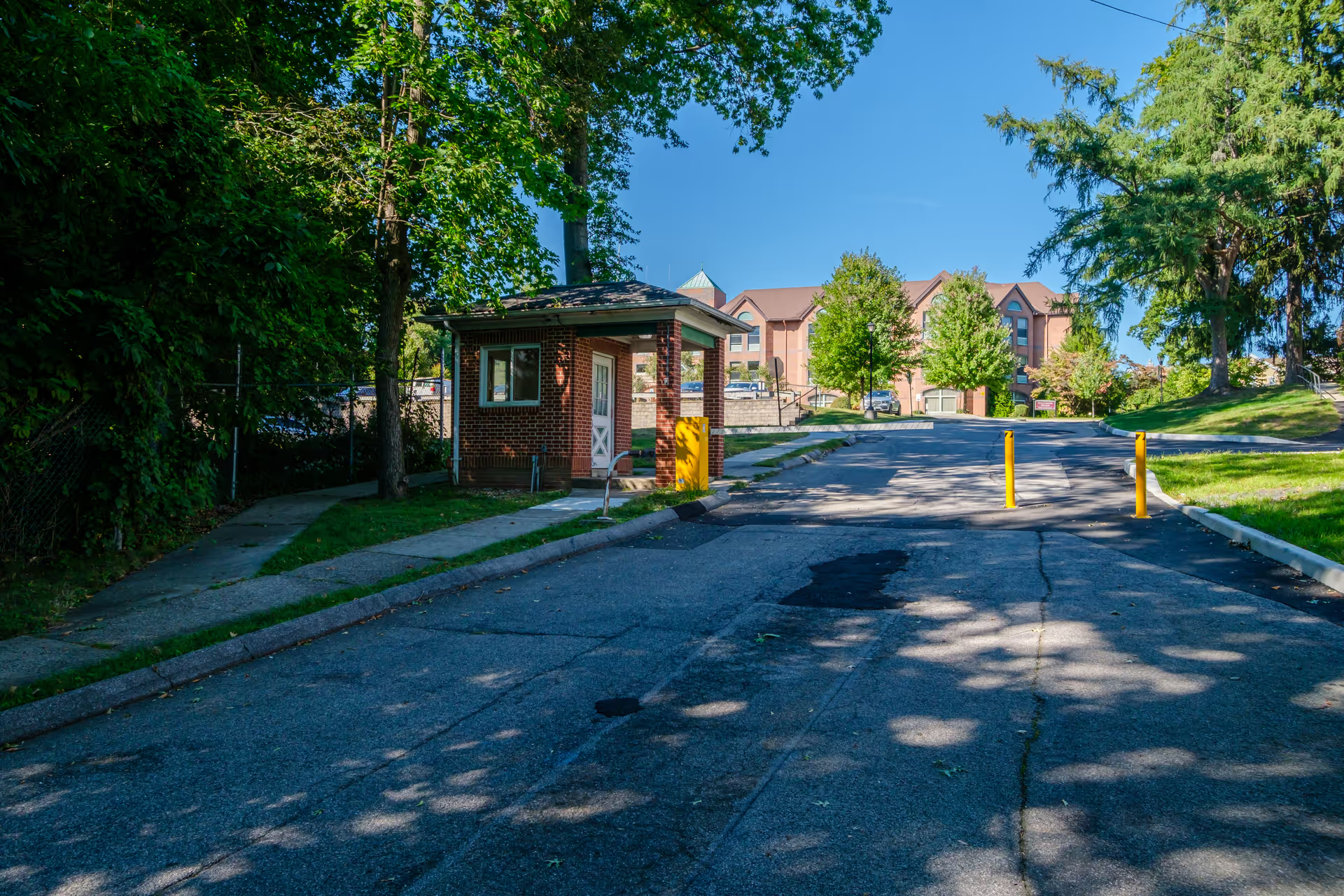
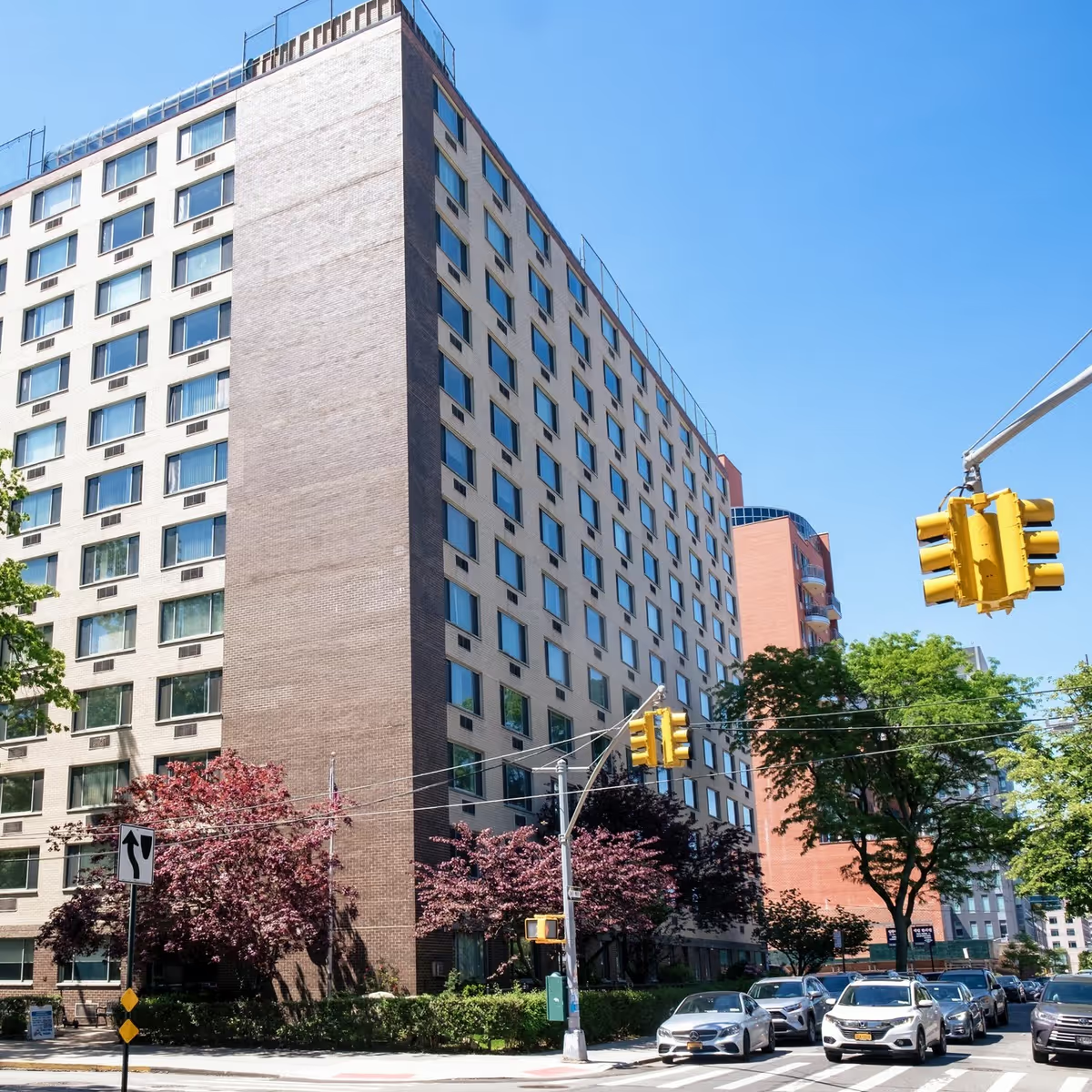
Facilities, maintenance, and infection-control matters Comments about the physical plant range from recently renovated, comfortable interiors to concerns about exterior disrepair, deferred maintenance, and constrained spaces (narrow hallways, shared bathrooms, curtain-partitioned rooms). Sanitation and odor control are recurring concerns, and there are noted pest-control and cleanliness issues in some accounts. These items point to uneven housekeeping and building-maintenance practices rather than a uniform condition across the entire facility.
Notable patterns and considerations for families The dominant pattern is variability: high-quality clinical and social services in many cases, and operational lapses in others. Key risk areas to probe further are staffing ratios and turnover, medication-administration protocols, incontinence-care processes, pest-control and housekeeping practices, emergency-transport procedures, and management accessibility. When visiting, families should inspect both public areas and resident rooms, ask for recent inspection reports and corrective-action records, and request clarification on how the facility handles care escalations and family notifications.
Bottom line Williamsbridge Center appears capable of providing strong rehabilitation and compassionate care under the right staffing and leadership conditions, with meaningful strengths in therapy, wound care, and social services. However, persistent operational concerns — particularly around staffing, sanitation, medication handling, facility maintenance, and communication — warrant careful, specific questions and an on-site evaluation before placement.