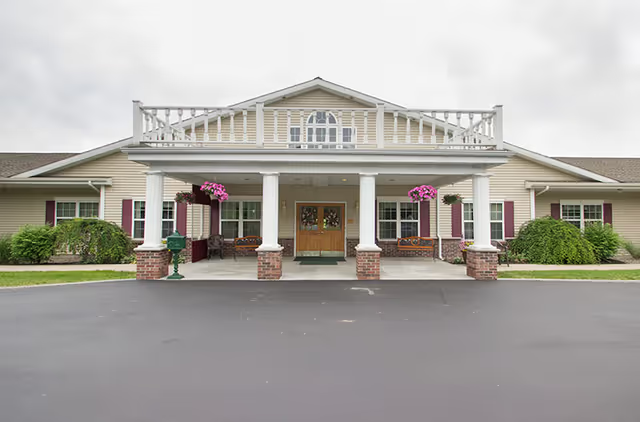
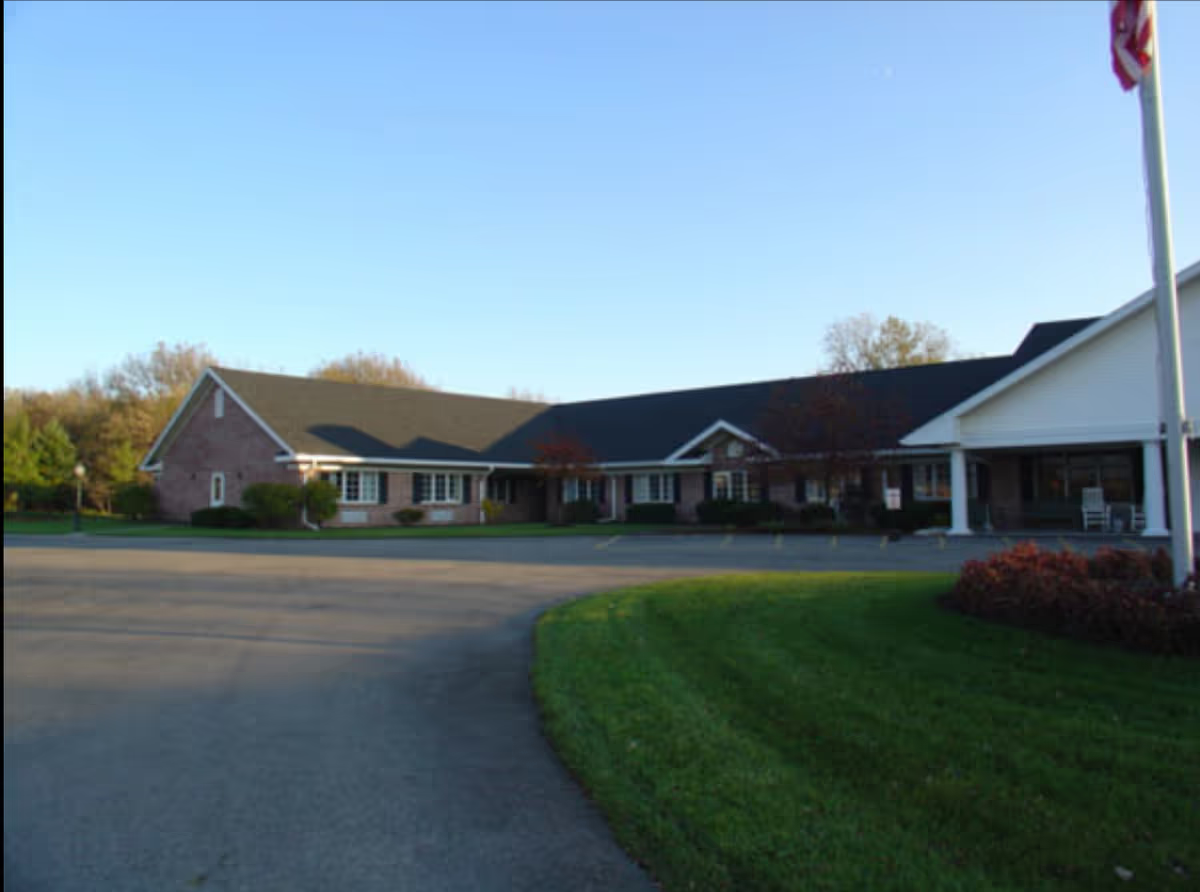
Reviews of Ontario Center present a sharply polarized picture: a consistent thread of strong rehabilitation and therapy services and several accounts of skilled, communicative nursing particularly on daytime shifts, contrasted with repeated operational shortcomings that affect basic care and safety. Families and observers most commonly praise the facility's PT/OT programs, activity department, and staff members who go above and beyond, noting that these elements contribute to faster recovery, engaged residents, and positive social programming.
Care quality shows a bifurcated pattern. Clinical rehabilitation and therapy are frequently described as high-quality and effective, with therapists and some nurses singled out for professionalism and good outcomes. At the same time, numerous accounts identify delays in direct-care assistance (long waits for aide help), inconsistent hygiene support, and hydration/urinary-tract–related clinical concerns that in some cases led to emergency visits. Safety oversight concerns recur as a theme: inadequate fall-prevention practices, unsecured mattresses or bed rails, and delayed responses to alarms or calls for help were described across multiple narratives.
Staffing and workforce issues emerge as a primary driver of variability. Reviewers indicate uneven staffing levels, particularly after midafternoon, overnight, and on weekends, and a reliance on temporary or agency personnel that contributes to inconsistent bedside skills and continuity of care. Night and weekend aide performance is commonly contrasted with stronger daytime nursing and therapy teams. Additional staffing-related concerns include use of personal devices while on duty, inconsistent professional conduct, and gaps in PPE use and infection-control adherence.
Dining and activities present divergent experiences. Activity programming is a clear strength: the facility offers a wide range of social, cultural, and recreational events that families describe as engaging and beneficial to residents’ quality of life. Dining receives mixed feedback — special meals and event catering are praised, but routine meal quality and presentation are described as variable, with reported declines during evenings and weekends.
Facility-level cleanliness and environment feedback is mixed. Some reviews describe clean, inviting common areas and well-maintained rooms, while others identify sanitation inconsistencies, odor concerns, delayed room cleaning, and dated infrastructure in parts of the building. These observations are linked in several accounts to the same staffing and housekeeping shortfalls noted elsewhere.
Management, communication, and transparency show recurring weaknesses. Families cite inconsistent incident reporting, limited or delayed family notification after incidents, and a perception of administrative defensiveness in some interactions. There are also mentions of recent leadership or policy changes whose net impact is unclear to families. A small number of accounts raise serious allegations about medication-management practices and marketing accuracy; these statements are more singular and would warrant direct inquiry and verification through regulatory channels.
Notable patterns for prospective families: investigate care during off-peak hours (nights and weekends), ask for specifics about staffing ratios and agency-staff use, confirm infection-control procedures and incident-notification protocols, and observe routine meal service as well as activity offerings. Given the contrast between highly rated therapy/nursing services and recurring operational concerns, an in-person visit during different shifts and clear documentation of care plans and communication expectations will help determine whether Ontario Center’s strengths align with an individual resident’s needs.