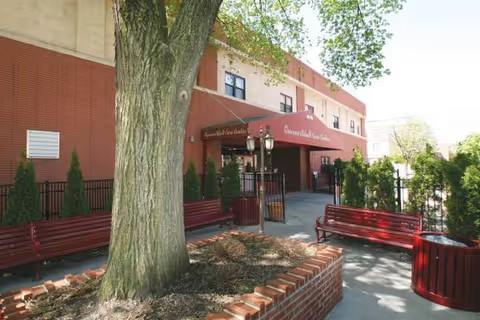
Sutton Gardens elicits strongly mixed impressions across reviewers. Many families emphasize a small, family-like environment with compassionate, attentive aides and engaged administrators. The community’s single-floor layout, outdoor porches and fenced grounds, and available on-site nursing (LPN/RN) or therapy services are frequently cited as strengths. Several accounts highlight effective dementia care, individualized meal assistance, daily housekeeping, and a range of group activities such as bingo, crafts, music and reading that support social engagement.
Care and staffing present a complex picture. Positive narratives describe staff who are patient, communicative with families, and capable of helping residents regain weight or improve mood. Administrators and certain nurses receive repeated praise for responsiveness and for facilitating smooth admissions and transfers. At the same time, numerous accounts raise concerns about staffing levels and consistency — examples include limited floor coverage, single activity staff for many residents, and aides stretched thin. These operational staffing patterns are linked to specific care risks raised by reviewers: delays in assistance, uneven supervision, and perceived gaps in clinical oversight including medication-management and monitoring practices.
Dining and activities are similarly varied. Some reviewers note tailored meal plans, healthy menus, and attentive feeding support; others describe basic or low-quality meal presentation and a limited range of activity programming. Activity offerings exist and can be meaningful for engaged residents, but several commenters felt programming was limited in scope or frequency, and that activity staffing did not match resident needs.
Facility condition and design are recurrent themes. The building’s small, intimate scale and recent room refurbishments appeal to families looking for a home-like setting. However, the facility is older and was not originally designed for assisted living, resulting in compact rooms, shared-sink double occupancy arrangements, limited private bathrooms in some wings, and small communal spaces that can feel crowded. Multiple reviewers raised sanitation-related issues, odor concerns in common areas, and pest-control observations; others reported improvements under newer management or after renovations. Safety-related observations include concerns about supervision, response after falls, and physical layout limitations for mobility devices.
Management and transparency show wide variation in experience. Many families praise hands-on administrators who communicate frequently, send photos, and address problems quickly. Conversely, others describe inconsistent management presence, poor answering-service responsiveness, unclear billing or additional charges, and at least one allegation of financial misconduct. There are also mentions of regulatory scrutiny, which prospective families should explicitly inquire about during a tour.
Notable patterns for prospective families: Sutton Gardens may suit someone who prefers a smaller, more personal community with staff who can provide close, familiar care and good dementia support. At the same time, the facility exhibits operational weaknesses that warrant careful due diligence — particularly around staffing ratios and schedules, bathroom availability and room configurations, sanitation and pest-control practices, medication-management and clinical oversight, security of personal belongings, and the facility’s regulatory history. Recommended steps for a prospective move include visiting at varied times of day, observing meal times and activity periods, asking for current staffing ratios and licensed-clinical coverage, reviewing recent inspection records, clarifying all fees and contract terms, and seeking current family references to validate ongoing improvements or persistent issues.