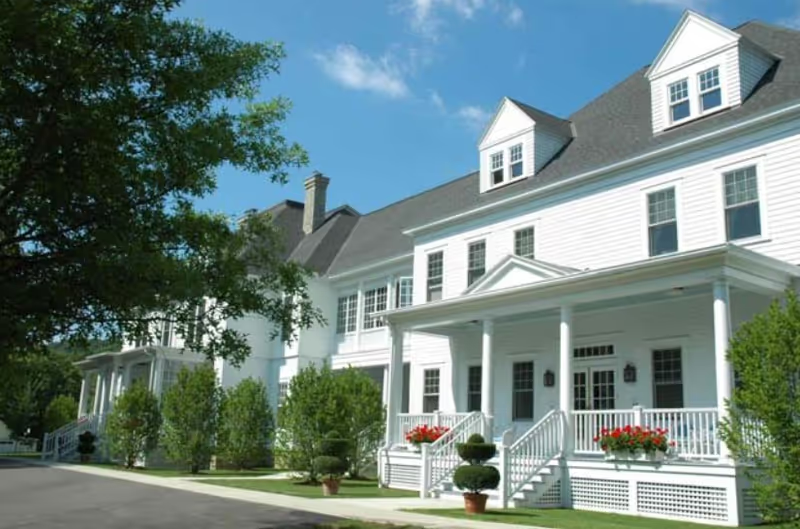
Overall assessment The New York State Veterans Home presents as a well-maintained, medically capable long-term care option with strong emphasis on clinical care and resident comfort. Reviewers consistently highlight skilled nursing, accessible two-person assist practices for transfers and activities of daily living, and reliable access to on-site clinical staff such as a nurse practitioner and visiting physicians and specialists. The facility's scale and layout — large therapy rooms, wide hallways, pod-based neighborhoods and renovated wings with scenic views — support both rehabilitation services and communal living.
Care and staff Families and residents commonly describe compassionate, respectful staff interactions and a family-like culture among nursing aides, therapists, and administrative personnel. Several accounts indicate attentive end-of-life and bereavement support, continuity of care for long-term residents, and positive outcomes in both physical and mental health for some residents. At the same time, there are operational concerns related to staff conduct and availability: reports point to inconsistent professionalism in some shifts and staff personal-phone use that can affect responsiveness. Reviewers also described variable accessibility of particular clinicians, which suggests uneven communication and coverage across providers.
Dining, activities, and amenities The facility's nonclinical offerings are a consistent strength. Dining quality and an on-site café receive favorable mentions, and housekeeping and maintenance are characterized as keeping the environment clean and bright. Activity programming is broad and active: music, bands, bingo, arts and crafts, cornhole, outings to nearby towns, and animal interactions (including a cat room and allowance for resident pet visits) are frequently cited. These elements contribute to a home-like, resort-like atmosphere for many residents and support social engagement and recreational therapy.
Management, logistics, and safety patterns A set of operational issues recurs in the commentary. Families describe appointment cancellations and delays in coordinating external medical visits, along with lapses in timely communication between staff and families. The facility's telephone system and billing controls are noted as unclear, including at least one serious billing concern; this points to a need for clearer call-access procedures and financial oversight. Security and visitor-management processes also raise questions for some families — accounts of perceived favoritism or unauthorized entrants imply gaps in access control rather than systematic intent. Entrance and parking logistics are also mentioned as a source of delay for visitors, which can affect timely arrivals and departures.
Overall impression and practical guidance Taken together, the reviews paint a largely positive picture of clinical capability, staff compassion, facility upkeep, and programmatic richness, balanced by operational weaknesses in communication, security, and logistics. Long-term residents and families who prioritize clinical competence, active programming, and a pet-friendly, home-like environment are likely to view the Home favorably. Prospective families should consider visiting in person, asking about appointment coordination protocols, telephone and billing controls, visitor-security procedures, and staff-coverage schedules to assess whether the facility’s operational practices meet their expectations.