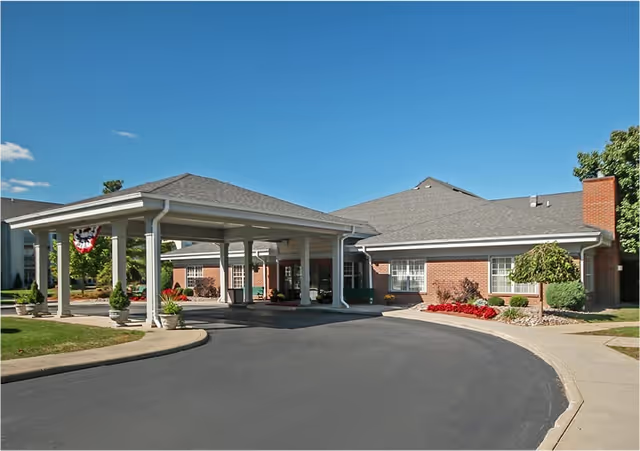
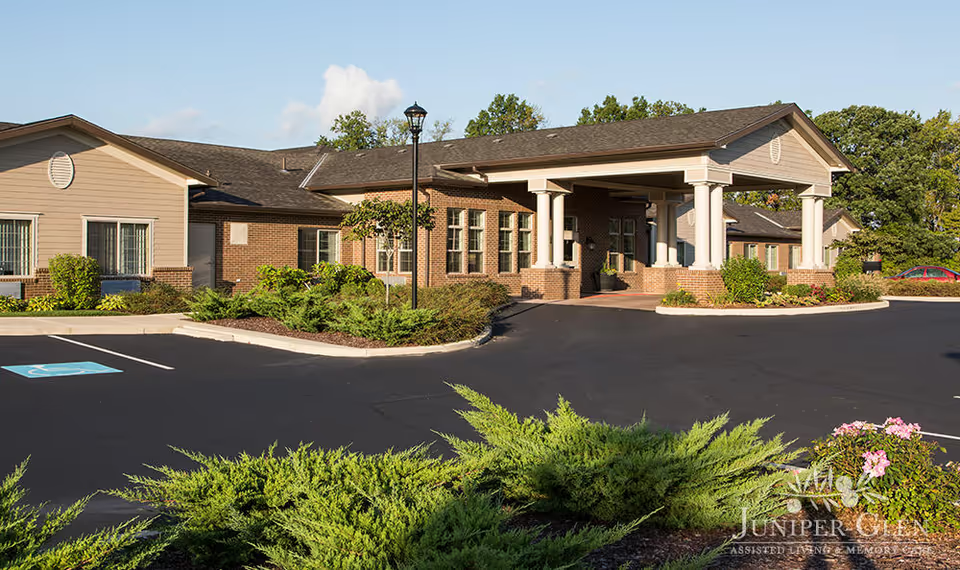
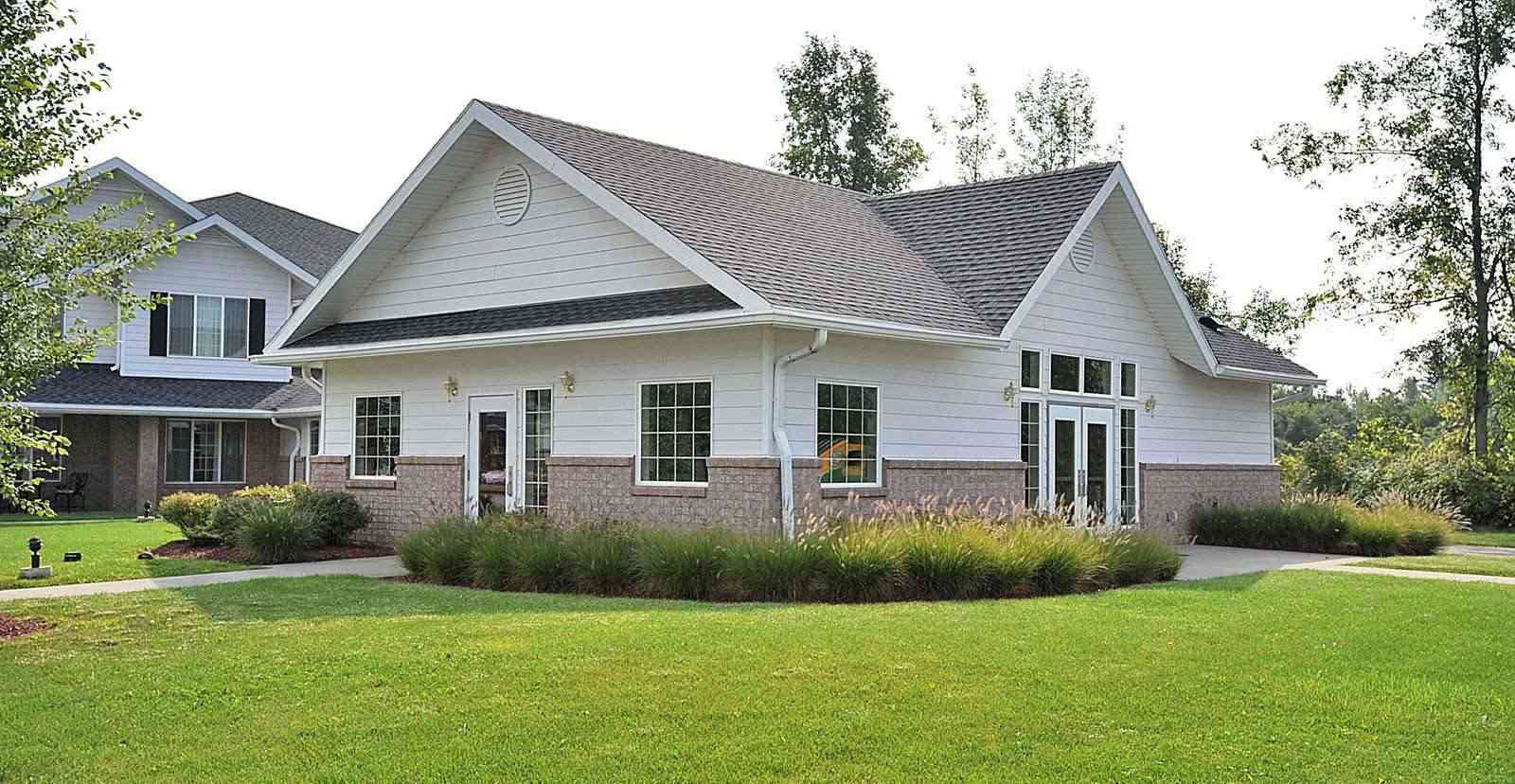
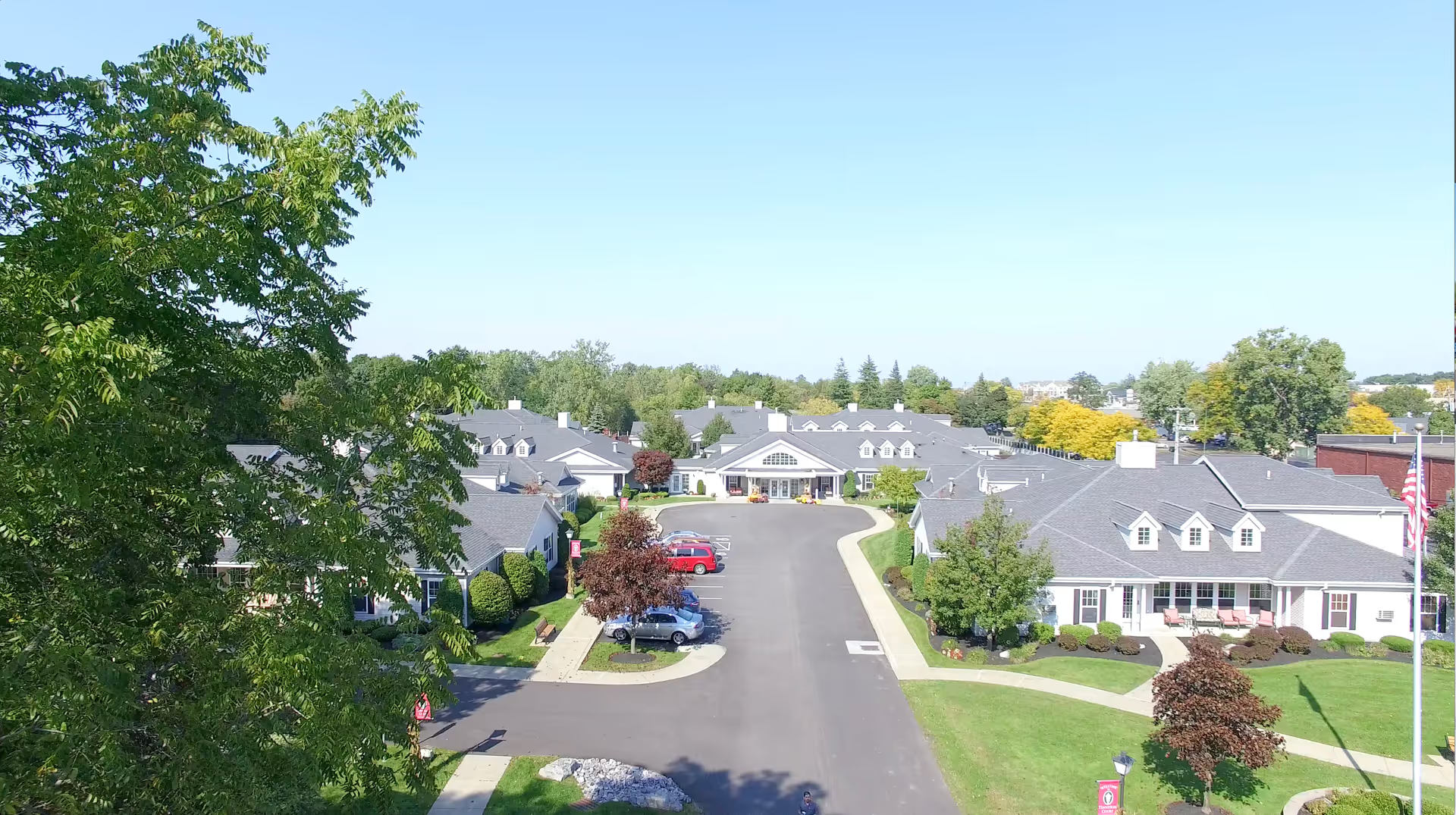
Canterbury Woods presents as a high-end, campus-style senior living community with many resort-like attributes. Reviewers commonly describe luxurious, hotel-like common areas and very large private apartments, supported by extensive amenities such as a heated saltwater pool, cafe, salon services, a library, and planned cultural venues. The community offers robust activities and cultural programming, and many families find the life-care model and on-site services attractive for long-term planning and proximity to family.
Dining and social life are frequently highlighted as strengths. Multiple accounts describe restaurant-quality meals, varied menus, and an appealing dining-room experience. Social opportunities and planned programming contribute to a sense of community for many residents, while the spacious private units provide significant privacy. The property’s accessibility and layout can accommodate residents with limited mobility, and tours and admissions staff are often experienced in explaining costs and options.
However, several operational concerns recur across reviews. Cleanliness and sanitation practices are described unevenly, with some accounts indicating odor concerns and inconsistent housekeeping in certain units or common areas. Skilled nursing and rehab services are flagged as understaffed in some reports; this links to delays in call-button response and inconsistent attention to clinical needs. There are also multiple concerns related to medication management and pain control, including delayed or inadequate pain relief during short-term rehabilitation stays. These issues point to gaps in clinical staffing levels and care-provision processes in higher-acuity settings.
Dementia care and environmental suitability for residents with cognitive impairment are another notable pattern. Reviewers describe the community as oriented toward higher-functioning residents, with long corridors and a sprawling layout that may increase the risk of disorientation for people with memory impairment. Several comments suggest the facility is not well adapted for advanced dementia and that staff training and procedures for cognitively impaired residents may be limited.
Administrative responsiveness and transparency are additional areas of concern. Families report inconsistent communication from management, unclear processes for addressing complaints, and a perception of top-down decision-making that can leave issues unresolved. Food quality is generally praised but also described as variable over time by some families, and the overall cost of residency plus long waiting lists make the community inaccessible for many prospective residents.
In sum, Canterbury Woods offers a premium environment with substantial amenities, spacious living, and strong dining and social programming—characteristics that appeal to independent and higher-functioning seniors. Prospective residents and families should weigh these strengths against operational risks in higher-acuity care: ask detailed questions about skilled-nursing staffing ratios, call-response times, medication and pain-management protocols, dementia-specific programming and staff training, housekeeping and sanitation procedures, rehab capabilities for post-surgical recovery, and the community’s complaint-resolution process. A focused tour that queries these areas and, where possible, conversations with current residents and families can help clarify whether the community’s strengths align with the prospective resident’s care needs and expectations.