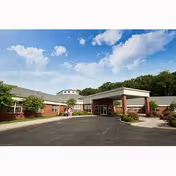
Kingston Residence of Sylvania receives strongly mixed feedback across clinical, operational, and amenity areas. The facility is frequently praised for its therapy and rehabilitation services, an attentive Memory Care team, and a well-maintained, modern campus with amenities such as a pool, salon, courtyard, and renovated dining spaces. Families describe engaging activity programming, restaurant-style dining rooms, and compassionate caregiving in several units, providing a family-like atmosphere and strong short-term rehab outcomes.
Clinical quality appears bifurcated. Physical and occupational therapy services, along with memory-care programming, are consistently identified as strengths; many families credit these services with meaningful functional gains and good rehab results. Conversely, multiple accounts point to operational weaknesses in day-to-day nursing and personal care: inconsistent direct-care staffing, long waits for assistance or transfers, delays in medication administration, and medication-administration errors. These issues have been associated with rehospitalizations, safety concerns, and the need for intensive family advocacy in some cases. Night-shift supervision and continuity are a recurrent concern, with reviewers noting a gap between daytime assurances and nighttime performance.
Staffing and management present a mixed picture. Reviewers describe many compassionate, hardworking aides and a welcoming admissions team, but also note uneven caregiver competence, occasional poor communication from supervisors, and slow follow-through on family meetings or care-plan promises. Several families felt compelled to remain highly involved to ensure basic needs were met. There are also observations of variable nursing oversight and inconsistent responsiveness to call systems, which suggests training, scheduling, or oversight gaps that affect reliability.
Dining and activities also show variability. The facility offers a renovated, pleasant dining environment and a robust activities calendar that includes music, crafts, movies, and community events. However, meal quality and consistency are uneven across reports: some families praise the dining experience while others cite limited menu variety, poorly executed entrées, and constrained dining scheduling or sign-up systems. Snack availability on third shift and late-night options are limited.
Facilities, amenities, and logistics are generally viewed positively. The campus is described as clean, contemporary, and comfortable, with well-kept common areas and attractive furnishings. Apartment sizes and bathroom footprints are noted as small in some units, and parking and canteen/snack access on later shifts are limited. Financially, the facility does not accept Medicaid, which may be a decisive factor for some families.
Notable patterns to weigh: strong therapy and memory-care capacity contrasts with inconsistent personal-care reliability; daytime staff and leadership often receive better assessments than night-shift operations; and family involvement is frequently necessary to ensure follow-through on individualized care. Prospective residents and families should consider touring multiple units at different times of day, asking detailed questions about staffing ratios, medication-safety protocols, night supervision, and discharge procedures, and verifying financial fit given the lack of Medicaid acceptance.