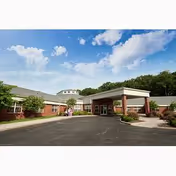
Overall impression: Reviews indicate a facility with some clinical strengths but persistent operational challenges. Physical and occupational therapy services are frequently identified as a positive element, and families note a convenient location and individual caregivers who demonstrate compassion. At the same time, reviewers describe recurring problems that affect everyday care, safety, and family confidence.
Care quality and clinical oversight: A common pattern is understaffing and uneven clinical supervision. This manifests as missed or inconsistent medication administration, delays in clinical monitoring and follow-up (including laboratory communication), and variability in how individual nurses and aides perform basic care tasks. Several comments raise serious concerns about end-of-life management and clinical responsiveness in urgent situations; these should prompt review of clinical oversight, handoff procedures, and escalation protocols.
Staffing, training, and conduct: Families describe both competent individual staff members and broader gaps in staff training and supervision. Chronic staffing shortages, reliance on agency personnel, and reports of unsupervised aides contribute to unpredictable resident experiences. There are repeated mentions of concerns about staff conduct and responsiveness, including curt interactions and delayed response to call lights. Leadership turnover and a stated focus on improvement are present and may be a meaningful lever for addressing these issues.
Dining, therapy, and activities: Dining experiences are described as inconsistent — occasional satisfactory meals occur alongside complaints about timing and quality. Therapy services (PT/OT) receive positive remarks when delivered, but several accounts describe interrupted or minimal rehabilitation, inconsistent scheduling, and situations where expected therapy was not provided. Activity programming is not frequently detailed, suggesting it is not a standout feature in these reviews.
Facilities and sanitation: Multiple reviewers cite sanitation and odor concerns in resident rooms and common areas, as well as maintenance deficiencies such as dust accumulation, flooring issues, and poorly sealed windows. These environmental issues affect perceived safety and comfort and indicate a need for more reliable housekeeping and building maintenance processes.
Property control and ethical concerns: There are troubling statements about missing personal items and offers to resolve disputes informally. Given the seriousness of these claims, facilities should ensure transparent property-control procedures, secure storage, and clear incident reporting. One theme is inconsistent follow-through on family complaints and limited explanation of clinical findings, which undermines trust.
Management and notable patterns: Several reviewers note a change in leadership with visible efforts to improve care; this is an important positive signal. However, persistent operational weaknesses — especially staffing, supervision, communication, and environmental maintenance — will require sustained management focus to correct. Prospective residents and families should ask management about current staffing levels, clinical oversight protocols (medication administration, lab follow-up, monitoring), personal-property safeguards, housekeeping schedules, and specific improvement actions implemented under the new leadership.
Bottom line: The facility shows strengths in therapy services and has individual caregivers who provide good care, but consistent operational problems (staffing, supervision, hygiene, communication, and property-control processes) have produced variable resident experiences. Families considering this facility should seek up-to-date information from leadership about corrective actions and monitor key operational measures during the initial weeks of placement.